How Ancient Chinese Bronze Was Made: A Masterful Process
How ancient Chinese bronze was made is a testament to sophisticated craftsmanship
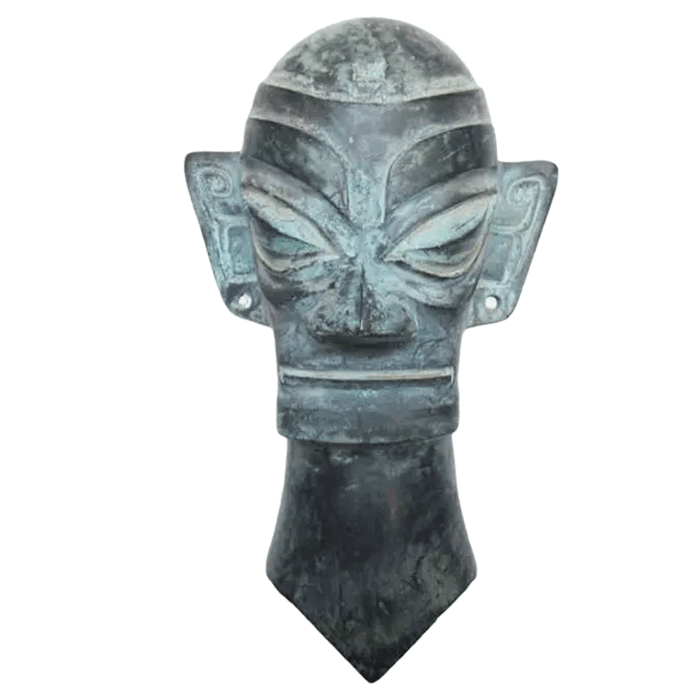
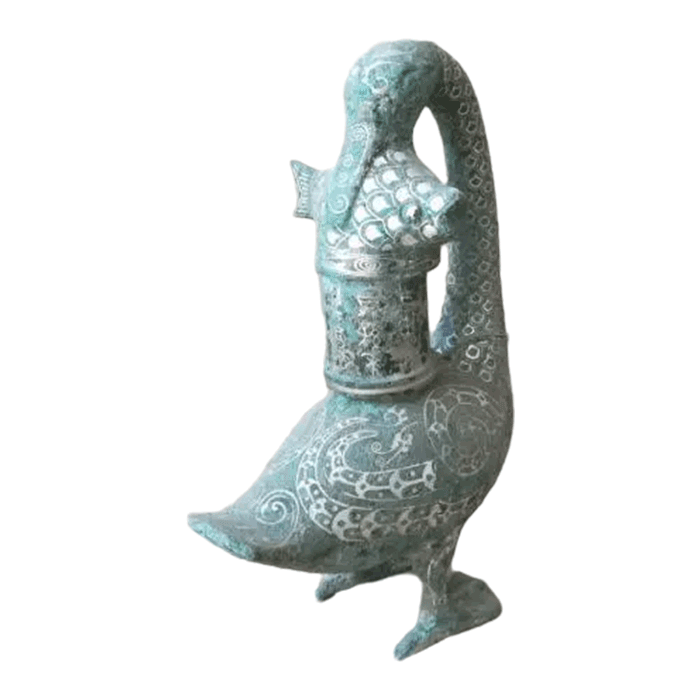
The magnificent bronze ritual vessels, weapons, and statues of ancient China, particularly from the Shang and Zhou dynasties, are celebrated not only for their artistic beauty but also for the incredible technological prowess they represent. These artifacts were not simply hammered into shape; they were the product of a complex, multi-stage process known as piece-mold casting. This technique, unique to ancient China, allowed for a level of detail, precision, and scale that was unparalleled in the Bronze Age world. Understanding this intricate workflow offers a profound appreciation for the skill of ancient artisans and provides a critical foundation for evaluating the quality of modern bronze reproductions.
For collectors, museum curators, and businesses sourcing high-quality bronze art, knowing the historical context is invaluable. It illuminates the difference between a simple casting and a masterful recreation that honors its cultural origins. This article traces the journey of an ancient bronze, from the initial clay model to the final, lustrous object, revealing the ingenuity that defined a golden era of metallurgy.
The Foundation: Material Selection and Model Creation
Every masterpiece begins with a vision and the right materials. For an ancient Chinese bronze caster, the process started long before any metal was melted. The initial stages involved meticulous preparation of clay and the painstaking creation of a perfect master model, which would serve as the blueprint for the final piece.
Sourcing and Preparing the Clay
The success of the piece-mold technique depended entirely on the quality of the clay used for the model and the molds. Artisans required fine, loess soil, which was abundant in the Central Plains region of China, the heartland of the Shang and Zhou civilizations. This soil had excellent plasticity when wet and became hard and porous when fired, properties essential for the casting process.
The raw clay was not used directly. It underwent a refining process of levigation, where it was mixed with water and allowed to settle, separating the fine particles from coarser sand and organic impurities. Tempering agents, such as sand, chopped straw, or crushed pottery (grog), were often mixed into the refined clay. This temper reduced shrinkage and cracking during the drying and firing stages, ensuring the mold would maintain its precise dimensions and withstand the thermal shock of receiving thousands of degrees of molten bronze.
Sculpting the Master Model
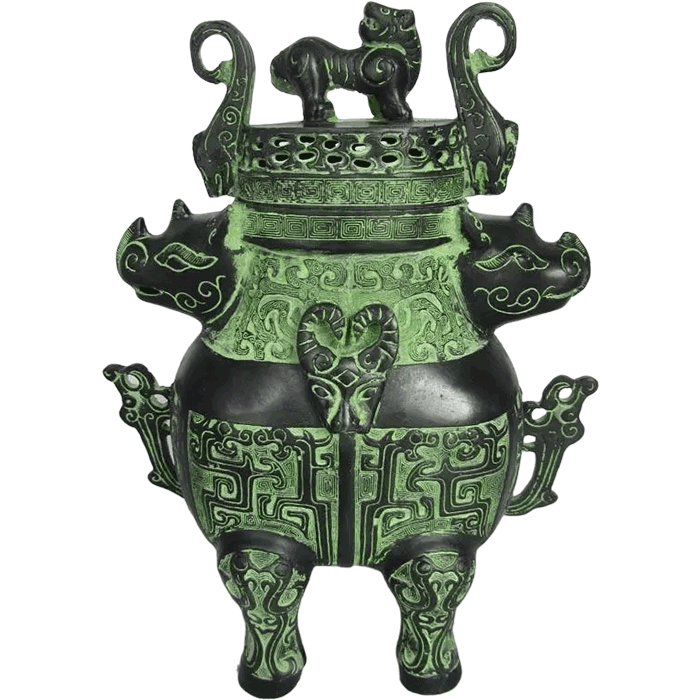
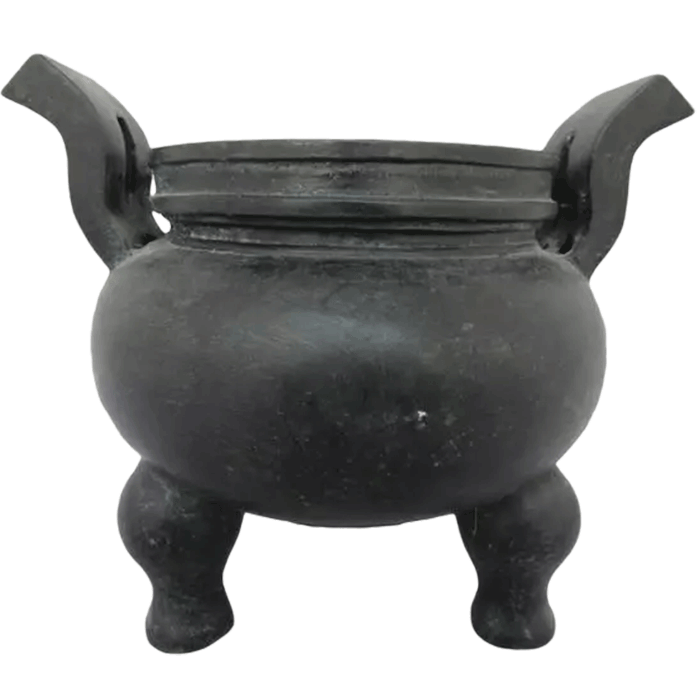
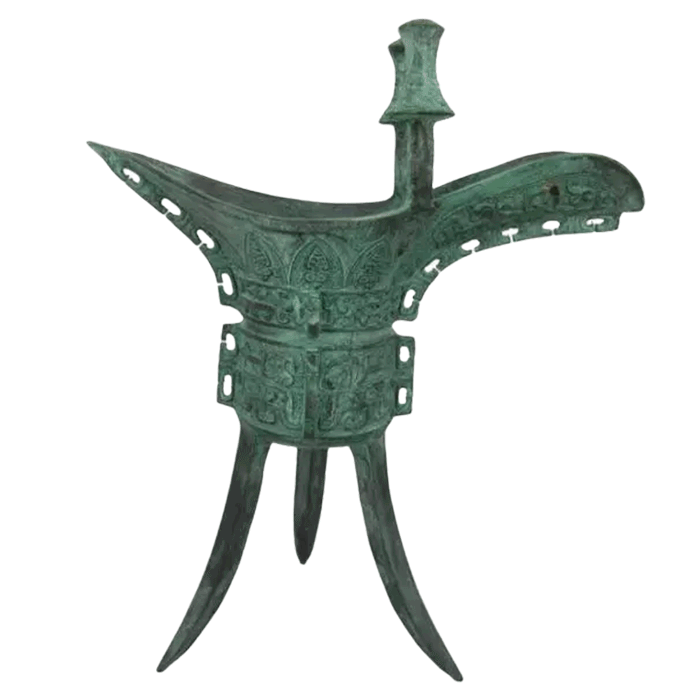
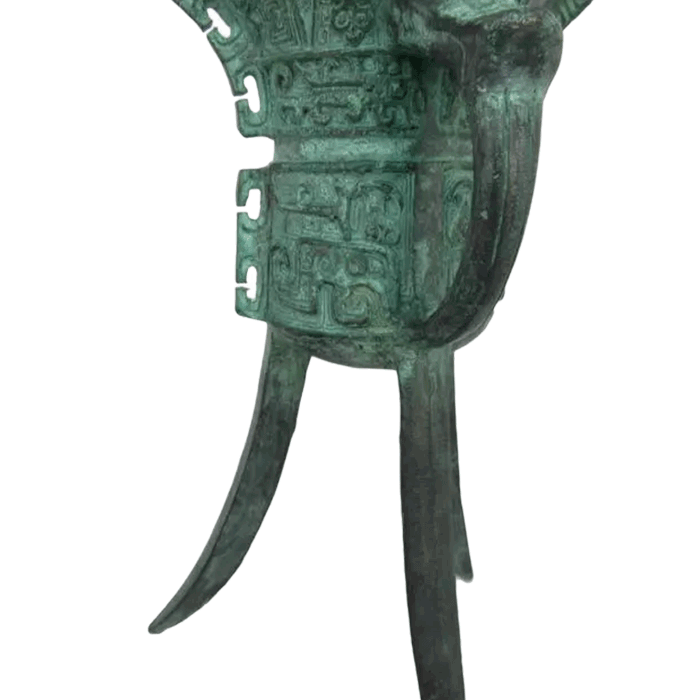
With the clay prepared, a master artisan would sculpt the master model (or mo). This was a positive, solid replica of the final bronze object, perfect in every detail. Whether it was a ceremonial ding tripod, an elegant gu beaker, or a fearsome-looking axe, the model had to be exact in its proportions, symmetry, and surface contours. Every decorative element that was intended for the final piece was first carved into this clay original.
This stage was a combination of artistic skill and technical foresight. The artisan had to consider the flow of molten bronze, the thickness of the vessel walls, and how the piece would eventually be demolded. The intricate designs, such as the iconic taotie masks, swirling cloud patterns (leiwen), and precise flanges, were not added later; they were integral to this initial model. The sharpness and clarity of the final bronze were directly tied to the precision of the carving on this clay prototype.
The Piece-Mold Casting Technique: A Shang Dynasty Innovation
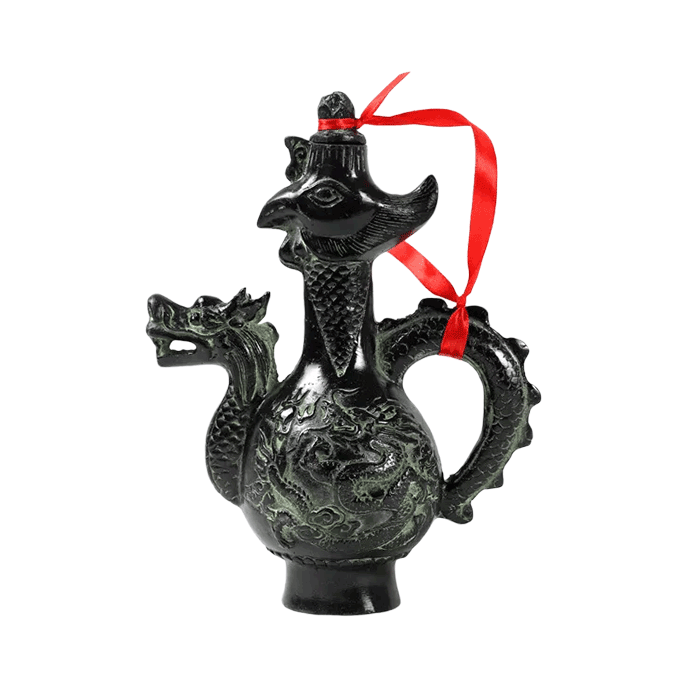
While other cultures used simpler one- or two-part molds or the lost-wax method, ancient Chinese artisans perfected the piece-mold assembly. This method allowed for complex, hollow forms with crisp, intricate surface decoration that was cast directly into the metal, not worked onto it after the fact.
Creating the Outer Mold Sections
Once the master model was complete and had dried to a leather-hard state, a new layer of damp, tempered clay was carefully pressed against its exterior. This outer layer was not a single piece. Instead, it was applied in carefully planned sections, typically two, three, four, or more, depending on the complexity of the vessel. The number and placement of these sections were critical for ensuring the mold could be removed from the model without damaging the delicate surface details and later reassembled perfectly.
After this outer clay layer was applied, it was allowed to partially dry. The artisans would then carefully cut it along the predetermined seam lines and gently pry the sections away from the master model. These pieces, which now bore a negative impression of the model's exterior decoration, became the outer mold assembly. They were then touched up to remove any imperfections and fired in a kiln, turning them into hard, ceramic-like shells ready for casting.
The Core and the Void
To create a hollow vessel, a solid bronze casting would be impractically heavy and wasteful of precious metal. The solution was the core (or fan). After the outer mold pieces were removed, the master model's surface was shaved down by a uniform amount, equivalent to the desired thickness of the final bronze vessel's walls. This shaved-down model became the core.
The core was then fired and carefully placed inside the reassembled outer mold sections. The space between the inner surface of the outer mold and the outer surface of the core created a void. This precisely shaped cavity was where the molten bronze would flow. To keep the core perfectly centered within the outer mold and prevent it from shifting during the pour, small bronze or copper spacers known as chaplets were often placed in the void. These chaplets would fuse with the molten bronze and become a permanent, often invisible, part of the final object.
Intricate Decoration and Inscriptions
One of the most remarkable aspects of this technique was how it handled decoration. The negative impressions on the inner faces of the outer mold pieces captured every detail from the master model. This meant that the intricate decorative patterns were an integral part of the cast itself. Furthermore, if the vessel was to include an inscription—common for commemorating important events—the characters would be carved in reverse (mirror image) into the clay of the core before it was fired. When the bronze filled the mold, it would form the characters in their correct, raised orientation on the vessel's interior. This method ensured a level of clarity and permanence that post-cast engraving could not match and is a key feature of many authentic chinese bronze sculpture pieces.
The Casting Process: From Molten Metal to Solid Form
With the mold assembly complete, the most dramatic and perilous stage of the process began. The foundry team, working with extreme heat and immense weights, had to execute the pour with perfect timing and coordination.
Alloying and Melting the Bronze
The bronze itself was a carefully prepared alloy, primarily of copper and tin. The ratio was critical; a higher tin content produced a harder, more brittle metal with a lower melting point, while a lower tin content resulted in a softer, more ductile bronze. Lead was often added to improve the fluidity of the molten metal, making it easier to fill every crevice of a complex mold. Smelting and alloying were done in ceramic crucibles heated in charcoal-fueled furnaces, with bellows used to reach temperatures exceeding 1,000° Celsius (1,832° Fahrenheit).
The Critical Pour
The mold assembly, including the core, was often pre-heated before the pour to reduce the thermal shock that could cause it to crack. The molten bronze was then poured from the crucibles into the mold through specially designed gates or runners. For very large objects, like the famous Houmuwu square cauldron, multiple crucibles had to be poured simultaneously in a highly choreographed effort involving dozens of people. The pour had to be fast and continuous to prevent the metal from cooling and solidifying prematurely, which would result in a failed casting.
Cooling and Demolding
After the pour, the entire assembly was left to cool slowly. A slow cooling process was crucial to prevent the bronze from becoming too brittle. Once completely cooled, the outer ceramic mold sections were broken away, and the inner core was painstakingly scraped out. This was a moment of truth, revealing whether the casting was successful. The fact that the molds were destroyed in the process meant that each piece-mold bronze was a unique creation.
Post-Casting: The Art of Finishing and Patination
The raw casting that emerged from the mold was not the finished product. A significant amount of skilled labor was still required to transform it into a polished work of art.
Chasing, Grinding, and Polishing
The raw casting would have casting seams, or flashes, where the mold sections met. It would also have remnants of the pouring gates and the chaplets. These imperfections were removed by artisans using a process of grinding, filing, and chiseling. This work, known as chasing, required a delicate touch to blend the repairs seamlessly with the cast decoration. The entire surface was then polished using abrasives like sand and water to achieve a smooth, lustrous finish. The original appearance of these bronzes was not the green patina we see today but a brilliant, golden sheen akin to polished brass.
The Development of Patina
Over centuries of burial in soil, the bronze surface reacted with minerals, moisture, and air, creating the rich green, blue, and reddish patinas that are now considered a hallmark of ancient bronzes. This patination is a slow, natural oxidation process. In modern reproductions, skilled artisans can accelerate and control this process using various chemical treatments to create specific finishes, from a classic verdigris to a deep, lustrous black, providing a wide array of options for bronze decorations, home bronze decor, bronze home decor arts.
Bridging Ancient Techniques with Modern Precision at Luoyang Yichuan Bronze Craft
The legacy of these ancient masters informs every piece we create at Luoyang Yichuan Bronze Craft Co., Ltd. While we honor the spirit of the piece-mold technique, we also leverage modern advancements and other traditional methods, like lost-wax casting, to achieve unparalleled quality and versatility for our global B2B clients.
Located in Yichuan County, Luoyang—a region with a deep history in bronze craftsmanship—our 3,000-square-meter facility is home to over 30 skilled artisans. These are not just technicians; they are bronze-casting masters and finishing experts who have dedicated their lives to this art form. This deep pool of talent allows us to produce over 50,000 bronze art pieces annually, supporting projects of any scale, from a single prototype to large production runs.
Our commitment to quality is codified in our ISO 9001 certified quality management system. We use premium bronze alloys (Cu-Sn) and subject every piece to rigorous inspection before shipment, ensuring compliance with international export standards. This modern oversight, combined with traditional hand-finishing, chasing, and polishing, allows us to solve critical sourcing pain points for our clients. We excel at:
- Exact Replication: We can precisely replicate antique bronzes, capturing the subtle details and stylistic nuances that define their historical period.
- Consistent Patina Matching: Our artisans are masters of patination, able to achieve consistent and beautiful colors across large orders, whether you require an antique look or a modern finish.
- Secure Packaging: We understand the fragility of complex sculptures and utilize export-compliant protective packaging to ensure your order arrives safely, anywhere in the world.
Whether you need to source intricate Buddhist statues, stately animal and human figures, or customize a bronze sculpture from sculpmart.com based on your unique design, our process is built for precision and reliability. We offer a minimum order quantity (MOQ) of just one piece for custom projects and provide comprehensive after-sales support, including free replacement for any casting defects and guidance on patina maintenance. By blending ancient artistry with modern quality control, we deliver bronze works that are not just objects, but enduring testaments to a rich cultural heritage.