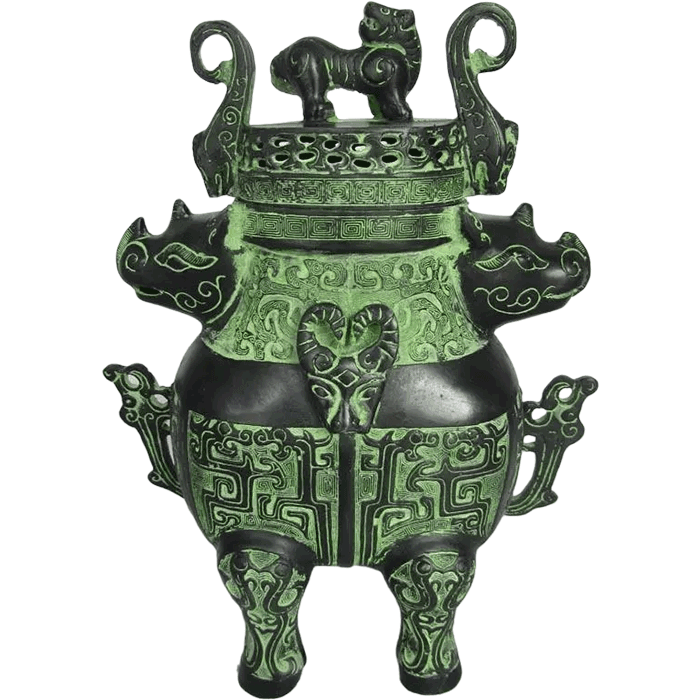
Houmuwu Ding bronze reproduction: weight and stability
Houmuwu Ding bronze reproduction: weight, walls, and stability for exhibition planning
Large ceremonial bronze vessels create a powerful focal point in museums, cultural venues, hotel lobbies, corporate collections, and public exhibitions. However, a large ding is not simply a decorative object. Its final weight, wall construction, leg geometry, center of gravity, transportation route, and base connection must be considered together before casting begins.
For exhibit planners and professional buyers, the technical feasibility stage should establish whether the proposed object can be safely cast, moved, installed, maintained, and displayed in its intended setting. A visually convincing vessel that cannot pass through a loading entrance, sit securely on a floor, or be serviced after installation may create avoidable cost and schedule risks.
Luoyang Yichuan Bronze Craft Co., Ltd. manufactures bronze vessels, sculptures, incense burners, Buddhist statues, mirrors, and custom bronze artworks in Yichuan County, Luoyang. With a 3,000-square-meter production area and more than 30 skilled craftsmen, including bronze-casting masters and finishing artisans, the company can support discussions from a single custom prototype to a bulk production program. For large vessel projects, the most productive starting point is a clear engineering brief rather than a photograph alone.
Why a Houmuwu Ding bronze reproduction requires early technical review
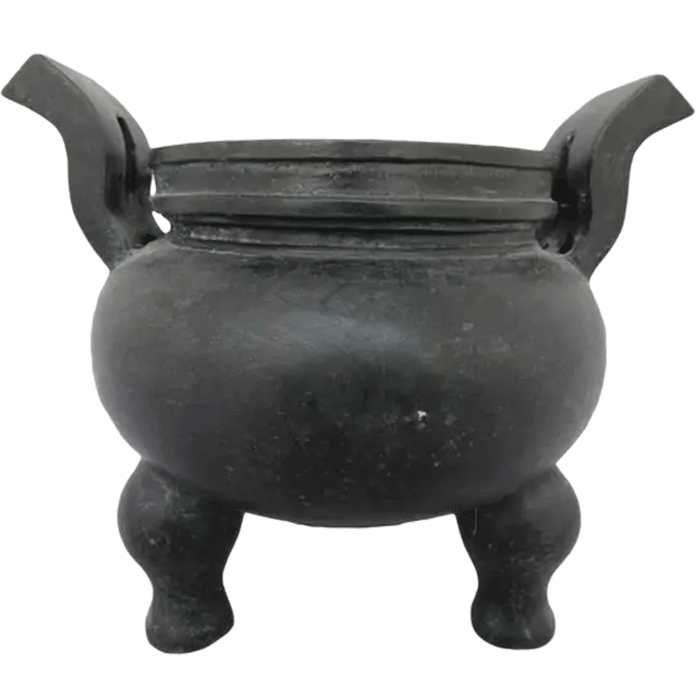
A ding-inspired vessel usually combines a broad rectangular or square body, heavy rim sections, projecting handles, ornamental surfaces, and multiple legs. These elements are visually important, but each one affects the finished mass and the way loads are transferred to the floor. On a large reproduction, small changes in dimensions can produce a substantial increase in bronze volume.
Buyers should first define the intended purpose of the piece. A museum-style interpretation, a lobby centerpiece, a prop for a temporary exhibition, and an outdoor landmark may have different requirements for wall thickness, base treatment, surface finish, mounting, and handling. A project that will remain indoors on a reinforced plinth does not face the same loading and environmental conditions as a vessel placed in a public outdoor plaza.
Historical reference is useful, but a reproduction should not be assumed to duplicate every construction feature of an ancient object. The design team should agree on which details are essential: overall silhouette, taotie-style ornament, handles, inscriptions, leg profile, surface texture, patina character, or a particular display scale. For historical context, buyers may consult this overview of the houmuwu square cauldron while preparing a reference package.
At the feasibility stage, it is helpful to separate three questions:
- Visual fidelity: Which motifs, proportions, textures, and patina effects must be retained?
- Structural practicality: What wall sections, internal supports, leg dimensions, and joining methods are appropriate for the scale?
- Installation safety: Can the object be delivered, lifted, positioned, and secured without exceeding site limitations?
Answering these questions early reduces the risk of redesign after mold preparation or after the exhibition contractor has already selected a pedestal.
Estimating weight from bronze volume and construction geometry
Weight is one of the first figures an exhibit planner needs, yet it should not be treated as a simple estimate based only on height. A tall vessel with modest wall sections may weigh less than a lower vessel with a thick rim, dense relief, solid-looking legs, and substantial handle construction. The most reliable estimate is developed from the approved three-dimensional geometry and the planned casting method.
Start with the external envelope
The external envelope includes the overall height, body length and width, handle projection, leg spread, rim thickness, and any pedestal or hidden mounting structure. These dimensions affect more than visual scale. They determine crate size, door clearance, forklift access, crane reach, and the footprint required for safe placement.
Exhibition teams should provide the manufacturer with the following information:
- Maximum permitted object height, width, and depth.
- Floor loading information and any limits imposed by the building engineer.
- Doorway, elevator, corridor, loading dock, and turning clearances.
- Available lifting equipment, including lifting capacity and hook height.
- Whether the vessel must be delivered in one piece or assembled on site.
- Whether visitors can touch the object or whether barriers will be used.
These constraints may affect the optimal scale more than a visual rendering does. A design that fits well in an open gallery may still be impractical if its transport crate cannot reach the final room.
Calculate metal volume rather than relying on appearance
For planning purposes, the casting team evaluates the volume of the bronze shell and the volume of major solid or reinforced sections. The vessel body, rim, handles, legs, decorative projections, internal ribs, joining areas, and mounting plates must all be included. If the design is hollow, the internal cavity geometry is as important as the outer profile.
Material density may vary with alloy composition and casting details, so final mass should be confirmed from the approved model, selected Cu-Sn bronze alloy, and production plan. It is better to use a documented calculation range during early budgeting and update it after the mold and engineering details are approved. This approach gives display contractors a realistic basis for selecting plinths, lifting equipment, and floor protection.
Luoyang Yichuan Bronze Craft Co., Ltd. uses premium Cu-Sn bronze alloy and the traditional lost-wax casting method. For a large custom vessel, lost-wax production allows the team to evaluate ornament depth, transitions between thick and thin areas, and the practical division of complex forms before final casting. Hand chasing and polishing can then refine cast details, while antique or modern patina finishing can be selected to match the exhibition concept.
Include non-bronze components in the handling plan
The final installation load may be greater than the bronze casting alone. A complete display system can include an internal steel frame, hidden anchors, a stone or metal plinth, vibration pads, leveling components, a protective cover, and shipping supports. These parts should be listed separately so that the venue understands both the object weight and the total floor load.
For temporary installations, planners should also distinguish between static display weight and moving weight. A vessel may be stable once positioned, but its center of gravity can shift during lifting or while crossing ramps. The rigging plan should therefore be prepared around verified lifting points and approved handling orientation, not assumed from the visual shape of the vessel.
Wall thickness: balancing visual authenticity and casting reliability
Wall thickness is central to the design of a large bronze vessel. It affects mass, stiffness, cooling behavior, surface quality, resistance to accidental impact, and the ability to reproduce fine relief. A wall that appears uniform from the outside may need carefully managed section transitions inside to support successful casting and finishing.
There is no single wall thickness that is correct for every project. The required section depends on the scale of the vessel, the relief depth, the shape of the corners, the handle and leg configuration, the intended indoor or outdoor environment, and whether the object includes hidden support features. The correct solution is a project-specific design decision.
Thick sections and thin sections behave differently
Very thick areas can increase weight rapidly and may require additional attention during casting and cooling. Conversely, very thin areas may be more vulnerable to distortion, damage during handling, or loss of crispness in complex ornament. Sudden changes between thick and thin sections should be assessed because they can complicate metal flow and finishing work.
On a ding form, certain locations deserve particular review:
- The upper rim, where visual weight and structural stiffness often meet.
- Corner transitions, which combine geometric complexity with ornamental detail.
- Handle roots, where projecting components meet the vessel body.
- Leg-to-body junctions, where vertical load is transferred into the supports.
- Areas behind deep relief, where the exterior pattern affects the available internal wall section.
- Bottom surfaces and hidden connection zones, especially when anchors or a support frame are required.
Buyers seeking an antique-style surface should understand that patina does not replace structural design. A dark brown, green, black, or mixed antique finish may enhance the appearance of age and depth, but the vessel still needs suitable wall construction and stable support beneath the finish.
For related background on materials, the comparison of bronze and brass can help procurement teams use more accurate terminology when reviewing alloy requirements.
Stability begins with the legs, base, and center of gravity
Stability is not determined only by the vessel’s total weight. A heavy object can still be vulnerable if its support footprint is too narrow, its legs are uneven, its center of gravity is elevated, or the floor surface is not level. Large ding vessels require a systematic review of how the body load passes through each leg and into the display base or structural floor.
Evaluate the support footprint
The support footprint is the effective area defined by the points where the legs or base contact the plinth. A wider and well-proportioned footprint generally provides better resistance to tipping than a narrow one, but the final design must also retain the intended historical silhouette. If a concealed stabilization system is needed, it should be designed so that it does not distract from the vessel’s visible character.
Possible stability measures may include a fitted plinth, discreet locating pins, concealed brackets, internal reinforcement, or anchoring designed around the exhibition site. The appropriate option depends on the display environment, public access level, seismic requirements where applicable, and whether the installation is permanent or temporary.
For public-facing projects, planners should discuss foreseeable contact risks. Children leaning on a leg, cleaning equipment striking the base, vibration from nearby activity, or accidental movement during event setup can all affect a freestanding object. A barrier, elevated platform, or fixed connection may be justified even when the vessel is not intended for outdoor use.
Keep the center of gravity under control
The center of gravity should remain within a safely supported area during normal display conditions. Projecting handles, a tall upper body, dense rim ornament, and uneven internal reinforcement can influence balance. The casting team should consider the finished object as a complete assembly rather than treating the body, legs, and handles as unrelated decorative elements.
If the vessel must be divided for transportation and assembled at the venue, the connection strategy deserves special attention. Joint locations should support accurate alignment, controlled load transfer, and a finished appearance compatible with the approved patina. The installation crew should receive clear information on the correct sequence of assembly, supported lifting points, and final leveling checks.
Large-scale custom work benefits from a manufacturer that can coordinate aesthetic and production considerations. Luoyang Yichuan Bronze Craft Co., Ltd. has an annual output of more than 50,000 bronze art pieces and supports projects from one custom sculpture onward, with bulk order terms evaluated according to size and design complexity. This flexibility is useful for buyers who need a prototype or scale model reviewed before authorizing a larger exhibition version.
From approved drawing to safe delivery and placement
A successful project moves through defined checkpoints. The earlier technical information is documented, the easier it becomes to coordinate the manufacturer, curator, architect, display designer, freight provider, and installation contractor.
- Define the reference scope. Provide photographs, drawings, target dimensions, desired decorative details, and patina expectations.
- Confirm the display setting. Identify indoor or outdoor placement, floor type, access route, lighting, visitor distance, and security requirements.
- Review the preliminary model. Confirm external dimensions, likely wall construction, leg configuration, handle projection, and support strategy.
- Develop a weight and handling estimate. Use the proposed geometry and construction plan to guide plinth, freight, and rigging decisions.
- Approve finish samples. Review antique or modern patina direction under lighting conditions similar to the final venue.
- Plan packaging and shipping. Confirm crate dimensions, protective materials, lifting access, and receiving procedures before dispatch.
- Inspect after installation. Verify level, support contact, finish condition, anchoring where used, and the absence of transport damage.
The company operates under an ISO 9001 quality management system and states that its products comply with export quality inspection standards for art crafts. Quality inspection is completed before every shipment. For fragile large works, export-compliant protective packaging is especially relevant because surface edges, handles, and legs may need protection from vibration and impact during transit.
In the event of a confirmed casting defect, Luoyang Yichuan Bronze Craft Co., Ltd. offers free replacement, and after-sales support includes patina touch-up and restoration guidance. Buyers should still document receiving inspection procedures in advance, including who will inspect the crate, when photographs will be taken, and how any issue will be reported after delivery.
Questions buyers should ask before approving production
Before issuing a purchase order, exhibition planners should request a practical discussion of the points below. These questions encourage a clear technical record and help avoid assumptions between the buyer, designer, and fabricator.
- What are the confirmed overall dimensions, including handles and hidden supports?
- What is the estimated finished bronze weight and total installed weight?
- How will wall sections, leg connections, and rim areas be constructed?
- Will the object be cast as one unit or as multiple sections?
- What lifting points and handling orientation are recommended?
- What floor, pedestal, or anchoring information is required from the venue?
- How will the antique or modern patina be sampled and approved?
- What packaging dimensions and unloading equipment will be needed?
- What inspection standards will be applied before shipment?
Buyers who need an integrated design discussion can customize a bronze sculpture through the company’s custom project process. This is particularly valuable when a ding vessel must match an existing collection, architectural palette, or interpretive exhibition plan.
Choosing a feasible path for a large ceremonial bronze vessel
A large bronze ding should be evaluated as both an artwork and a load-bearing display object. Weight depends on actual metal volume and reinforcement, wall construction influences casting reliability and visual detail, and stability depends on a controlled center of gravity, properly designed legs, and a suitable display base. These factors should be settled through drawings, model review, and installation planning before production proceeds.
For buyers sourcing ceremonial vessels alongside other collection pieces, Luoyang Yichuan Bronze Craft Co., Ltd. also provides Chinese bronze sculpture options that can support a coordinated bronze display program. Whether the requirement is a single interpretive vessel or a larger cultural installation, a disciplined feasibility review will help align historic appearance, manufacturing practicality, freight planning, and safe final placement.