Houmuwu Ding Bronze Reproduction & Inscription Accuracy
Achieving Historical Fidelity in Your Houmuwu Ding Bronze Reproduction
The Houmuwu Ding, formerly known as the Simuwu Ding, stands as a monumental testament to the casting prowess of China's Shang Dynasty. As the heaviest piece of ancient bronzeware ever discovered, its historical and cultural significance is immense. For museums, educational institutions, and collectors of fine heritage art, acquiring a replica of this magnificent vessel is a goal. However, the value of such a reproduction lies not only in its scale and form but also in its fidelity to the original, particularly concerning the three characters inscribed on its interior wall: "后母戊" (Hòu Mǔ Wù). This inscription is the vessel's soul, identifying it as a ritual object created in honor of King Wu Ding's consort, Fu Jing. For any serious acquisition, understanding the process and challenges of replicating these characters is paramount.
This guide serves as a comprehensive FAQ for curators, educators, and heritage retailers who are assessing the documentary and interpretive value of a bronze replica. We will delve into the complexities of inscription accuracy, the casting techniques required to achieve it, and the quality assurances that underpin a truly museum-grade reproduction. As a leading manufacturer of chinese bronze sculpture, Luoyang Yichuan Bronze Craft Co., Ltd. is committed to transparency and excellence in every piece we create.
The Houmuwu Ding: Why Inscription Fidelity is Non-Negotiable
Before exploring the technical aspects of replication, it is essential to appreciate the inscription's importance. The characters "后母戊" are not merely decorative; they are a direct link to the vessel's purpose and provenance. They confirm its identity as a ritual food vessel (a ding) dedicated to a specific royal figure, providing invaluable insight into the ancestor worship practices of the Shang Dynasty elite. An inaccurate, illegible, or poorly rendered inscription fundamentally undermines the replica's educational and historical value. It transforms a piece of documented history into a mere decorative object.
For a reproduction to serve its purpose in an exhibition, a classroom, or a curated collection, it must faithfully represent the epigraphic evidence of the original. This includes the style of the oracle bone script characters, their placement within the vessel, and even the subtle imperfections that tell the story of its age and creation. A high-quality replica allows viewers to engage with the artifact on a deeper level, connecting them to the historical narrative it represents. Therefore, the standards for inscription accuracy must be as rigorous as those for the vessel's overall dimensions, weight, and decorative motifs.
FAQ: Replicating Ancient Bronze Inscriptions
Sourcing a large-scale bronze replica involves significant investment and research. The following questions address common concerns for discerning B2B clients focused on historical accuracy.
What are the primary challenges in replicating ancient bronze inscriptions?
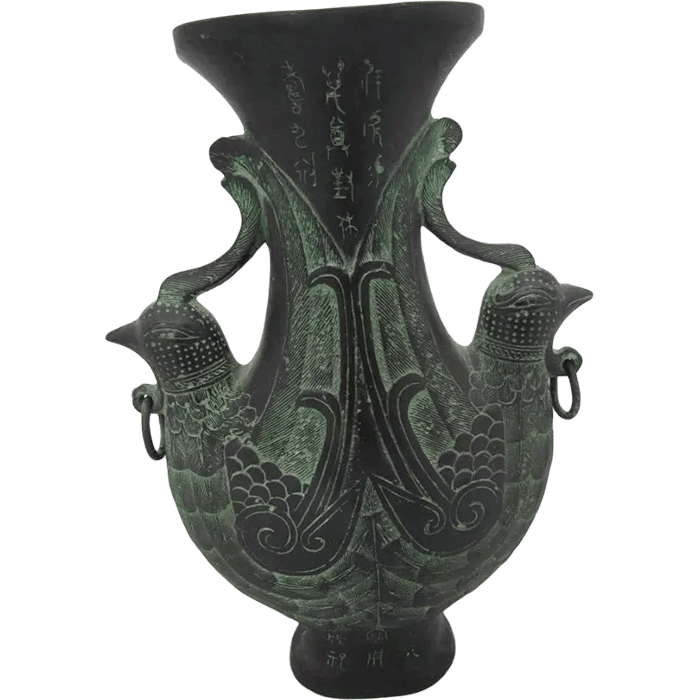
Replicating inscriptions from artifacts nearly 3,300 years old presents several distinct challenges. The first is sourcing high-fidelity reference materials. The original Houmuwu Ding is housed in the National Museum of China, and direct access is limited. Therefore, accuracy depends on meticulous study of high-resolution photographs, academic rubbings (tàběn), and scholarly research on Shang Dynasty epigraphy. Any ambiguity in the source material can lead to inaccuracies in the final product.
The second challenge lies in the nature of the ancient script itself. The characters on the Ding are an early form of Chinese script, closely related to oracle bone script. The strokes are robust and possess a certain primitive power that differs significantly from modern characters. Capturing this stylistic nuance requires an artisan with a deep understanding of ancient calligraphy and the skill to translate it into a three-dimensional medium.
Finally, the condition of the original artifact must be considered. Centuries of burial have resulted in corrosion and wear, which can obscure parts of the inscription. A key decision in the replication process is whether to reproduce the inscription as it appears today—with its historical imperfections—or to recreate it as it would have looked when first cast. Each approach has different implications for the final piece's interpretive value. At Luoyang Yichuan Bronze Craft Co., Ltd., we consult with clients to determine the most appropriate approach for their specific needs, whether for academic study or aesthetic display.
How does Luoyang Yichuan Bronze Craft Co., Ltd. ensure inscription accuracy?
Our commitment to accuracy is embedded in our production philosophy, which combines rigorous research with master craftsmanship. Our process begins with a thorough analysis of all available documentation on the houmuwu square cauldron. Our team of over 30 skilled craftsmen includes masters who specialize in ancient bronze replication and understand the specific forms of Shang Dynasty script.
The crucial step is the creation of the master model. This is not simply a mechanical process; it is an artistic and scholarly endeavor. The characters are meticulously carved into the model, ensuring that the stroke weight, character balance, and stylistic feel align with authenticated examples of the period's script. This model then becomes the basis for the traditional lost-wax casting process, a method renowned for its ability to capture the most intricate details.
What casting methods are used to preserve the fine details of inscriptions?
We exclusively use the traditional lost-wax casting method (cire-perdue) for all our intricate bronze artworks. This time-honored technique is unparalleled in its ability to render fine details, making it ideal for pieces with complex inscriptions and decorative patterns. The process involves several key stages:
- Wax Model Creation: A precise wax model of the Ding, including the interior inscription, is created. This is where the initial accuracy is established.
- Ceramic Shell Molding: The wax model is coated in multiple layers of a ceramic slurry, which is then hardened to create a durable mold. The detail on the inside of this mold is a perfect negative of the wax model.
- Dewaxing: The ceramic shell is heated, causing the wax to melt and run out, leaving a hollow, detailed cavity.
- Bronze Pouring: Molten, premium bronze alloy (Cu-Sn) is poured into the heated ceramic mold, filling every crevice, including the fine lines of the inscription.
- Shell Removal: Once the bronze has cooled and solidified, the ceramic shell is carefully broken away, revealing the raw bronze casting.
This method ensures that the inscription is an integral part of the casting, not an addition etched or engraved after the fact. The result is a level of detail and authenticity that cannot be achieved with simpler casting methods like sand casting.
The Role of Finishing in Inscription Legibility
A perfect casting is only the beginning. The subsequent finishing processes are critical for ensuring the inscription is both legible and historically convincing. After the raw casting is freed from its mold, it undergoes several stages of hand-finishing by our specialized artisans.
Hand Chasing and Polishing
Hand chasing is the meticulous process of refining the surface of the bronze with small chisels and tools. Our artisans use this technique to remove any minor imperfections from the casting process and to sharpen the edges of the inscription's characters. This requires a delicate touch to enhance clarity without altering the original form or style of the script. The area around the inscription is then polished to create a smooth surface that provides a clear background for the characters.
Patina Application and Color Matching
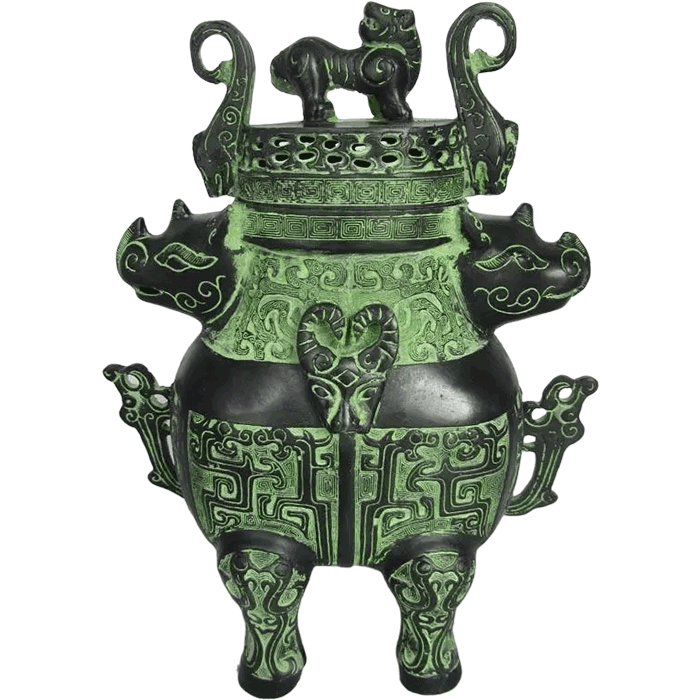
Perhaps the most crucial finishing step for historical replicas is the application of the patina. A patina is the colored layer on the surface of the bronze that develops over time due to oxidation. We offer a range of patina finishing options, from modern polished looks to complex antique finishes that replicate the mottled green, blue, and earth tones of excavated artifacts.
For a Houmuwu Ding bronze reproduction, achieving a consistent and authentic patina is a key challenge we solve for our clients. Our artisans are masters of patina color matching. They use a proprietary blend of chemicals and application techniques to create a patina that looks naturally aged. For inscriptions, this is particularly important. The patina is applied carefully to enhance the legibility of the characters, often creating a subtle contrast between the recessed lines of the script and the surrounding surface. This ensures the inscription is clearly visible without looking artificial or freshly painted, preserving the piece's historical integrity.
Quality Assurance for Your Sourcing Needs
At Luoyang Yichuan Bronze Craft Co., Ltd., we understand the sourcing pain points faced by international B2B buyers. Concerns about quality consistency, shipping damage, and post-sale support can be significant barriers. We have built our operations to address these issues directly.
Our 3,000-square-meter production facility in Yichuan County, Luoyang, operates under an ISO 9001 certified quality management system. Every piece, from a single custom prototype (MOQ from 1 piece) to a bulk production run, undergoes a rigorous quality inspection before shipment. This inspection specifically verifies the accuracy of form, the quality of the casting, the consistency of the patina, and the fidelity of any inscriptions. We guarantee our work and offer free replacement for any casting defects.
Furthermore, we specialize in creating export-compliant protective packaging for fragile and large-scale sculptures, ensuring your investment arrives safely. For institutions looking to build or expand their collections of bronze statues with different themes, our capacity of over 50,000 pieces annually and our dedication to craftsmanship make us a reliable partner. To learn more about our company and heritage, please read more about scultmart.
By partnering with us, you gain access to a team of master craftsmen dedicated to preserving the legacy of Chinese bronze art through faithful and high-quality reproductions.