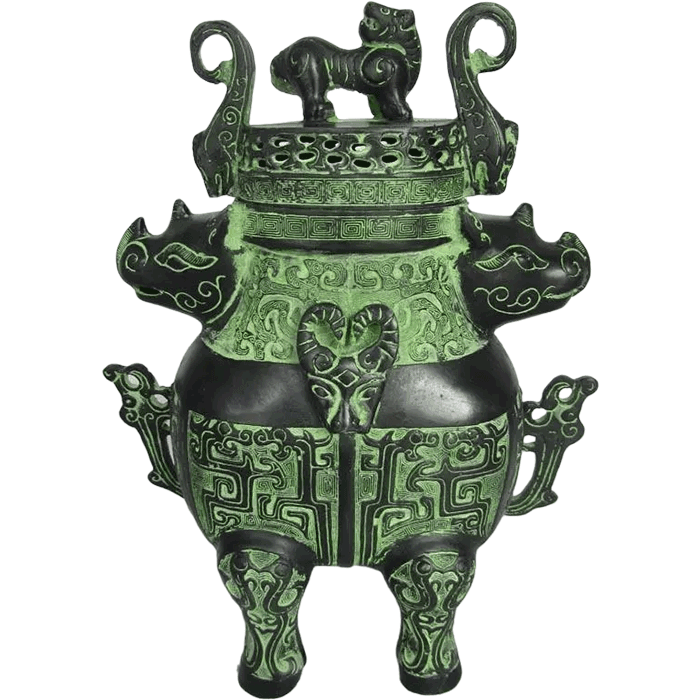
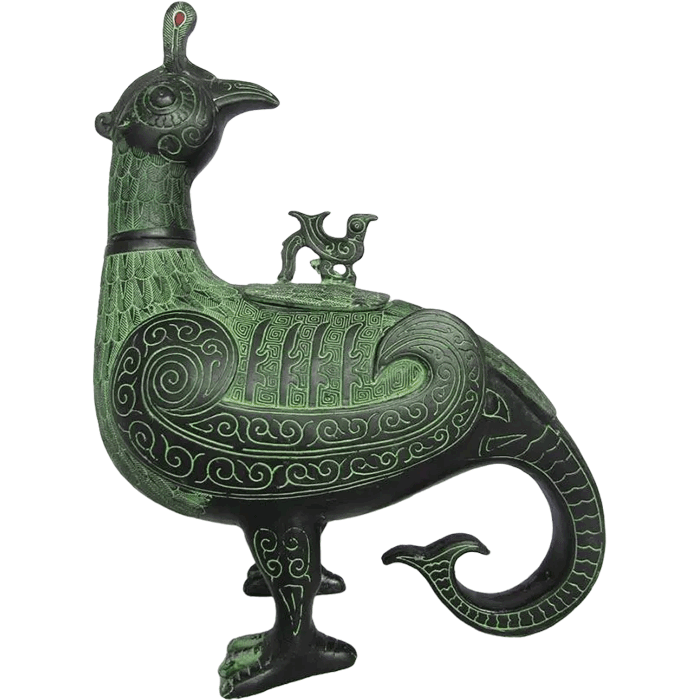
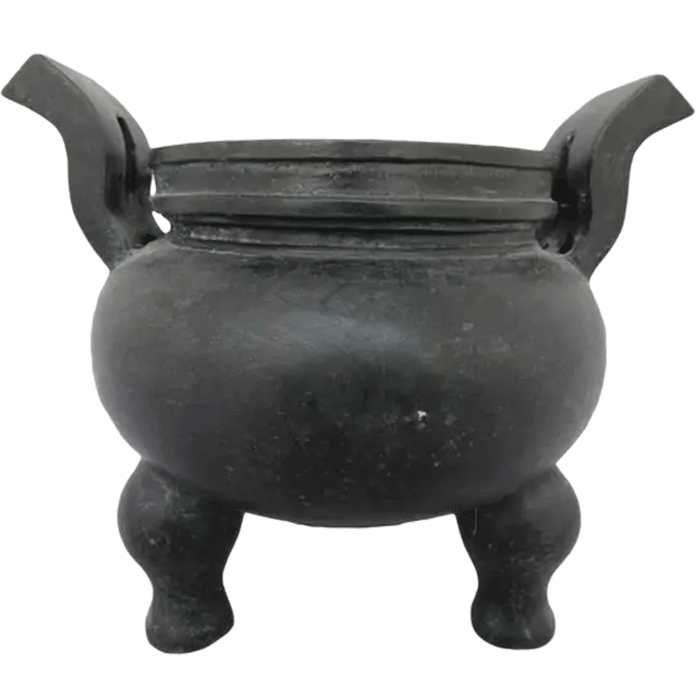
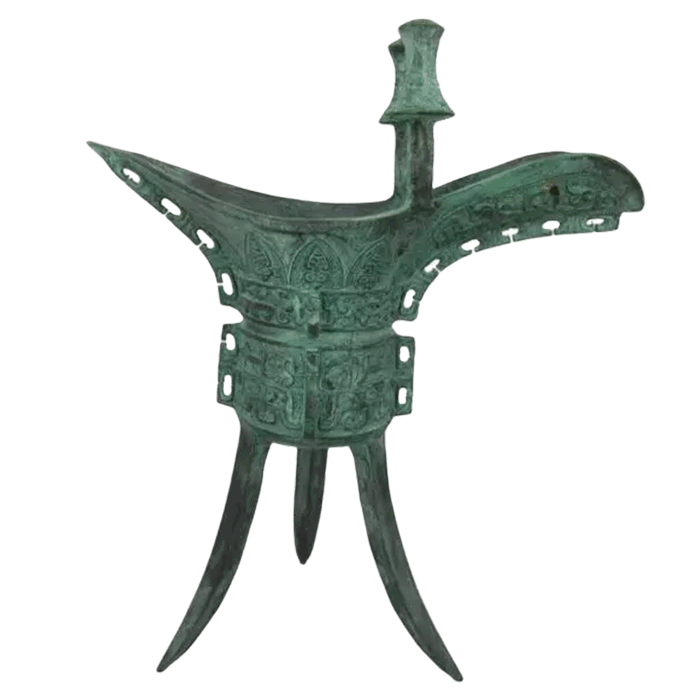
Houmuwu Ding Bronze Reproduction: Taotie Relief
Houmuwu Ding bronze reproduction: matching taotie relief with decorative accuracy
For product developers, museum-shop teams, cultural-gift buyers, and interior-art buyers, the taotie relief is often the first feature used to judge whether a large ritual-vessel replica looks convincing. A square ding can have the correct outline, handles, legs, and bronze color, yet still fail visually when its decorative bands are shallow, asymmetrical, overly smooth, or positioned without reference to the vessel’s structure.
When evaluating a reproduction during the design-reference stage, the goal is not simply to request “more detail.” The goal is to define which decorative elements control recognition, how those elements should relate to the vessel panels, and what level of hand-finishing is needed after casting. This approach helps procurement teams compare proposals more clearly before approving a prototype, a display piece, or a larger cultural-gift order.
Luoyang Yichuan Bronze Craft Co., Ltd. produces bronze vessels, sculptures, incense burners, Buddhist statues, mirrors, and custom bronze artworks. Its 3,000-square-meter production area in Yichuan County, Luoyang, supports work by more than 30 skilled craftsmen, including bronze-casting masters and finishing artisans. That combination of casting and hand-finishing capability is particularly relevant when a relief pattern needs to remain visually clear after mold making, casting, chasing, polishing, and patina application.
Why taotie relief determines the credibility of a Houmuwu Ding bronze reproduction
The taotie motif is not a separate ornament that can be placed anywhere on the surface. In a successful design, the relief works with the ding’s geometry. The main face should read as a balanced visual field, while the relief frames, central divisions, projecting forms, and surrounding borders should reinforce the weight and formality of the vessel.
Buyers should therefore assess decorative accuracy at three levels:
- Macro structure: the location of each patterned zone on the main body, handles, corners, and legs.
- Motif organization: the relationship between the central axis, paired eyes, horns, brows, curls, and secondary lines.
- Surface character: the relief depth, edge sharpness, hand-worked transitions, patina contrast, and metal texture.
A pattern can be historically inspired yet still appear weak if these three levels are not coordinated. For example, deep lines alone do not produce a strong relief. If the central axis is shifted, if the paired elements differ noticeably in scale, or if the border pattern crowds the main motif, the panel may look unbalanced from normal viewing distance.
For a reference-oriented project, provide the supplier with front, side, corner, top, and close-up images whenever available. It is also useful to identify the most important viewing direction. A vessel placed on a pedestal in a hotel lobby, gallery, reception area, or cultural exhibition may be viewed mainly from the front, whereas a tabletop gift or display object may be inspected from all four sides. The required level of finish should follow the intended viewing conditions.
Buyers who are building a broader ancient-bronze collection can also review the visual vocabulary used across Chinese bronze sculpture categories. Comparing vessel forms, animal motifs, surface treatments, and decorative density can help a design team establish a consistent collection direction before finalizing a single piece.
Build a usable reference package before requesting a quotation
A clear reference package reduces ambiguity. It also gives the manufacturer a practical basis for judging whether the requested relief should be sculpted directly, adapted from supplied images, or developed as an interpretive pattern that retains the desired visual character.
For the taotie decoration, a useful package should include more than one overall photograph. Close-up material is essential because low-resolution images often hide the exact junctions between raised and recessed surfaces. A relief that looks simple in a distant image may contain several layers of lines, small curves, narrow gaps, and transitions that need to be planned before wax work begins.
Reference materials to prepare
- Overall front, side, rear, and top views of the chosen design reference.
- Close-up images of the principal relief panel and its surrounding borders.
- Marked images identifying the preferred front face and the most important visual zones.
- Target dimensions, including total height, body width, opening size, handle projection, and leg proportions.
- A scale reference, such as a dimensioned drawing or an object of known size.
- Notes indicating whether the goal is close visual replication, a simplified decorative interpretation, or a contemporary adaptation.
- Patina expectations, including dark brown, black-brown, green-toned, layered antique, or a cleaner modern bronze finish.
- Installation requirements, such as indoor display, plinth mounting, outdoor placement, or protective packaging for shipment.
For buyers using a specific historical image as the source, it is helpful to distinguish between “must match” features and “acceptable variation” features. The overall vessel silhouette, placement of the central mask, relief depth, and leg alignment may be non-negotiable. Minor background textures or very small decorative marks may allow some flexibility, especially when the final object is intended for viewing at a distance.
This distinction matters because bronze casting is a dimensional process, not a flat printing process. Enlarging or reducing a reference can change the apparent width of channels, the prominence of raised forms, and the amount of visual separation between adjacent lines. A pattern that works at one size may need adjustment to remain legible at another size.
Evaluate relief composition, symmetry, and depth
The most reliable way to assess taotie relief is to examine the decorative panel as a controlled composition. Start from the central vertical axis and move outward. The paired forms on the left and right should create a stable visual balance, but they should not look mechanically stamped or excessively smooth. The strongest results usually retain controlled hand-finished character while preserving the intended symmetry.
Check the central axis first
The centerline affects the entire reading of the pattern. If it drifts to one side, the eyes, brows, horns, curls, and outer borders may all appear uneven even when each individual detail is well cast. Ask for a front elevation drawing, a marked proof image, or a wax-stage review that shows the centerline and the relationship of the motif to the vessel edges.
On a square vessel, the decorative panel should also be evaluated in relation to the corners. The corners create visual boundaries that can compress the pattern if the motif is too wide. Conversely, if the motif is too narrow, the body can look empty and the relief may lose its authority. The surrounding ground and border lines should provide enough space for the central image to read clearly.
Specify relief hierarchy rather than only relief depth
Not every line needs equal height. A strong decorative panel generally uses hierarchy: primary forms should be easier to see from several steps away, while secondary scrolls and interior lines can remain more subtle. When all lines are equally raised, the pattern can become visually noisy. When every line is too shallow, the panel may disappear after dark patina is applied.
During design review, discuss the following points:
- Which elements should be the highest and most prominent.
- Which recessed channels must remain open and visible after patination.
- Whether the borders should be raised, incised, or developed through contrasting texture.
- How sharp the motif edges should appear after hand chasing.
- Whether slight surface irregularity is desired to support an antique appearance.
Luoyang Yichuan Bronze Craft Co., Ltd. uses premium Cu-Sn bronze alloy and the traditional lost-wax method for bronze work. This process is well suited to relief-oriented projects because the wax stage allows decorative modeling to be reviewed before metal casting. After casting, hand chasing can clarify selected lines and transitions, while polishing and patina finishing can be adjusted for either antique or modern visual requirements.
Plan the relationship between casting, hand chasing, and patina
Decorative accuracy does not end when the bronze leaves the mold. The final appearance depends on a sequence of decisions: casting cleanup, chasing, edge refinement, texture retention, polishing level, and patina application. Buyers should review these stages as connected operations rather than treating patina as a last-minute color choice.
Hand chasing is especially important for large ritual-vessel replicas because it can restore clarity to relief lines after casting. It should be used carefully. Over-chasing can make a pattern look unnaturally sharp or newly engraved, while insufficient finishing can leave transitions soft and indistinct. The desired result is a controlled surface in which the main motif remains readable without looking disconnected from the cast body.
Patina also changes the perceived depth of the taotie pattern. A darker finish can emphasize high points through gentle polishing, while deeper recesses retain a darker tone. A layered antique look may use tonal variation to reveal the relief, but excessive contrast can make the object look decorative in a modern way rather than cohesive as a vessel reproduction. For a restrained result, request sample swatches or photographed finish options under neutral lighting.
The company offers antique or modern patina finishing and provides after-sales support for patina touch-ups and restoration guidance. For a buyer commissioning display pieces that may be moved, installed, or periodically maintained, this support can be relevant to long-term presentation planning.
It is also useful to compare bronze with other copper-based materials before approving a finish specification. The article on bronze and brass differences can help purchasing teams use clearer material terminology when discussing color, durability expectations, and surface treatment with stakeholders.
Create an approval checklist for prototypes and production orders
A detailed approval checklist turns subjective comments such as “make it more antique” or “make the mask stronger” into actions that can be checked. This is valuable for single display works as well as repeat cultural-gift programs. Luoyang Yichuan Bronze Craft Co., Ltd. supports custom sculpture orders from one piece and can negotiate bulk production requirements according to size and design complexity, so a defined approval process can be applied whether the project starts with one prototype or expands into multiple units.
Recommended visual approval points
- Overall silhouette: Confirm that body width, height, handles, opening, and legs match the approved drawing or reference proportions.
- Panel placement: Verify that the taotie relief is centered on each intended face and aligned consistently with corners and borders.
- Motif symmetry: Check paired eyes, horns, brows, curls, and outer elements from a direct front view.
- Relief hierarchy: Ensure primary forms remain visible at normal viewing distance and secondary lines do not become clogged.
- Edge quality: Review whether the chased edges are crisp enough without appearing excessively machined.
- Patina consistency: Compare the selected color and tonal variation across the body, corners, handles, and legs.
- Surface defects: Identify casting defects, unwanted pits, rough seams, or finishing marks that distract from the relief.
- Packaging plan: Confirm protective packing requirements for handles, legs, corners, and raised decorative areas before export shipment.
| Review stage | Buyer focus | Useful approval evidence |
|---|---|---|
| Reference confirmation | Motif layout and vessel proportions | Marked reference images and dimensioned drawing |
| Wax or model review | Relief placement, symmetry, and major forms | Front, side, and close-up photographs |
| Post-casting review | Cast completeness and relief clarity | Unfinished metal photographs |
| Finish sample review | Patina tone, polishing level, and contrast | Sample panel or controlled lighting photographs |
| Pre-shipment inspection | Final appearance and protective packaging | Final inspection photographs and packing images |
The company operates under an ISO 9001 quality management system and performs quality inspection before every shipment. Its products also comply with export quality inspection standards for art crafts. For buyers assessing a detailed vessel with raised decoration, these process controls are relevant because damage or overlooked defects around high-relief areas can affect the visual result as well as transport safety. Free replacement is available for casting defects.
Choose a supplier that can translate visual references into bronze work
The right supplier should be able to discuss the design in practical terms: panel alignment, mold divisions, relief thickness, casting feasibility, finishing priorities, patina contrast, and packing protection. A supplier should also be prepared to identify where a supplied reference needs clarification before production begins. This is more useful than accepting a vague image and making unverified assumptions about the relief.
For projects that require a modified scale, a customized inscription area, a presentation base, or a related series of vessels and sculptures, buyers can review how to customize a bronze sculpture as part of the early product-development discussion. A coordinated program may include a ding as the focal piece alongside smaller bronze décor, animal figures, or display-oriented cultural gifts.
Historical context can also help internal design teams explain why certain surface choices matter. The overview of the Houmuwu square cauldron offers a useful starting point for stakeholders who need to connect vessel form with a more informed design brief.
Ultimately, a convincing reproduction is achieved through disciplined visual decisions rather than decorative excess. Define the reference hierarchy, establish the motif’s central axis, specify relief depth by importance, review patina against the intended display environment, and document acceptance criteria before casting. With annual output exceeding 50,000 bronze art pieces and capabilities spanning custom prototypes through bulk production, Luoyang Yichuan Bronze Craft Co., Ltd. can support buyers who need a structured path from decorative reference to finished bronze vessel.