Houmuwu Ding Bronze Reproduction: Size & Script Guide
Crafting an Authentic Houmuwu Ding Bronze Reproduction with Precision in Size and Script
The Houmuwu Ding, formerly known as the Simuwu Ding, stands as a monumental testament to the artistry and metallurgical prowess of China's Shang Dynasty. As the heaviest and largest piece of ancient bronze ware ever discovered, its historical and cultural significance is immense. For museums, cultural institutions, corporate collectors, and designers, acquiring a faithful reproduction is not merely about decoration; it is about capturing a piece of history with integrity. Sourcing a high-quality replica requires a deep understanding of the two most critical elements that define its authenticity: its massive scale and the precise execution of its iconic script.
This guide provides a detailed B2B perspective on what to look for when commissioning a Houmuwu Ding bronze reproduction. We will explore the challenges and nuances of replicating its size and inscriptions, detailing the traditional craftsmanship and modern quality control systems necessary to produce a piece worthy of its legendary predecessor. At Luoyang Yichuan Bronze Craft Co., Ltd., we specialize in transforming historical reverence into tangible, masterfully crafted bronze art, ensuring every detail meets the most rigorous standards.
The Monumental Scale of the Original Houmuwu Ding
The sheer presence of the original Houmuwu Ding is its most striking feature. Discovered in 1939 in Anyang, Henan province, the vessel measures 133 cm in height, 110 cm in length, and 79 cm in width. Its staggering weight of 832.84 kilograms makes it an unparalleled achievement of ancient bronze casting. This monumental scale was not just for aesthetic impact; it signified immense royal power and was used in solemn sacrificial ceremonies dedicated to the king's mother. For any reproduction to be considered faithful, it must first respect these foundational proportions.
Achieving Proportional Accuracy in Reproductions
Replicating this scale presents significant technical challenges. Whether a client requires a 1:1 full-size replica for a museum centerpiece or a scaled-down version for a corporate lobby or private collection, maintaining exact proportionality is paramount. A distorted or inaccurately scaled piece immediately loses its historical credibility.
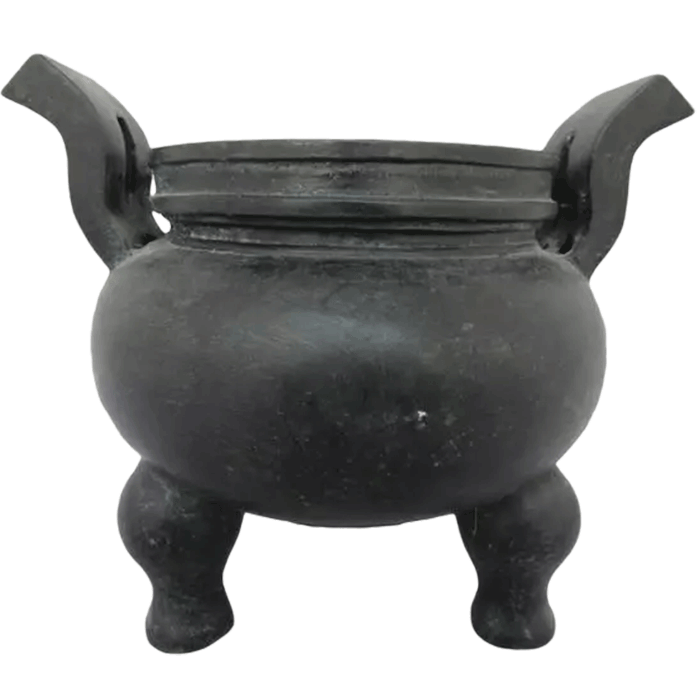
At our 3,000-square-meter production facility, our process begins with meticulous digital or physical modeling based on extensive historical data. Our team of over 30 skilled craftsmen, including master mold makers, ensures that the rectangular cauldron, the four powerful columnar legs, and the two imposing U-shaped handles are all rendered in perfect harmony. This precision is maintained regardless of the final size, from a single custom prototype to large production runs.
The material choice is equally critical. We utilize a premium bronze alloy (Cu-Sn) that not only provides the requisite strength and durability for a large-scale casting but also lends the piece a substantial, authentic weight. This commitment to both proportion and material integrity ensures that every reproduction, large or small, conveys the gravitas of the original artifact. These pieces are a vital part of chinese bronze sculpture collections worldwide.
Deciphering the Script: The "Houmuwu" Inscription
While its size is its most immediate feature, the inscription found on the inner wall of the Ding is what gives it its name and historical context. The three characters, "后母戊" (Hòu Mǔ Wù), are cast in a style consistent with Shang Dynasty oracle bone script. This inscription translates to "Queen Mother Wu," identifying the vessel as a ritual object created by the Shang King Wu Ding in memory of his mother, Fu Jing. The script itself is simple, powerful, and deeply resonant of its era.
The Art of Replicating Ancient Calligraphy in Bronze
For a reproduction, the accurate rendering of these three characters is a non-negotiable element of authenticity. It is a detail that separates a generic decorative object from a serious historical replica. The challenges are numerous:
- Stylistic Accuracy: The characters must be replicated in the correct ancient calligraphic style, capturing the weight, balance, and flow of each stroke as it would have been inscribed nearly 3,300 years ago.
- Casting Clarity: The inscription must be cast with crisp, clear edges. A blurry or shallow inscription is a sign of a low-quality mold or an inferior casting process.
- Authentic Depth: The depth of the characters into the bronze surface must be consistent and deliberate, appearing as an integral part of the vessel rather than a superficial engraving added as an afterthought.
Our artisans achieve this through painstaking attention to detail during the creation of the initial wax model. The inscription is carefully carved into the wax, ensuring every nuance is captured before the casting process even begins. Following the casting, hand-chasing tools are used by our finishing artisans to refine the characters, sharpening their edges and ensuring they meet our exacting quality standards. This meticulous approach guarantees that the historical soul of the vessel is preserved.
The Lost-Wax Casting Method: Achieving Precision in Form and Detail
To create a superior Houmuwu Ding bronze reproduction, the choice of manufacturing method is crucial. We employ the traditional lost-wax casting (cire-perdue) method, a technique refined over millennia that offers unparalleled precision for complex shapes and intricate details. This process, overseen by our ISO 9001 certified quality management system, ensures consistency and excellence from a single piece to an annual output of over 50,000 bronze art pieces.
The lost-wax process involves several intricate stages:
- Master Model Creation: A perfect, full-scale model of the Ding is created in a medium like clay or wax. This is the stage where every detail, from the proportions of the body to the *taotie* (animal-mask) motifs and the internal script, is perfected.
- Wax Replica and Mold Making: A wax replica is made from the master model. This wax version is then covered in multiple layers of a liquid ceramic slurry, which hardens into a rigid shell or mold.
- Dewaxing: The ceramic shell is heated in a kiln. The wax model inside melts and drains out, leaving a perfectly hollow, heat-resistant mold that is an exact negative impression of the final sculpture.
- Bronze Pouring: Molten, premium bronze alloy is carefully poured into the pre-heated ceramic mold, filling every crevice, including the fine details of the inscription and decorative patterns.
- De-shelling and Finishing: Once the bronze has cooled and solidified, the ceramic shell is carefully broken away, revealing the raw bronze casting. The piece then moves to our finishing artisans for chasing, polishing, and patination.
This method allows for the creation of a single, seamless vessel that accurately captures every subtle curve and sharp detail. The flexibility of lost-wax casting is ideal for B2B clients, as it allows us to handle orders ranging from a minimum order quantity (MOQ) of one piece up to large, negotiable bulk orders. This flexibility allows clients to customize a bronze sculpture from sculpmart.com to their exact specifications for any project.
Beyond Casting: The Art of Finishing and Patination
A raw bronze casting is only the beginning. The final stage of production is where the piece is truly brought to life, and it is where many sourcing challenges, such as inconsistent color, can arise. Our comprehensive finishing process addresses these pain points directly.
Hand Chasing and Polishing
After de-shelling, our artisans meticulously inspect the entire surface. Using specialized hand tools, they chase the details of the *taotie* motifs, ensuring every line is sharp and defined. They smooth the surfaces, remove any minor imperfections from the casting process, and prepare the vessel for its final patina. This hands-on approach by our master craftsmen is what elevates a good casting into a great work of art.
Expert Patination
The patina is the surface coloration of the bronze, which develops naturally over centuries or can be induced through the controlled application of chemicals and heat. For a historical reproduction, achieving an authentic-looking patina is essential. We offer a range of finishes:
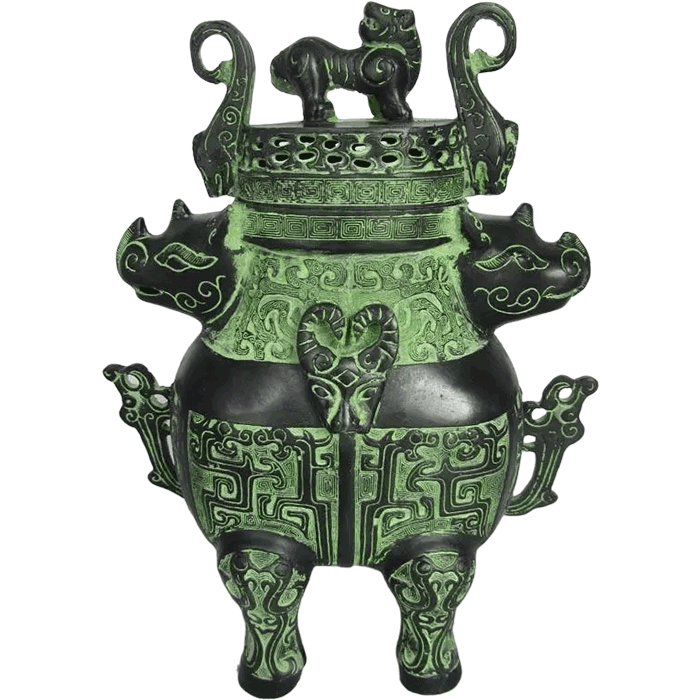
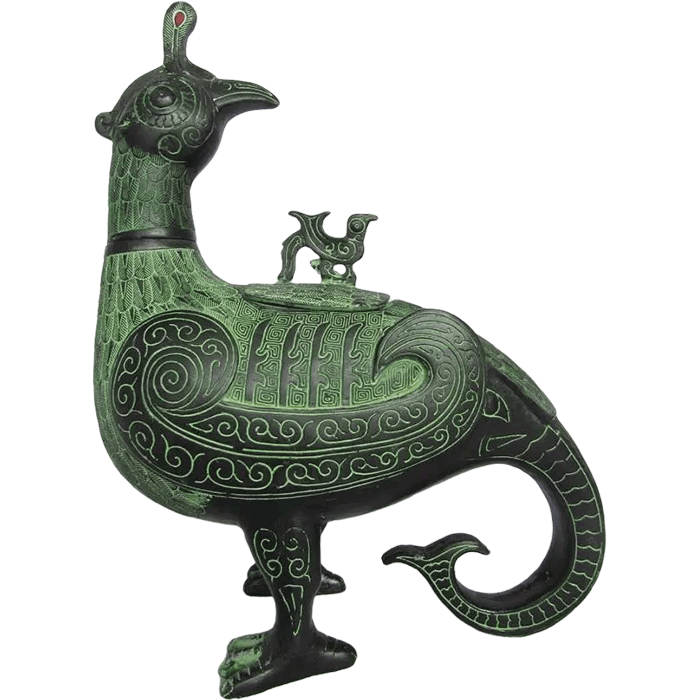
- Antique Patina: We can replicate the classic greenish-blue patina characteristic of ancient excavated bronzes. We solve the common sourcing problem of inconsistent color by using standardized chemical formulas and application techniques, ensuring that every piece in a bulk order has a perfectly matched patina. This aged appearance is crucial for conveying the deep history embodied in the evolution of bronze culture over 2000 years.
- Modern Finishes: For clients seeking a more contemporary look, we can also apply other finishes, such as a rich brown, polished gold, or sleek black patina.
Our commitment to quality extends beyond delivery. We offer after-sales support, including guidance on patina touch-ups and restoration, ensuring the long-term beauty and integrity of your investment.
Sourcing a High-Fidelity Reproduction: Quality and Logistics
When you source a significant piece like a Houmuwu Ding replica, you are investing in a statement of quality and historical appreciation. As a B2B partner, Luoyang Yichuan Bronze Craft Co., Ltd. is structured to provide not only exceptional craftsmanship but also a seamless and reliable procurement experience.
Key Quality Indicators for Buyers
When evaluating a potential supplier, focus on these critical quality benchmarks:
- Dimensional and Proportional Accuracy: The reproduction must be faithful to the scale of the original artifact.
- Detail Fidelity: The script and decorative motifs must be crisp, clear, and historically accurate.
- Material Integrity: The piece should be cast from a high-quality bronze alloy for durability and authentic weight.
- Patina Quality: The patina should be expertly applied, stable, and consistent across all pieces in an order.
Your Reliable Manufacturing Partner
We solve common sourcing pain points by integrating our craftsmanship with robust business practices. Every product we create complies with export quality inspection standards for art crafts. Before any piece leaves our facility, it undergoes a rigorous final quality inspection. In the unlikely event of a casting defect, we offer a free replacement. Furthermore, we address the critical issue of safe transit by using export-compliant protective packaging specifically designed for large and fragile sculptures, ensuring your order arrives in perfect condition, anywhere in the world.
By focusing on the essential details of size and script, and backing our craftsmanship with certified quality systems and dedicated client support, we provide a definitive solution for sourcing historically accurate and artistically superior bronze reproductions.