History of Chinese bronze vessels and ritual use
History of Chinese bronze vessels reveals the central role of ritual use
Chinese bronze vessels are among the most recognizable objects of early East Asian material culture. For curators, museum educators, heritage retailers, and collectors, their value lies not only in their impressive casting quality or decorative patterns. Each form was closely connected with an ancient ritual system that used food, wine, music, ancestry, and political authority to define social order.
Understanding a vessel’s original ritual purpose helps buyers make more meaningful decisions when selecting replicas, display objects, interpretive pieces, or themed collections. A ding tripod, for example, communicates food offerings and rank; a zun suggests ceremonial wine; a hu presents a more elegant storage form; and an incense burner reflects later devotional and domestic traditions. When these objects are displayed without context, they can appear simply decorative. When their ritual use is explained, they become tools for telling a larger story about Chinese civilization.
History of Chinese bronze vessels begins with ancestral ceremony
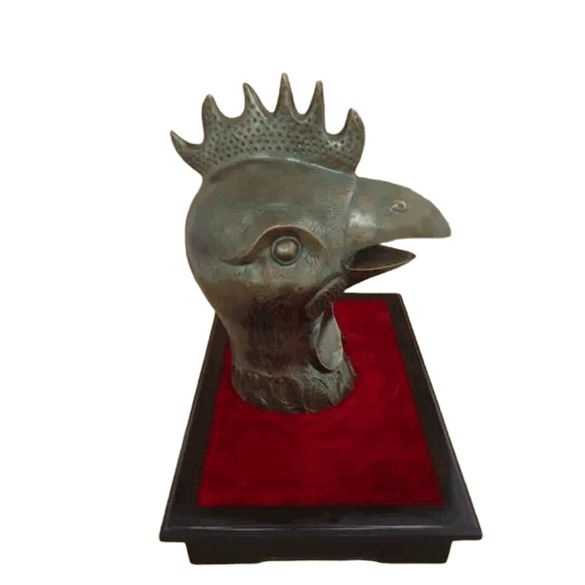
Bronze casting developed in China over a long period, but bronze vessels became particularly important when ruling houses and elite families used them in ceremonies dedicated to ancestors and deities. In early Chinese belief, ancestors remained connected to the living family and could influence prosperity, succession, harvests, and political stability. Ritual offerings created a formal relationship between the living and the ancestral world.
Food and wine were placed in specially designed containers during ceremonies. Rather than being ordinary kitchenware, many bronze vessels were status-bearing ritual instruments. Their material, scale, inscriptions, ornament, and number could all communicate the position of the family that owned them. The ability to commission and use substantial bronze sets was therefore connected with wealth, authority, and access to skilled metalworkers.
For an educational display, it is useful to explain that ritual bronzes were often part of coordinated groups rather than isolated objects. A ceremonial arrangement might include vessels for heating grain, presenting cooked meat, pouring wine, holding fermented beverages, washing hands, and making music. Together, these pieces established an ordered ritual environment.
The vessel’s function also helps explain its shape. Deep bowls, narrow mouths, tripod legs, loop handles, animal-head spouts, and fitted lids were not random stylistic choices. They reflected practical requirements as well as symbolic conventions. A tripod could stand above a heat source; a covered container could protect food; a tall wine vessel could support pouring; and a wide vessel mouth could make contents visible during an offering.
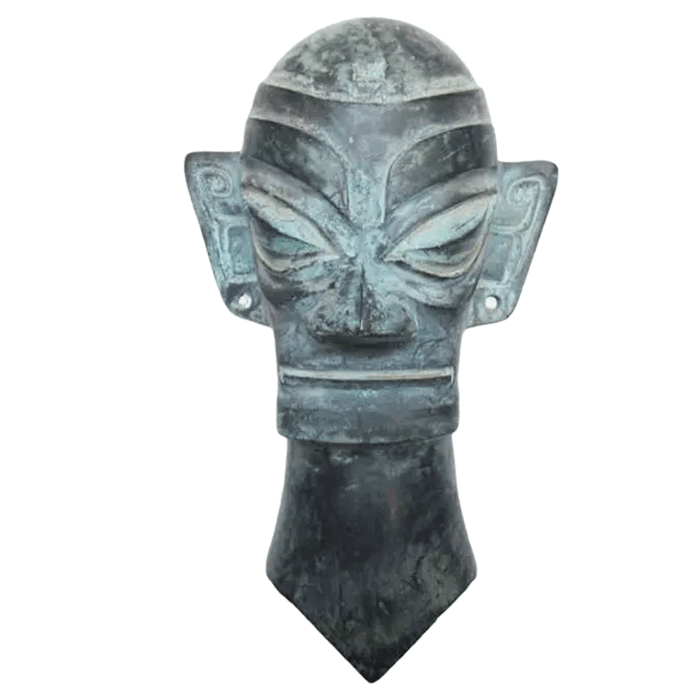
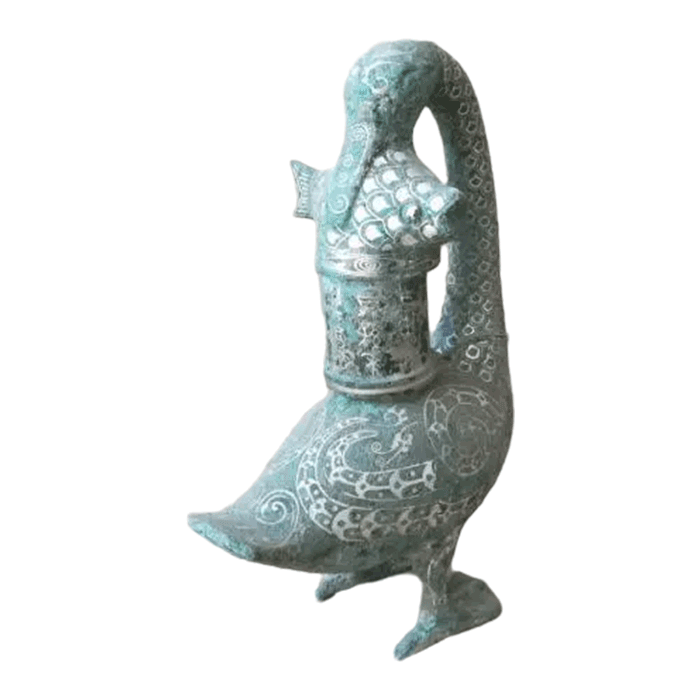
Organizations developing a historical product collection may benefit from grouping forms by ritual category rather than by decoration alone. A small selection that includes a ding, gui, zun, hu, and incense burner can provide visitors with a clearer narrative than a group of unrelated decorative vessels. For additional examples of form and ornament, explore chinese bronze handicrafts that reflect the visual language of traditional bronze art.
Food vessels expressed rank, offering, and family continuity
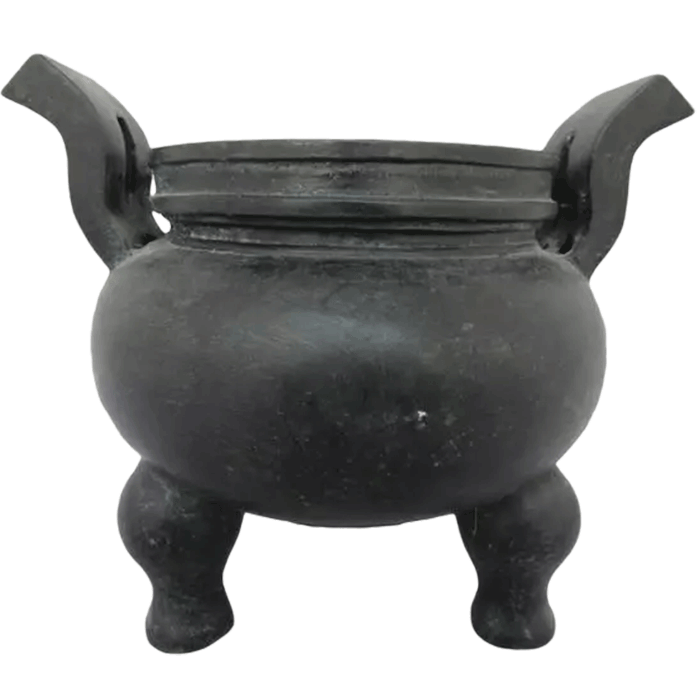
Food vessels occupied a major place in early ritual practice. The most widely recognized example is the ding, generally a round or square cauldron supported by legs. Round ding vessels usually have three legs, while square examples commonly have four. Their structure made them suitable for heating or presenting food, and their prominence in ceremonial settings caused the ding to become a lasting symbol of power and legitimacy.
In an ancestral rite, prepared food could be offered as a sign of respect and continuity. The ritual was not merely about nourishment. It was a formal act that affirmed the family line, the responsibilities of descendants, and the authority of the person conducting the ceremony. Large and elaborate ding vessels could therefore carry a strong political message.
The gui was another important food vessel. Often shaped as a rounded bowl on a foot, it was associated with offerings of grain or cooked food. A display pairing a ding with a gui can help audiences understand that ancient ritual meals required different forms for different kinds of offerings. The contrast also creates an effective visual composition: the substantial, legged silhouette of the ding beside the rounded profile of the gui.
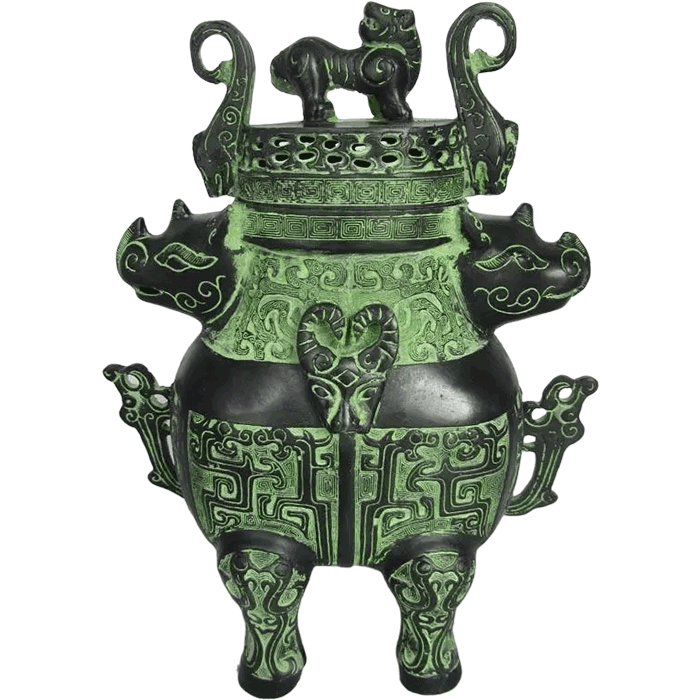
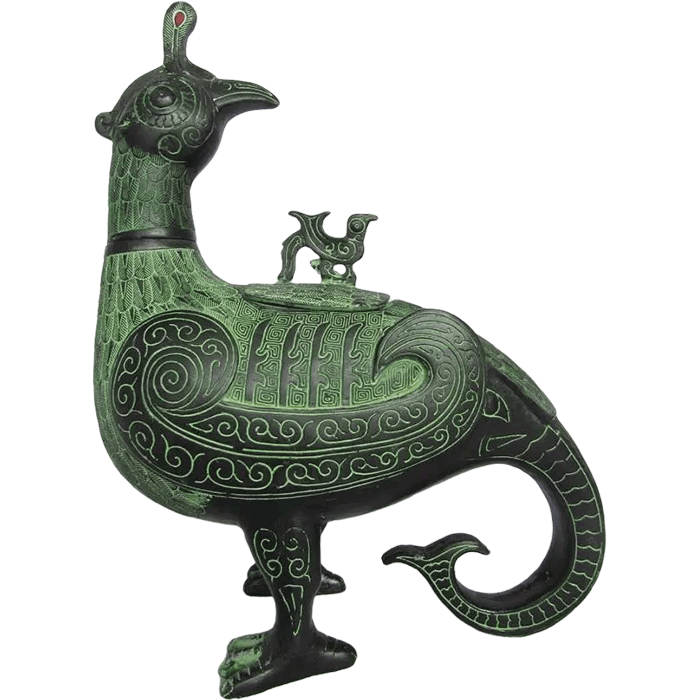
Some early food vessels incorporated animal imagery, including taotie-style masks, birds, dragons, rams, and other stylized creatures. These motifs remain subjects of scholarly interpretation. In a public-facing display, it is best to describe them carefully as powerful decorative and symbolic imagery rather than assigning a single fixed meaning to every pattern. Their repeated use shows that ritual bronze design combined function with an elaborate visual vocabulary.
For heritage retailers, ding and gui forms are especially appropriate when building collections around themes of ancestral ritual, ancient feasting, authority, or the development of Chinese state culture. Smaller-scale reproductions can serve as educational décor, while larger pieces may act as focal objects in galleries, hotel lobbies, cultural centers, and private collections.
A famous example of the monumental ritual ding tradition is discussed in the page on the houmuwu square cauldron. Such important forms demonstrate why the ding remains one of the strongest visual references for ancient Chinese bronze culture.
Wine vessels turned ceremonial drinking into a visual language
Wine played a highly visible role in many early Chinese ceremonies. Fermented beverages were used in offerings, banquets, and rites that brought together the living, ancestors, and political community. As a result, ancient workshops produced a remarkable variety of wine vessels, each with a distinct shape and handling method.
The zun is commonly recognized by its tall body and flaring or open mouth. It was used for holding wine and became a preferred form for elaborate ornament. Some zun vessels were cast in animal-inspired shapes, while others relied on geometric bands, masks, and raised motifs. In a curated display, a zun can represent the ceremonial presentation of wine and the technical sophistication of bronze decoration.
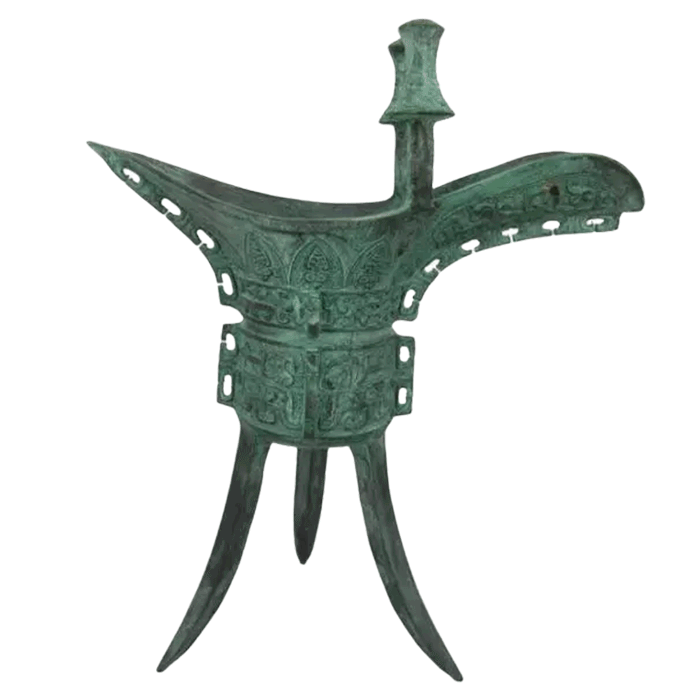
The you often has a covered body and a movable handle, making it distinctive in silhouette. The jue is a smaller tripod wine vessel with a pouring spout and pointed posts near the rim. The jia, another tripod form, is generally associated with warming wine. These forms are valuable for education because they show that ritual drinking involved preparation, storage, warming, serving, and pouring rather than a single generic container.
The hu is another major form, typically recognized by a pear-shaped or elongated body, narrow neck, and handles or ring attachments. It could be used for storing wine and was made in many variations through different historical periods. Because the hu has an elegant, balanced profile, it is often well suited to retail collections and interior displays that need an object with historical character but a refined visual presence.
Wine vessel selections should be interpreted with care. Ancient rites were governed by social customs that changed over time, and the use of specific forms could differ by region and period. A practical display label can identify the broad function of a vessel while noting that ritual practices evolved across centuries. For a focused overview of these forms, see ancient chinese bronze wine vessel examples.
Bronze design changed as ritual practice and society evolved
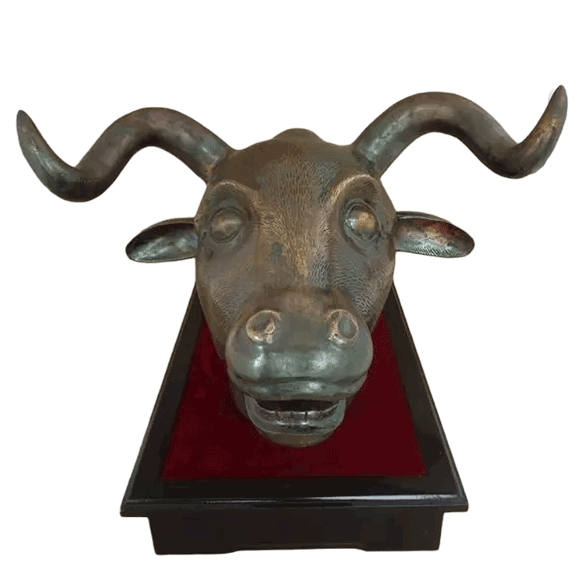
Bronze vessels did not remain visually or socially static. Early ritual bronzes are often associated with dense ornament, strong symmetry, animal masks, and substantial casting. In later periods, forms became more varied, decorative programs expanded, and inscriptions grew in importance. The objects continued to support ceremony, but they also reflected changing tastes, political structures, regional cultures, and technological capabilities.
During the Zhou period, bronze inscriptions became especially significant. Cast texts could record gifts, military events, land matters, family achievements, or ritual commissions. These inscriptions transformed vessels into durable records of elite memory. For curators, an inscribed vessel reproduction can help connect art history with writing, administration, genealogy, and state formation.
Over time, ritual bronzes also developed more complex surface treatment. Some pieces used high-relief decoration, while others displayed carefully organized registers of dragons, birds, geometric bands, or interlaced patterns. Later styles could appear more dynamic and less rigid than earlier symmetrical designs. A collection arranged chronologically can show visitors how changes in ornament reflect broader shifts in visual culture.
Bronze continued to be used for more than food and wine containers. Bells, weapons, mirrors, lamps, fittings, and sculptural objects expanded the material’s cultural presence. The ritual world of bronze therefore included sound, light, movement, warfare, and display. A well-planned exhibition may place vessels beside related forms to show how bronze shaped multiple aspects of elite life.
For example, ceremonial music can be introduced through ancient chinese bronze wares—zenghouyi chime bells. Adding a bell image or a small bell reproduction beside wine and food vessels helps visitors imagine a fuller ritual setting rather than viewing each object independently.
Later incense burners and Buddhist bronzes broadened ritual expression
As Chinese religious and ceremonial life developed, bronze objects continued to serve new forms of devotion. Incense burners became particularly important in religious, scholarly, domestic, and commemorative environments. Unlike the early food and wine vessels associated with ancestral sacrifices, incense burners emphasize fragrance, purification, meditation, and the visual presence of rising smoke.
The boshanlu, or hill-shaped incense burner, is one of the most recognizable later bronze forms. Its pierced cover may resemble a mountain landscape, allowing incense smoke to emerge through openings in the lid. This design provides an excellent interpretive bridge between bronze technology and religious imagination. It can be used in educational displays addressing Han-period cosmology, mountain symbolism, immortal realms, or the sensory aspects of ritual.
Buddhist bronze statues also became important in later religious practice. While they differ from ancient vessel forms, they share the broader tradition of using bronze to create enduring ceremonial objects. A combined collection of vessels, incense burners, and Buddhist figures can demonstrate the long continuity of metal craftsmanship across changing religious settings.
For buyers, this distinction is helpful when creating coherent collections. Ding, gui, zun, and hu vessels are ideal for an ancient court or ancestral-rite theme. Incense burners and Buddhist statues are better suited to devotional, temple-inspired, scholarly, or contemplative settings. Bronze mirrors can complement either direction, especially when a collection explores daily life, personal adornment, or symbolic reflection.
How to select vessel forms for educational displays and heritage retail
Curators and heritage retailers should begin by defining the narrative that the collection needs to communicate. The right vessel is not always the largest or most ornate piece. It is the piece that best supports the intended interpretation, space, audience, and product category.
- For ancestral ritual displays: Select a ding, gui, and a wine vessel such as a zun or hu. This grouping communicates food offerings, ceremonial drink, family continuity, and rank.
- For ancient banquet themes: Combine wine vessels with smaller pouring forms, cups, and a food container. Explain the sequence of storing, warming, pouring, and presenting.
- For political-history displays: Use a ding or an inscribed vessel form to introduce authority, lineage, and the public role of ritual.
- For decorative heritage collections: Choose a hu, zun, or incense burner with balanced proportions and carefully considered surface ornament.
- For religious or contemplative spaces: Prioritize incense burners and Buddhist bronze artworks, while using earlier vessel forms as historical reference points.
Scale is also important. A compact tabletop vessel may be suitable for museum retail, office décor, or a private collector. A larger tripod or vase may work better as a gallery centerpiece or architectural accent. The intended display environment should guide decisions about dimensions, finish, mounting, and packaging.
Surface finish deserves equal attention. An antique-style patina can support historical interpretation, while a cleaner modern finish may better suit a contemporary hospitality or commercial interior. When commissioning reproductions, buyers should clearly define whether the desired appearance is archaeological, traditional, decorative, or modernized. Reference images, measurements, intended placement, and color expectations all help create a more accurate specification.
Custom bronze production for historically informed collections
Luoyang Yichuan Bronze Craft Co., Ltd. produces bronze vessels, sculptures, mirrors, incense burners, Buddhist statues, and custom bronze artworks for projects ranging from a single prototype to bulk production. The company uses premium Cu-Sn bronze alloy and traditional lost-wax casting, with hand chasing, polishing, and patina finishing available for antique or modern visual requirements.
For buyers developing historically informed collections, custom work can be useful when a specific ding, zun, hu, tripod, vase, or ceremonial composition is needed. Clear design documentation is especially important for projects involving antique replication, coordinated vessel sets, or consistent patina color across multiple pieces. The production team can support custom orders from one piece, while bulk order quantities are negotiated according to design complexity and size.
Located in Yichuan County, Luoyang, Henan Province, the company operates a 3,000-square-meter production area with more than 30 skilled craftsmen, including bronze-casting masters and finishing artisans. Its ISO 9001 quality management system certification and shipment inspection process support export-oriented bronze art projects. Protective packaging is available for fragile sculptures and vessels, and casting defects are covered by free replacement support.
For a project that requires a custom museum display object, retail collection, or interpretive bronze series, buyers can customize a bronze sculpture with design, scale, finish, and patina requirements aligned to the planned setting.
When ritual use guides selection, Chinese bronze vessels become more than decorative objects. They become visual evidence of how ancient communities organized offerings, honored ancestors, expressed authority, and preserved cultural memory through metal. That context gives curators and heritage retailers a stronger foundation for choosing vessel forms that are both visually compelling and historically meaningful.