History of Chinese Bronze Vessels: Shape & Inscriptions
The rich history of Chinese bronze vessels is told through their evolving forms and inscriptions.
Ancient Chinese bronze vessels are more than just exquisite artifacts; they are silent historians cast in metal. For millennia, these objects were central to state rituals, ancestor worship, and the consolidation of political power. To the untrained eye, they may appear as beautiful but enigmatic relics. However, for scholars, collectors, and designers, understanding the language of their shapes, decorations, and inscriptions is key to unlocking a wealth of information about the society that created them. This knowledge is invaluable when sourcing or specifying historically accurate replicas for museums, collections, or architectural projects.
By examining the evolution of form and the content of their inscriptions, we can trace the technological advancements, shifting belief systems, and political transformations of ancient China. This guide provides a foundational understanding for interpreting these magnificent works of art, connecting the past's craftsmanship with today's precision manufacturing.
Decoding the Dynasties: How Vessel Shapes Evolved Over Time
The form of a bronze vessel is its most immediate identifier, often placing it within a specific dynasty and revealing its intended function. The progression from simple, utilitarian shapes to complex, monumental forms reflects the growing sophistication of bronze-casting technology and the increasing importance of these objects in the social hierarchy.
The Xia and Early Shang Dynasty (c. 2070–1300 BCE): The Dawn of Bronze Casting
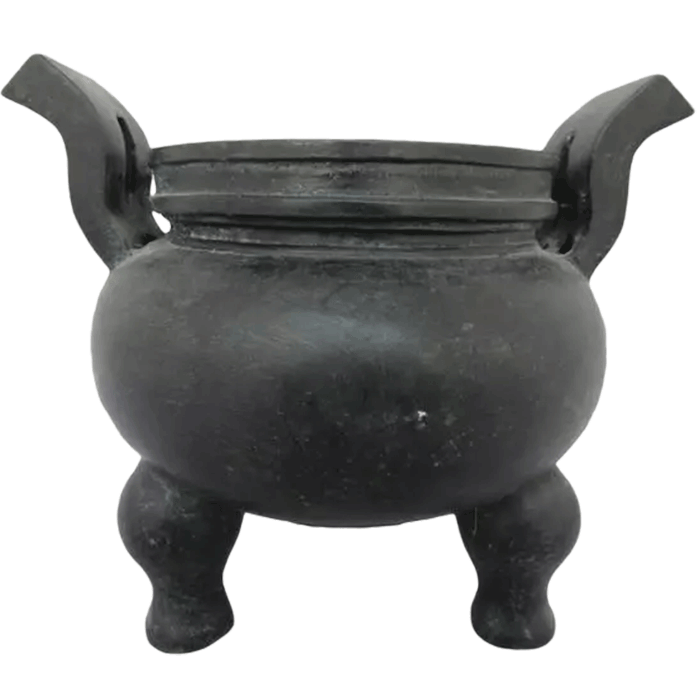
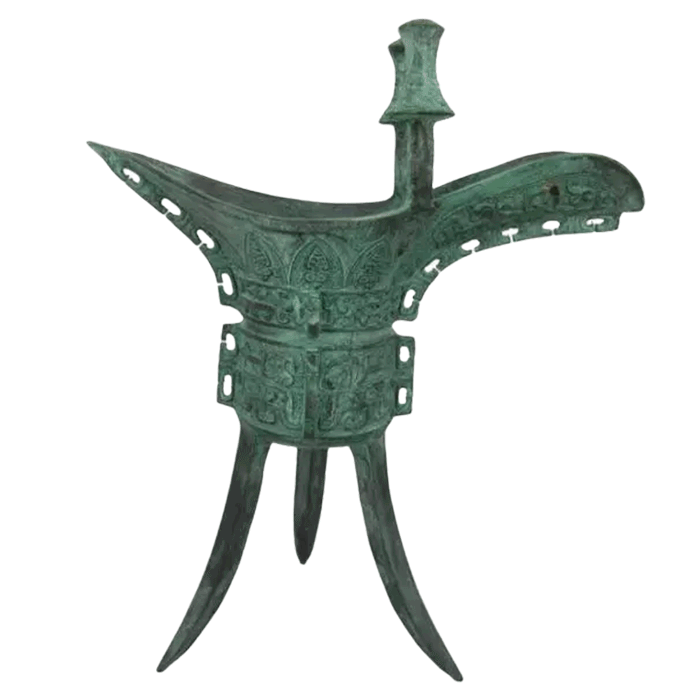
The earliest ritual bronzes emerged during the late Xia and early Shang periods. These pioneering pieces were characterized by their relatively simple silhouettes and thin-walled construction. The technology, based on piece-mold casting, was still being perfected. Common shapes from this era include the jue, a distinctive tripod wine vessel with a long spout and handle, and the ding, a round-bodied tripod cauldron for cooking ritual food offerings. Decoration was minimal, often consisting of simple raised lines or nascent versions of the zoomorphic motifs that would dominate later periods. The focus was on function—these vessels were tools for communicating with ancestors and nature spirits, a practice that formed the bedrock of early Chinese spiritual life.
The Late Shang and Western Zhou Dynasty (c. 1300–771 BCE): The Zenith of Ritual Bronzes
The late Shang and Western Zhou dynasties represent the apex of Chinese bronze art. During this period, casting techniques achieved an extraordinary level of mastery, allowing for the creation of larger, heavier, and more complex vessels. The repertoire of shapes expanded significantly to accommodate elaborate ritual ceremonies. New forms appeared, such as the zun (a wide-mouthed wine vessel, sometimes in the shape of an animal), the guang (a wine server shaped like a sauceboat with an animal-head lid), and the fangyi (a square, house-shaped container).
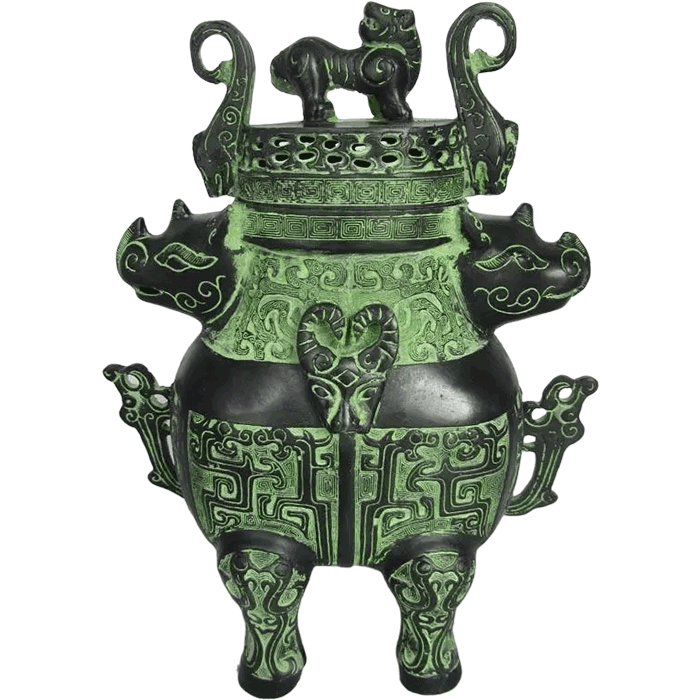
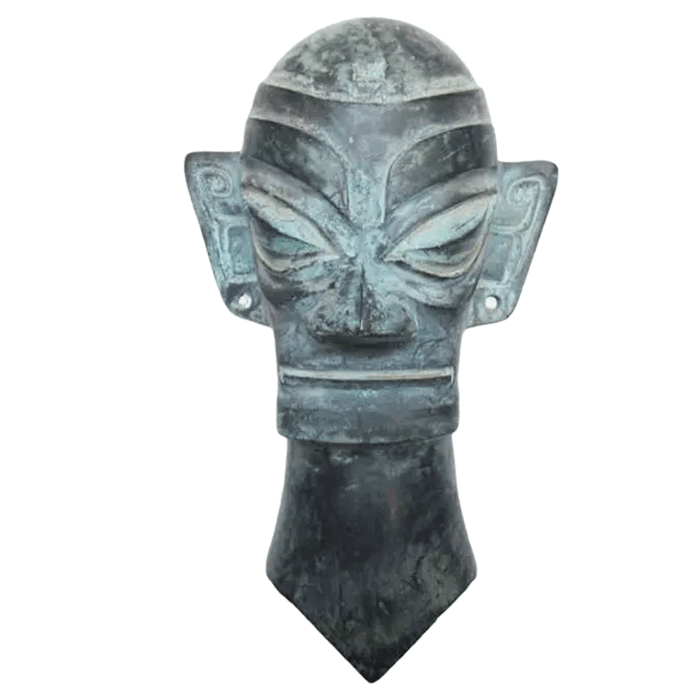
Decoration became dense, intricate, and highly stylized. The taotie, a symmetrical monster mask, became the dominant motif, often set against a background of fine spiral patterns known as leiwen (thunder pattern). The sheer power and imposing presence of these bronzes were intentional; they were no longer just ritual implements but potent symbols of the owner's wealth, status, and divine authority. Owning a set of nine ding tripods, for example, was a prerogative reserved for the Zhou king, signifying his mandate to rule "all under Heaven."
The Spring and Autumn and Warring States Periods (771–221 BCE): A Shift Towards Secularization
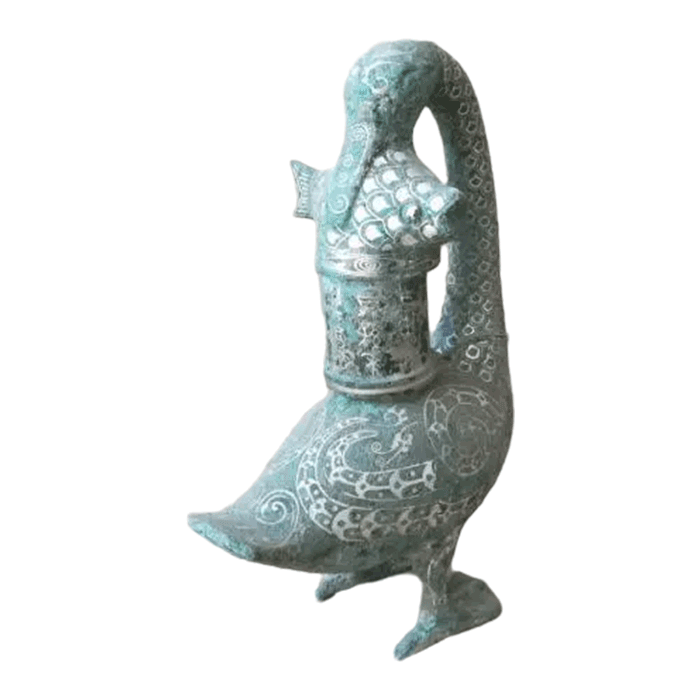
As the central authority of the Zhou court weakened, a new era of regional styles and artistic innovation began. Bronze production was no longer the exclusive domain of the royal court. Powerful feudal lords and a rising merchant class commissioned vessels to display their own wealth and influence. This led to a stylistic shift away from the heavy, imposing forms of the Western Zhou. Bronzes became more elegant, refined, and varied. An exploration of the characteristics of the bronze wares of the Spring and Autumn and Warring States periods reveals a move towards intricate, interlaced patterns inspired by dragons and serpents. New decorative techniques, such as inlaying bronze with gold, silver, copper, and turquoise, created a stunning, polychromatic effect. While still used in rituals, bronzes were increasingly featured in secular contexts like diplomatic banquets and feasts, becoming luxurious items of conspicuous consumption.
The Han Dynasty and Beyond (206 BCE–220 CE): The Rise of Practicality
By the Han Dynasty, the role of bronze in society had fundamentally changed. The elaborate sets of ritual food and wine vessels were largely replaced by more affordable lacquerware and ceramics. Bronze casting, however, continued to thrive, but its focus shifted to more practical and decorative objects. Bronze mirrors, with one side polished to a reflective sheen and the other decorated with cosmological or auspicious motifs, became extremely popular. Other common items included incense burners (like the famous boshan lu hill censer), belt hooks, and chariot fittings. The designs were simpler and more streamlined, reflecting a new aesthetic that valued grace and utility over ritualistic gravitas.
Inscriptions as Historical Records: From Clan Emblems to Imperial Edicts
If the shape of a vessel tells us about its time and function, its inscription (jīn wén, or "metal text") provides its voice. These cast-in texts range from single characters to lengthy narratives, offering direct insight into the political, social, and personal concerns of the ancient elite.
Shang Dynasty Inscriptions: Names and Ancestors
The earliest bronze inscriptions from the Shang Dynasty are typically very brief, often consisting of just one to five characters. They usually record the clan emblem of the patron and the posthumous title of the ancestor to whom the vessel was dedicated. For example, an inscription might read "For Father Yi," indicating it was used in rituals honoring that specific ancestor. These short texts underscore the primary function of Shang bronzes: to facilitate communication with the spirit world and maintain lineage continuity.
Western Zhou Inscriptions: Documenting History in Bronze
The Western Zhou period is the golden age of bronze inscriptions. Texts became significantly longer, with some vessels containing several hundred characters. The content also evolved dramatically. Inscriptions were no longer just dedications; they were detailed legal and historical documents. They recorded royal appointments, land grants, military campaigns, legal victories, and ceremonial speeches. These texts were meant to be read by the ancestors, reporting on the family's achievements and seeking their continued blessing. For historians, these inscriptions are invaluable primary sources, often corroborating or adding crucial details to transmitted texts. The famous Bronze Statue and Mao Gong Ding, for instance, bears a nearly 500-character inscription detailing the king's instructions to his minister, making it one of the most important historical documents from ancient China.
Eastern Zhou and Later Inscriptions: Marks of Craftsmanship and Ownership
During the Eastern Zhou, as bronze production became more commercialized and regionalized, the nature of inscriptions changed once again. Long, narrative texts became less common. Instead, inscriptions often recorded more practical information, such as the name of the commissioning official, the artisan or foundry that made the piece, its weight, and sometimes the date of production. These "maker's marks" reflect a growing pride in craftsmanship and a system of accountability for quality, marking a transition from purely ritual objects to high-value, manufactured goods.
The Language of Decoration: Symbolism in Bronze Motifs
The decorative motifs on Chinese bronzes were not merely ornamental. They formed a complex symbolic vocabulary intended to mediate between the human and spirit worlds. While the precise meanings of some symbols are lost to time, art historians have identified several key motifs.
The Enigmatic Taotie Mask
The most iconic and mysterious motif is the taotie, a frontal, symmetrical mask of a mythical creature. It is characterized by large, staring eyes, horns or crests, and sometimes fangs, but typically lacks a lower jaw. Its true meaning is widely debated. Some scholars suggest it is a fearsome guardian to ward off evil spirits. Others believe it represents a shamanistic deity or a warning against gluttony, as it can consume but not swallow. Whatever its original intent, its powerful, abstract presence dominated the surfaces of Shang and Early Zhou bronzes.
Dragons, Birds, and Cicadas: Creatures of Power and Transformation
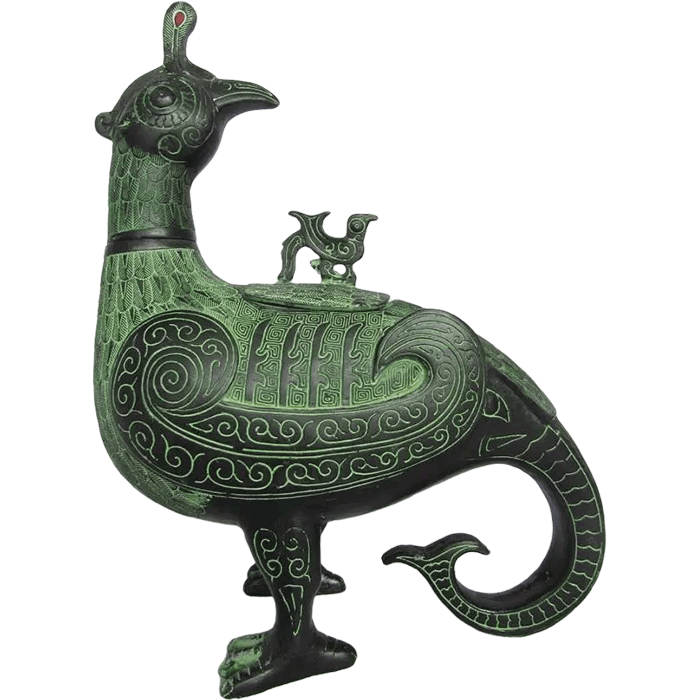
Other zoomorphic motifs were also common. The dragon, or kui, was a symbol of spiritual power, transformation, and control over the weather. Birds, often identified as phoenixes, represented good fortune and the sun. The cicada was a powerful symbol of rebirth and immortality, inspired by its life cycle of emerging from the ground after a long dormancy. These creatures populated the bronze surfaces, imbuing the vessels with their symbolic properties.
Sourcing Authentic Replicas: Bridging Ancient Craft with Modern Needs
Understanding the nuances of the history of Chinese bronze vessels is essential for any organization aiming to commission high-fidelity replicas. Whether for a museum exhibit, a private collection, or a culturally significant architectural design, authenticity matters. Replicating these masterpieces requires more than just a mold; it demands a deep appreciation for the original casting techniques, stylistic conventions, and material properties.
This is where partnering with a specialized manufacturer becomes critical. At Luoyang Yichuan Bronze Craft Co., Ltd., we combine historical knowledge with modern precision. Our team of over 30 skilled artisans, including bronze-casting masters, utilizes the traditional lost-wax method to ensure every detail of a historical design is faithfully captured. We solve common sourcing pain points, such as achieving exact replication from images or drawings, ensuring consistent patina color matching across large orders, and providing export-compliant packaging for fragile pieces.
Our ISO 9001-certified quality management system guarantees that every piece, from a single custom prototype to a bulk production run of over 50,000 pieces annually, meets stringent international standards. We work with a premium bronze alloy and offer hand-chasing, polishing, and patina finishing to achieve the desired antique or modern aesthetic. For projects that demand historical accuracy and exceptional craftsmanship, partnering with a knowledgeable manufacturer is crucial. Explore how we can help you customize a bronze sculpture from sculpmart.com and bring your vision to life with unparalleled quality.
</body>