History of Chinese Bronze Vessels: Dates and Uses
History of Chinese bronze vessels reveals how ritual, rank, and craftsmanship shaped ancient China
Chinese bronze vessels are among the most important surviving records of early Chinese civilization. Their forms, inscriptions, decorative motifs, and archaeological locations provide valuable evidence about ritual practice, political authority, family lineage, warfare, music, food culture, and technical development. For first-time buyers, museum researchers, collectors, designers, and sourcing teams, understanding the dates and intended uses of these objects is an essential first step before selecting a replica, determining a patina style, or preparing a custom bronze specification.
Most well-known ancient Chinese ritual bronzes were made from copper-tin alloys, often with additional elements that improved casting behavior and strength. Craftsmen used advanced sectional mold processes in early periods, while modern reproduction workshops commonly use lost-wax casting to create detailed replicas and custom interpretations. The vessel itself was never merely a container. In many dynasties, its size, number, decoration, and inscription communicated the social position of the owner and the religious or ceremonial purpose of the occasion.
Early dates and the rise of ritual bronze culture
The development of Chinese bronze vessels began long before the imperial dynasties. Early metalworking appeared in several regions of ancient China, but the ritual bronze tradition became especially prominent during the Erlitou culture, generally dated to approximately 1900–1500 BCE. Archaeological discoveries from this period include early bronze tools, weapons, plaques, and smaller vessels. These objects demonstrate that bronze production was already becoming organized and technically capable.
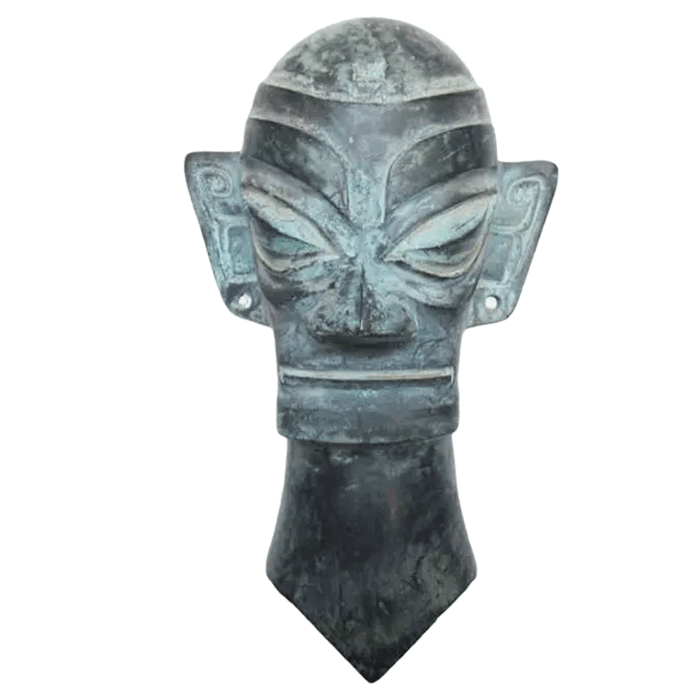
During the Shang dynasty, usually dated from around 1600 to 1046 BCE, bronze casting developed on a remarkable scale. Shang bronze vessels were used in ceremonies honoring ancestors and communicating with the spiritual world. They were commonly presented with cooked food, grain, wine, or water. Many surviving Shang pieces have heavy walls, powerful silhouettes, and high-relief decoration. The taotie, a symmetrical mask-like motif, is one of the best-known visual features of Shang ritual bronze design.
The late Shang period produced some of the largest and most technically demanding bronze vessels in ancient China. Square forms, animal-shaped vessels, tripod cauldrons, wine containers, and ceremonial implements became increasingly sophisticated. A monumental example can be explored through this overview of the houmuwu square cauldron, a vessel type that illustrates both ritual importance and the ability of early foundries to manage complex casting projects.
After the Zhou conquest of the Shang in 1046 BCE, the Western Zhou dynasty continued and expanded the ritual bronze tradition. From approximately 1046 to 771 BCE, bronzes became closely connected with aristocratic lineage, land grants, military achievements, official appointments, and sacrificial ceremonies. Inscriptions became longer and more historically informative. A vessel could record an event, identify a family, commemorate a royal command, or preserve a statement of duty for later generations.
Key dynasties in the History of Chinese bronze vessels
Bronze vessel styles changed gradually, but dynastic chronology remains a useful framework for identifying likely forms, decorative approaches, and functions. The following timeline offers a practical reference for researchers and buyers comparing ancient originals with reproduction requirements.
| Period | Approximate Dates | Typical Bronze Characteristics | Common Uses |
|---|---|---|---|
| Erlitou culture | c. 1900–1500 BCE | Early ritual forms and developing bronze technology | Elite ceremonial and practical use |
| Shang dynasty | c. 1600–1046 BCE | Bold animal masks, deep relief, heavy casting, tripod and wine forms | Ancestor worship, food and wine offerings |
| Western Zhou dynasty | 1046–771 BCE | More inscriptions, structured decoration, lineage emphasis | Ritual banquets, commemoration, political ceremony |
| Eastern Zhou dynasty | 770–256 BCE | Regional styles, intricate patterns, inlay, evolving shapes | Ritual, status display, court and noble life |
| Qin dynasty | 221–206 BCE | Standardization and imperial production | State, military, funerary, and court contexts |
| Han dynasty | 206 BCE–220 CE | More practical forms, mirrors, incense burners, cosmological imagery | Domestic, funerary, religious, and administrative settings |
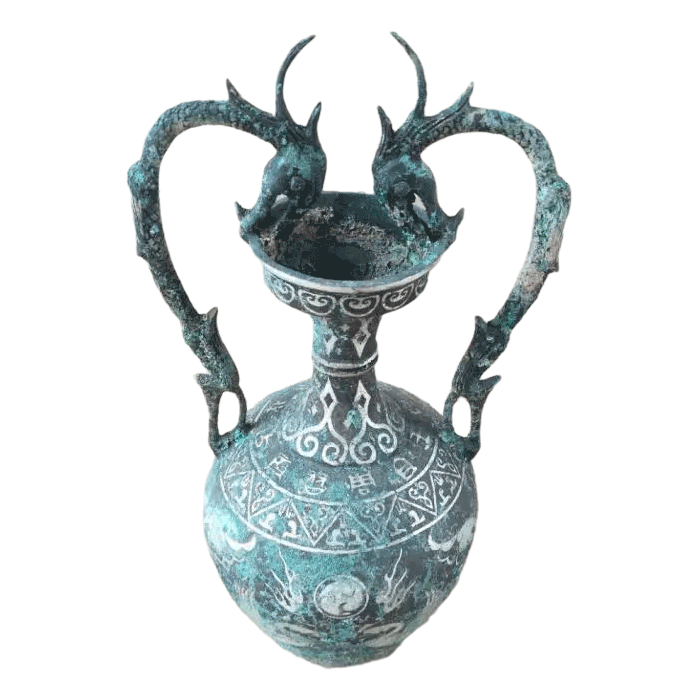
The Eastern Zhou period, including the Spring and Autumn period and Warring States period, was especially diverse. Between 770 and 256 BCE, regional states developed their own aesthetic preferences and production methods. Surface decoration often became more intricate, including interlaced dragons, geometric bands, bird motifs, and inlaid details. Vessels could appear lighter and more elaborate than many earlier Shang forms. For a closer stylistic reference, see this discussion of the Spring and Autumn bronze characteristics.
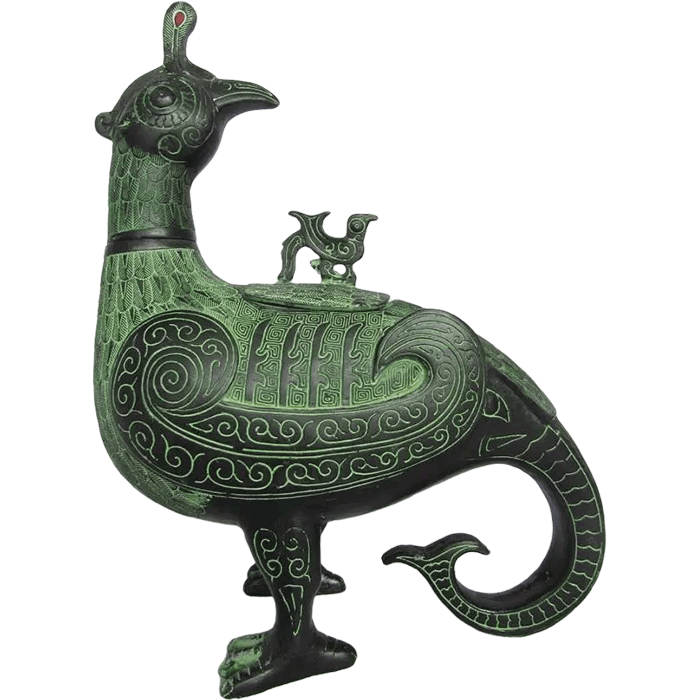
By the Qin and Han dynasties, bronze remained important, but its cultural role changed. Ritual vessel traditions continued, while practical and funerary objects became more common. Bronze mirrors, lamps, incense burners, weights, fittings, sculptures, and household articles received increasing attention. Han bronze designs frequently incorporated celestial imagery, mythical animals, mountains, clouds, immortals, and cosmological symbols. This shift helps explain why later Chinese bronzes often include both ceremonial meaning and decorative or domestic functions.
What the major vessel forms were used for
Identifying the form of a bronze vessel is the quickest way to understand its likely use. Ancient terminology can vary by period and archaeological interpretation, but the following categories are widely used when discussing Chinese ritual bronzes.
Ding: tripod food vessels
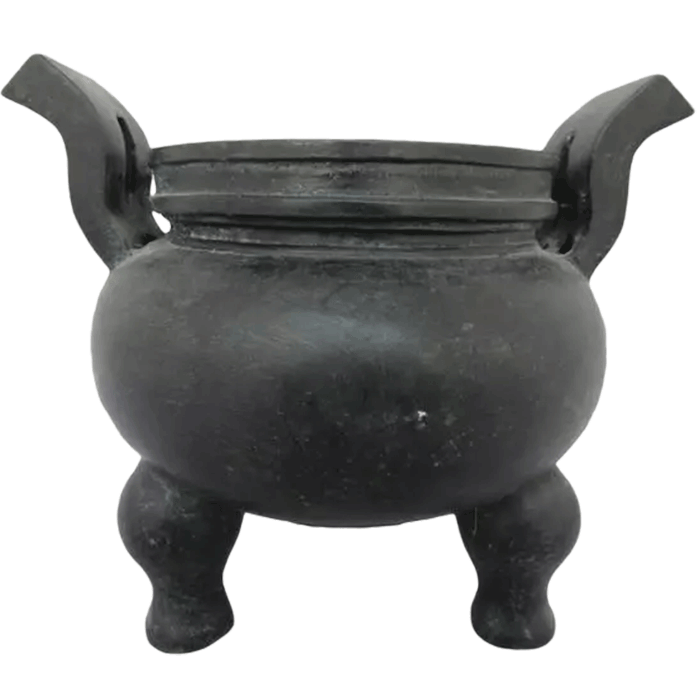
The ding is one of the most recognizable Chinese bronze vessel forms. It commonly has a round or square body, a deep basin, three or four legs, and two upright handles. Ding vessels were used to cook, hold, or present food offerings, particularly meat, in ancestral rites. Their association with authority was so strong that the ding became a symbol of political power and legitimate rule.
For modern reproduction projects, a ding specification should identify whether the buyer needs a round tripod, square four-legged version, lidded format, plain ceremonial finish, or a heavily patterned Shang-style surface. Dimensions should include overall height, body width, handle height, leg clearance, and wall thickness expectations. These details affect both appearance and casting feasibility.
Gui: grain offering vessels
The gui was generally used for grain or other food offerings. Many examples have a rounded bowl set on a ring foot, sometimes with handles or a cover. Gui vessels were important in Zhou ritual systems, where food and grain offerings formed part of formal ancestral ceremonies. Their proportions are often more rounded and balanced than the deeper body of a ding.
Zun, you, jue, and jia: wine-related vessels
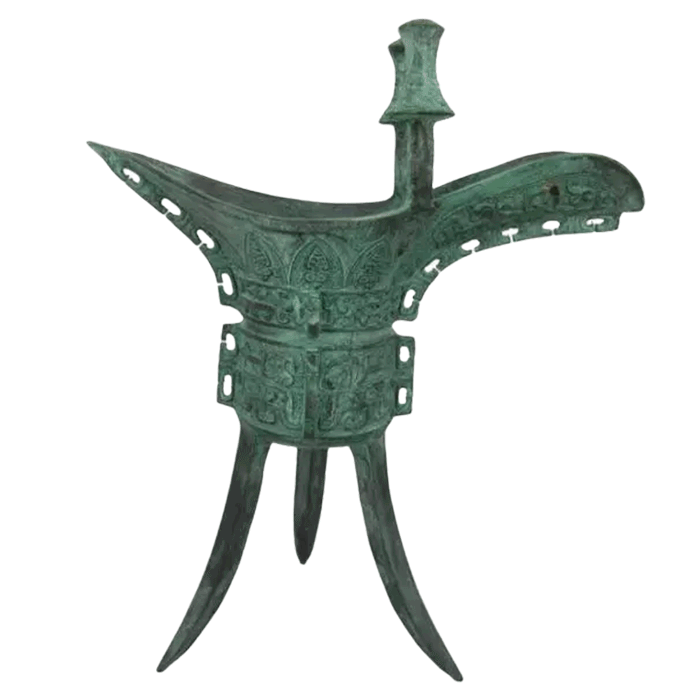
Wine played an important part in Shang and Zhou ritual culture, and several bronze forms are associated with heating, serving, storing, or presenting fermented beverages. A zun is commonly a wine vessel with a broad or flaring profile. A you often has a covered body and a bail handle. The slender jue usually has three legs, a pouring spout, a pointed tail, and posts above the rim. A jia is another tripod vessel associated with warming wine.
Because wine vessels can have narrow openings, sculptural handles, thin legs, lids, and projecting spouts, they require careful attention when replicated. A buyer should provide front, side, top, and detail views when requesting a historically informed reproduction. If the original object has inscriptions or a raised decorative band, those areas should be shown in enlarged reference images.
Hu and fanghu: storage vessels
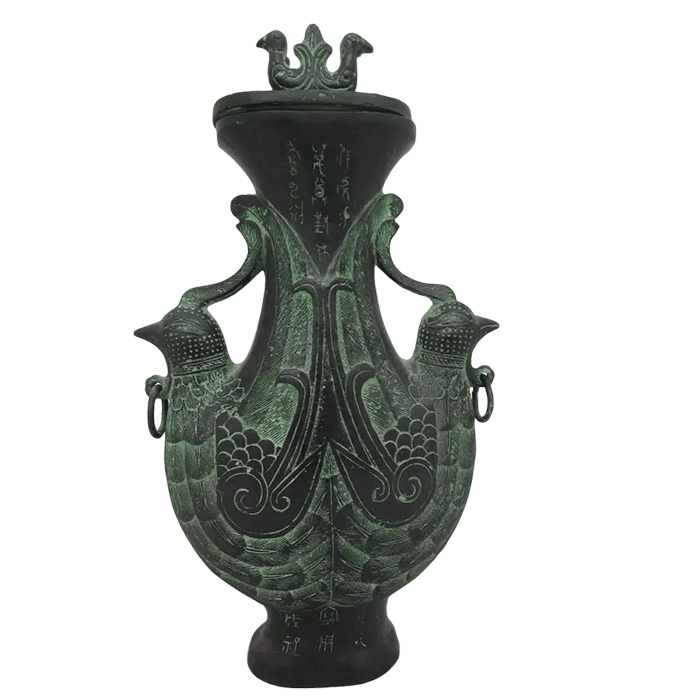
The hu is a storage vessel, generally characterized by a tall body and narrow neck. A fanghu is a square or rectangular variation. These vessels could store wine or other offerings and were often used in ceremonial settings. Their tall vertical profile makes them popular for display, interior decoration, and museum-inspired replica collections today.
Hu forms range from simple and restrained to richly decorated with animal handles, ring attachments, geometric pattern fields, or scenes in relief. A reproduction can therefore be designed as an antiqued display object, a faithful interpretation of a known historical shape, or a modern decorative vase inspired by early bronze proportions.
Yan, pan, and water vessels
The yan is commonly described as a steamer vessel, often consisting of an upper food container and a lower heating section. The pan is a shallow basin associated with water use, including washing rituals. Other water-related vessels, such as the yi, could be used for pouring or washing. These objects demonstrate that ritual bronze culture included not only food and wine offerings but also purification and formal preparation.
Decoration, inscriptions, and what they can verify
Bronze decoration is useful for dating and interpretation, but it should not be treated as a single rule. A dragon motif, bird pattern, animal handle, or cloud scroll can appear across more than one era. The most reliable assessment combines shape, casting method, ornament placement, inscription style, archaeological context, and comparison with documented examples.
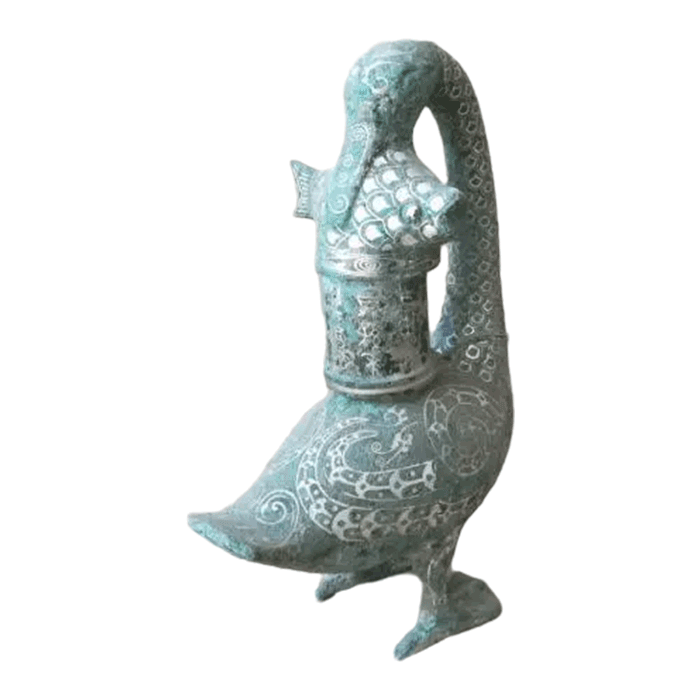
Shang vessels often use strong, symmetrical imagery. Animal masks, eyes, horns, birds, snakes, and stylized creatures may be arranged in horizontal bands. Western Zhou decoration often becomes more orderly, while inscriptions take on greater significance. In the Eastern Zhou period, decorative surfaces can become densely layered, technically refined, and visually dynamic. Some vessels include inlaid materials or complex openwork details.
Inscriptions are particularly important because they may identify a clan, person, event, office, gift, campaign, or ritual dedication. They are not merely decoration. For replica sourcing, inscriptions should be reproduced only from clear, verified reference material. If a customer does not require exact text, a simplified decorative panel may be more appropriate than an unclear imitation inscription.
Buyers interested in vessel terminology can review an introduction to bronze wares when comparing vessel families, proportions, and traditional naming conventions. This type of reference is useful before preparing an inquiry for a custom vessel, museum display copy, themed interior project, or educational collection.
From ritual object to modern replica specification
Modern buyers often approach Chinese bronze vessels for different reasons: museum display, cultural education, hotel and commercial interiors, private collections, garden architecture, film props, religious settings, commemorative gifts, or themed décor. The intended location and use should guide the specification. An indoor display replica may prioritize fine surface detail and a controlled antique patina, while a large outdoor vessel may require stronger structural planning and a finish suitable for its environment.
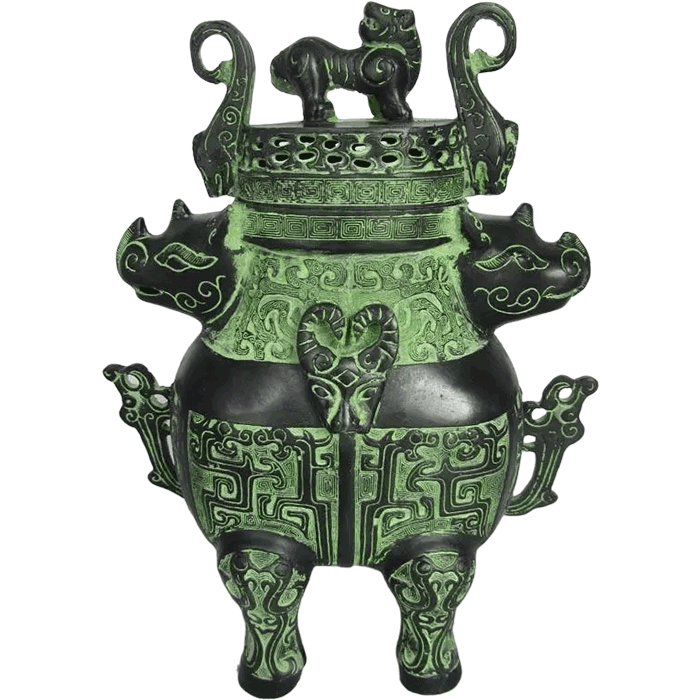
Luoyang Yichuan Bronze Craft Co., Ltd. produces bronze vessels including ding, zun, hu, tripods, and vases, as well as bronze sculptures, mirrors, incense burners, Buddhist statues, and custom bronze artworks. The company uses premium Cu-Sn bronze alloy and traditional lost-wax casting, with hand chasing, polishing, and patina finishing available in antique or modern looks. Its production capability supports a single custom prototype as well as bulk production runs, with custom sculpture MOQ starting from one piece.
For historically based replicas, a sourcing brief should clearly distinguish between an exact visual replication request and an inspired design request. Exact replication usually requires accurate dimensions, multiple reference photographs, inscription details, damage or wear preferences, and clear confirmation of which museum or archaeological version is being referenced. An inspired design can combine the silhouette of a hu, the feet of a ding, or the surface language of a Shang vessel without representing itself as a specific antique original.
Information to prepare before requesting a quotation
- Reference photographs showing front, back, side, top, base, handles, legs, and inscriptions.
- Required overall dimensions, including height, width, depth, and approximate weight range if relevant.
- Whether the vessel is decorative, ceremonial, architectural, indoor, outdoor, or intended for a display case.
- Preferred finish, such as dark brown, green verdigris, blackened bronze, warm antique bronze, or modern polished bronze.
- Required quantity and delivery destination for packaging and logistics planning.
- Whether a lid, removable component, mounting base, drainage opening, or internal reinforcement is required.
- Whether the object must reproduce visible age marks, casting texture, or a cleaner contemporary surface.
Before shipment, products are inspected for quality, and export-compliant protective packaging is available for fragile sculptures and bronze artworks. The company also offers free replacement for casting defects, with after-sales support for patina touch-ups and restoration guidance. Buyers who need a project developed from a drawing, photograph, clay model, or concept can customize a bronze sculpture or vessel design according to their required dimensions and finish.
How to use historical knowledge when selecting bronze vessels
A practical purchasing decision begins with the historical identity of the object. A Shang-style ding suits projects seeking strong ritual symbolism, bold animal-mask ornament, and a monumental early-bronze appearance. A Western Zhou gui or hu may be more suitable when inscriptions, balanced proportions, and ancestral ceremony are central themes. An Eastern Zhou vessel can support a more elaborate visual direction, especially where interlaced patterns, dragons, birds, or refined surface complexity are desired.
For interiors, a hu vase or zun form can provide a vertical focal point without requiring the footprint of a large tripod. For cultural venues, a ding may communicate ceremony and authority more directly. For incense or religious settings, a bronze burner may be selected instead of a historical food or wine vessel, while still using traditional Chinese bronze motifs. Buyers looking beyond vessels can also compare available Chinese bronze sculpture styles for coordinated animal figures, human statues, or decorative pieces.
Dates and dynasties should inform a replica, but historical accuracy also depends on disciplined design choices. A vessel should not combine random motifs from unrelated periods simply because each element appears ancient. When authenticity matters, select one primary period, identify a clear reference object or vessel type, define the decorative vocabulary, and request approval of the model and finish before production. This approach helps create bronze artworks that are visually convincing, technically practical, and appropriate for the intended setting.
Chinese bronze vessels continue to matter because they connect material craftsmanship with a long record of ceremony, memory, and artistic innovation. Whether the goal is research, collection planning, cultural display, or custom manufacturing, knowing the form, date, dynasty, and original use provides a reliable foundation for every later decision.