Hand-hammered Silver Tea Kettle Prices by Purity
A Hand-hammered silver tea kettle is priced by purity, weight, and workmanship.
For buyers comparing premium tea accessories, ceremonial gifts, hospitality items, or collectible decorative ware, silver purity is one of the most important quotation variables. A kettle made from a higher silver-content alloy generally carries a higher material cost, but purity alone does not determine the final purchase price. Metal weight, kettle capacity, hand-hammered surface treatment, handle construction, lid fit, engraving, interior finish, testing documentation, and export packaging all contribute to the total quote.
A Hand-hammered silver tea kettle should therefore be evaluated as both a material purchase and a handcrafted object. Two kettles with a similar silhouette can have very different prices if one uses 925 silver, another uses 950 silver, and a third is made with fine silver. Buyers should request clear material specifications before comparing supplier quotations, especially when purchasing for retail programs, high-end gift projects, tea houses, hotels, museums, or private-label collections.
How Hand-hammered silver tea kettle purity affects the quotation
Silver purity refers to the proportion of silver contained in the metal. It is commonly expressed in parts per thousand. For example, 925 silver contains 92.5% silver, while 950 silver contains 95.0% silver. Fine silver is often identified as 999 silver, meaning it contains approximately 99.9% silver.
Higher purity normally increases the direct metal component of the price because more fine silver is required for the same finished weight. However, the relationship is not simply linear. A high-purity item may also require different fabrication handling because silver becomes softer as purity increases. The maker may need to adjust wall thickness, reinforce selected areas, use carefully planned forming steps, or spend additional time correcting shape during handwork.
| Common Silver Grade | Approximate Silver Content | Typical Buyer Consideration |
|---|---|---|
| 925 Silver | 92.5% | Often selected when buyers want a balance of silver value, durability, and decorative finishing options. |
| 950 Silver | 95.0% | Commonly considered for premium giftware and projects requiring a higher silver-content specification. |
| 999 Fine Silver | 99.9% | Usually evaluated for high-purity collectible pieces, with careful attention to softness, form stability, and use conditions. |
When reviewing a quotation, buyers should ask whether the stated purity applies to the entire body, or whether different components use different materials. A kettle may include a silver body but have a separate handle structure, heat-resistant handle wrap, knob, interior reinforcement, or decorative element. Clear disclosure prevents misunderstandings when comparing like-for-like offers.
Calculate material cost from net silver weight
The most practical starting point for a quotation comparison is the net metal weight. Buyers should request the finished item weight in grams and ask whether the quote is based on gross weight or the estimated silver-bearing weight. Gross weight may include non-silver components, packaging inserts, handle fittings, or other materials. Net silver weight provides a more reliable basis for comparing material value.
A useful quotation structure separates the product into major cost categories:
- Silver material value: The cost of the metal required for the finished piece, including a reasonable allowance for production loss.
- Forming and hammering labor: The time needed to shape the body, create surface texture, refine the spout, fit the lid, and correct the final profile.
- Component fabrication: The cost of handles, knobs, bases, hinges, insulation elements, and decorative attachments.
- Finishing: Polishing, satin treatment, oxidation control, engraved decoration, protective treatment, and final cleaning.
- Quality control and packaging: Inspection, protective wrapping, cartons, export preparation, and shipment-related documentation where required.
For example, a supplier may quote two visually similar kettles at different prices because one has a heavier body wall, a thicker base, or a larger capacity. These changes increase the amount of silver consumed. Buyers should not compare only external dimensions. Capacity, wall thickness, and final metal weight should appear in the product specification sheet.
Silver market values also change over time. For this reason, a long-term purchasing agreement may need a defined pricing mechanism. Buyers can ask whether the supplier uses a metal-price reference date, how long the quotation remains valid, and whether a revised silver price will affect the balance payment if production begins later. This is particularly important for custom designs, where sampling and approval may extend the timeline before final production starts.
Understand how purity changes design and production choices
Purity influences more than material cost. It can affect the technical choices used to make the kettle. A higher-purity silver body may require more careful support during raising, hammering, joining, and final adjustment. The maker must manage the relationship between the desired thinness of the vessel and the strength needed for its intended use.
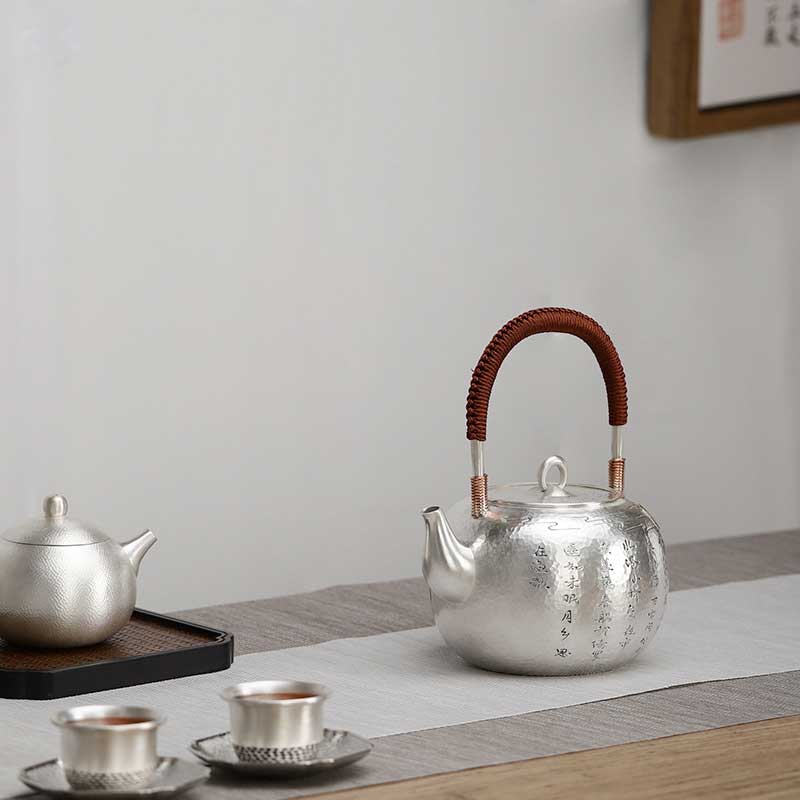
Hand hammering creates a distinctive surface through repeated controlled strikes. The visual result may range from subtle, even dimples to a more pronounced artisanal texture. A refined hammered finish takes planning because the pattern must remain balanced around the curved body, shoulder, spout connection, and lid opening. If buyers require a consistent surface pattern across a batch, the labor requirement can increase.
Functional details also matter. The lid should align correctly with the opening, the spout should pour cleanly, and the handle should be proportioned for safe and comfortable use. A large decorative kettle with a complex arched handle may require more production time than a smaller form with a simple top handle. Buyers seeking ceremonial display pieces may prioritize sculptural presence, while tea-service buyers may place more emphasis on pouring control, balance, and heat management.
It is helpful to distinguish between a display object and a product intended for regular hot-water service. Buyers should communicate the anticipated use clearly and request confirmation of the material composition and construction details relevant to that use. Silver purity does not by itself confirm suitability for every food-contact or heating application. Product requirements may vary by destination market, and importers should verify their own compliance obligations before placing an order.
Compare quotations beyond the purity number
A strong sourcing comparison should use a written specification rather than a photograph alone. Images can communicate general style, but they rarely show metal thickness, exact capacity, purity markings, lid construction, surface consistency, or handle attachment methods. A detailed request for quotation makes it easier to identify why one supplier appears less expensive than another.
Ask suppliers to quote against the same points:
- Silver purity and whether a testing method or purity mark is available.
- Target net weight range in grams.
- Overall dimensions and usable capacity.
- Body thickness or an agreed strength requirement where appropriate.
- Hand-hammered, polished, matte, engraved, or mixed finish requirements.
- Handle, knob, lid, and spout material details.
- Quantity, sampling needs, and acceptance criteria for production.
- Individual packaging, master carton requirements, and shipping destination.
When purchasing collectible accessories alongside bronze giftware, buyers may also want to compare metal character and finishing expectations. The article on bronze and brass differences can help procurement teams distinguish the material language used for copper-alloy decorative products. Although silver and bronze are fundamentally different material categories, the same sourcing discipline applies: define alloy, finish, dimensions, weight, intended use, and packaging before evaluating price.
Decorative complexity can also cause substantial quotation differences. Relief motifs, animal-shaped spouts, cast decorative feet, engraved calligraphy, repoussé work, or custom finials all add labor and may require separate tooling or prototype development. Buyers should ask whether decoration is hand engraved, stamped, cast, chased, or applied as a separate component. These methods produce different visual results and cost structures.
Specify the finish, marking, and presentation requirements
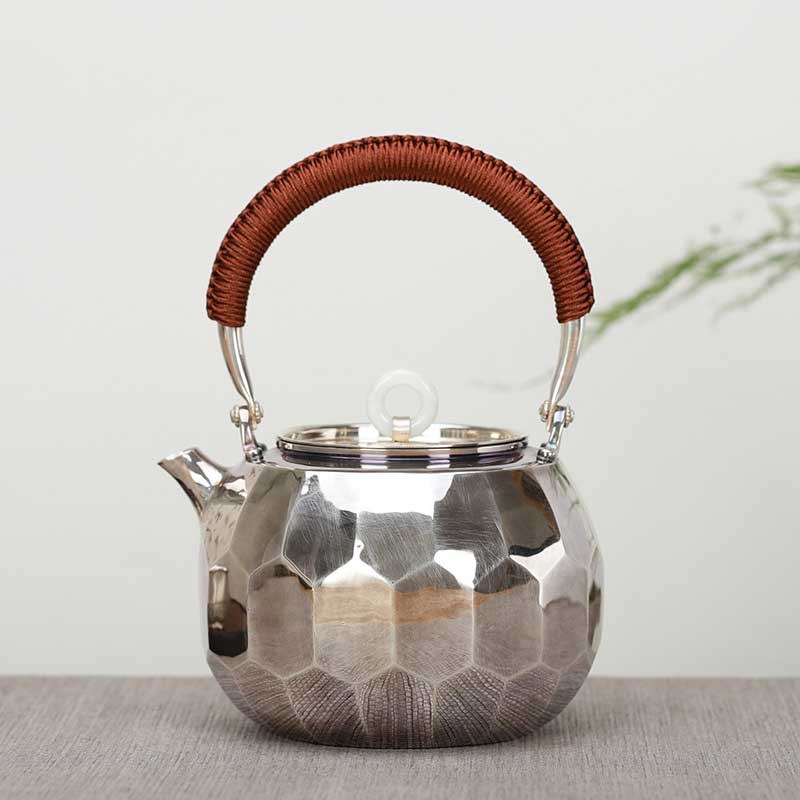
Surface finish has an important effect on perceived value. A bright mirror-polished surface can emphasize form and reflect light, but it may show fingerprints and handling marks more readily. A satin or softly brushed finish offers a quieter appearance. Hammered texture can make the object feel more artisanal and may visually soften small signs of use over time. Buyers should provide reference images and identify which visual features are essential, such as the depth of hammer marks, level of shine, or contrast between polished and textured areas.
If a purity mark, brand mark, date code, or commemorative inscription is required, clarify its location and format early. Marking may be placed beneath the base, inside a lid, on a handle fitting, or in another unobtrusive position. For private-label gift programs, buyers should confirm whether the mark will be engraved, stamped, laser applied, or otherwise produced. The marking process should not compromise the intended finish or distort a thin vessel wall.
Presentation is especially relevant for executive gifts and collectible items. A premium kettle may need a fitted gift box, protective inner wrap, care card, authenticity information, or a custom outer carton. Packaging should protect the spout, lid, and handle from movement during transport. If the item is being shipped internationally, buyers should request packaging dimensions and estimated packed weight so freight can be budgeted accurately.
For teams developing a broader art-gift collection, the handmade silver collection provides a useful reference point for coordinating silver-toned items with other decorative categories. Coordinated presentation can be valuable for retail assortments, cultural gift sets, and hospitality display programs.
Use samples and inspection criteria to control purchasing risk
For a custom or high-value order, a sample is often the clearest way to confirm expectations before production. The sample should be evaluated for purity declaration, overall weight, proportion, surface texture, lid fit, handle comfort, spout alignment, polish level, and packaging concept. Buyers should retain approved photos or a signed sample standard as the basis for production inspection.
Inspection criteria should distinguish acceptable handcrafted variation from defects. Hand-hammered work naturally includes individual character, but buyers can still define a standard for symmetry, stable standing, smooth edges, secure joints, uniform finish, and clean functional operation. If a kettle is intended as a display collectible, buyers may focus on decorative accuracy. If it is intended for tea service, they should additionally assess pouring behavior, balance, and comfort in handling.
Luoyang Yichuan Bronze Craft Co., Ltd. operates an ISO 9001 certified quality management system and performs quality inspection before shipment for its bronze art products. The company’s experience with traditional lost-wax bronze casting, hand chasing, polishing, patina work, and export-compliant protective packaging is relevant to buyers who are building mixed-material art, décor, and gift programs. Its bronze production scope includes sculptures, vessels, mirrors, incense burners, Buddhist statues, and custom artworks.
Buyers seeking complementary metal décor can review bronze home decor for ideas that pair tea accessories with sculptural vessels or display objects. For project-specific bronze pieces, the option to customize bronze sculptures supports orders ranging from a single custom prototype to negotiable bulk production quantities based on design complexity and size.
Build a clear buying decision around total value
The lowest quotation is not always the lowest total cost. A low initial price may exclude weight confirmation, finish standards, protective packaging, purity disclosure, or the level of handwork shown in the reference image. Conversely, a higher quotation may reflect greater silver weight, a more demanding purity level, more detailed hand finishing, or better protection for a fragile spout and lid.
Buyers should evaluate a kettle quotation using three questions. First, is the stated silver purity appropriate for the intended market position? Second, does the finished weight and construction support the desired appearance and use? Third, are the workmanship, inspection, packaging, and delivery terms defined well enough to avoid unexpected costs?
A well-prepared request for quotation turns purity from a vague marketing term into a measurable purchasing requirement. By specifying silver grade, net weight, dimensions, finish, components, quantity, and presentation needs, buyers can compare offers with confidence and select a premium tea accessory that aligns with both budget and brand expectations.