Guide to Shang Dynasty Bronze Ding Vessel Replica Features
Discovering the Hallmarks of an Authentic Shang Dynasty Bronze Ding Vessel Replica
The Shang Dynasty (c. 1600–1046 BCE) represents the apex of the Chinese Bronze Age, a period of unparalleled artistic and technological achievement. Among the era's most iconic creations is the ding, a ritual food vessel that was far more than mere cookware. It was a potent symbol of power, status, and the divine mandate to rule. For collectors, museum curators, and interior designers today, acquiring a faithful reproduction of a Shang ding is to own a piece of this profound history. But how can you distinguish a high-fidelity replica from a simple imitation? Understanding the key characteristics of authentic Shang bronzes is essential for evaluating the quality and accuracy of a modern reproduction.
This guide delves into the four critical areas of identification: form and shape, decorative motifs, material and patina, and inscriptions. By examining these elements, you can better appreciate the craftsmanship required to create a truly exceptional replica and make an informed sourcing decision for your project or collection.
Decoding the Form and Shape of a Shang Ding
The silhouette of a ding is its most fundamental feature. Shang artisans perfected a powerful and stable aesthetic that conveyed a sense of permanence and authority. A quality replica must first and foremost capture these essential structural characteristics.
The Classic Tripod (Liding) and Rectangular (Fangding) Forms
Shang ding vessels primarily appear in two distinct forms:
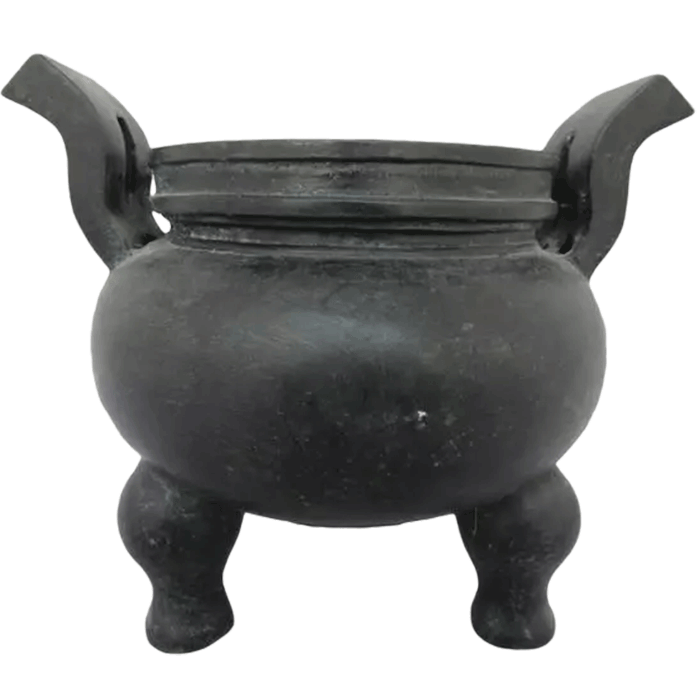
- Liding (鬲鼎): This is the round-bodied tripod form. It typically features a deep, bowl-like body supported by three robust, columnar legs. Early Shang examples often had more conical bodies and blade-like legs, which evolved into the more familiar bulbous shapes with solid, cylindrical legs in the middle and late periods.
- Fangding (方鼎): The less common but highly prestigious rectangular form. These four-legged vessels were generally larger and more imposing, reserved for the highest echelons of royalty. The famous Houmuwu Ding is a prime example of this monumental form.
When evaluating a replica, observe its basic shape. Does it conform to the known typologies of the Shang period? The curvature of the bowl, the angle of the legs, and the shape of the upright handles (or "ears") should all be consistent with archaeological examples.
Proportions and Symmetry
Beyond the basic shape, the harmony of proportions is a crucial indicator of quality. Shang bronzes exhibit a masterful sense of balance. The legs are not merely attached; they are an integrated part of the vessel's structure, providing a solid, unwavering foundation. The height of the legs should be in pleasing proportion to the depth of the body, and the two loop handles should be perfectly symmetrical and positioned to balance the vessel visually and physically. A superior replica will honor this intentional design, feeling stable and well-balanced rather than top-heavy or awkward.
Wall Thickness and Weight
Authentic Shang bronzes were cast using a significant amount of a precious resource: bronze. They were thick-walled, heavy, and built to last for generations of ancestral rituals. This substantiality is a key feature. A high-quality replica should reflect this by using a premium bronze alloy (Cu-Sn) and having a significant weight. It should feel robust and durable in your hands, not light or flimsy. This commitment to material integrity is a hallmark of a manufacturer dedicated to authenticity.
Examining the Intricate Decorative Motifs
The surface decoration of Shang bronzes is their most captivating feature. This complex visual language, filled with mythical beasts and abstract patterns, was central to the vessel's ritual function. A replica's accuracy is heavily judged by its ability to render these motifs with precision and clarity.
The Dominance of the Taotie Mask
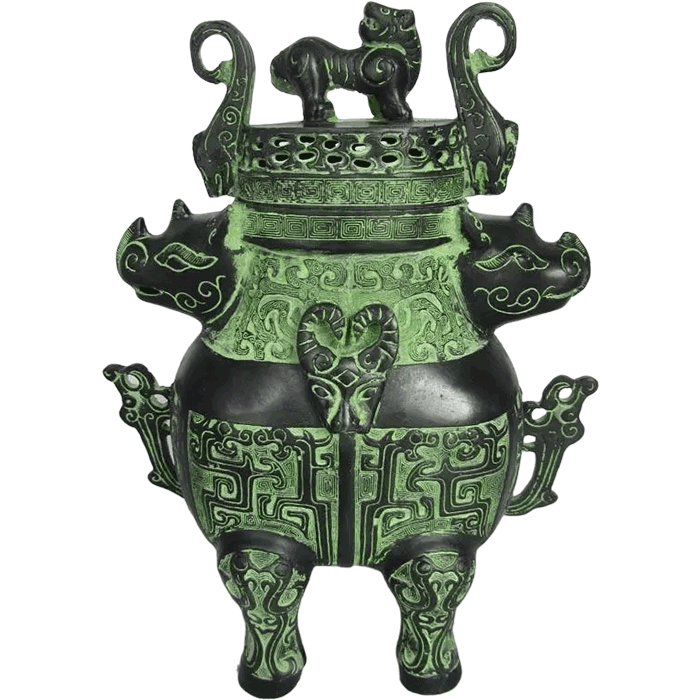
The most recognizable motif of the Shang Dynasty is the taotie (饕餮). This is a stylized, symmetrical mask of a mythical creature, characterized by a pair of large, prominent eyes. It often lacks a lower jaw and can feature horns, snouts, crests, and fangs. The taotie is typically displayed frontally, dominating the main decorative band around the vessel's belly. Its exact meaning is debated, but it is often interpreted as a protective guardian, a fearsome spirit, or a symbol of the connection between the human and supernatural worlds. In a replica, the lines of the taotie should be sharp, deep, and clear, capturing the intimidating power of the original design.
Supporting Animal and Geometric Patterns
While the taotie is the star, it is often surrounded by other creatures and patterns that enrich the vessel's design:
- Kui Dragons: A mythical, one-legged dragon or serpent typically shown in profile, often flanking the central taotie.
- Cicadas: Symbolizing rebirth and immortality, these were often found on the legs or in secondary decorative bands.
- Leiwen (雷紋): Known as the "thunder pattern," this dense background of fine, squared spirals fills the negative space, adding texture and depth to the overall design.
The interplay of these elements is complex. A well-crafted replica will show a clear distinction between the main motifs and the filler patterns, demonstrating a sophisticated understanding of Shang design principles. The ability to render this level of detail is a testament to both the artisans' skill and the casting process used. At Luoyang Yichuan Bronze Craft Co., Ltd., our craftsmen employ the traditional lost-wax method, a precision technique that allows for the faithful recreation of these intricate and layered ancient designs.
Understanding Patina and Material Composition
The surface of an ancient bronze tells the story of its long journey through time. The color and texture, known as patina, are the result of centuries of chemical reactions with its environment. Recreating this authentically is one of the most challenging aspects of producing a convincing replica.
The Signature Green and Blue Patina
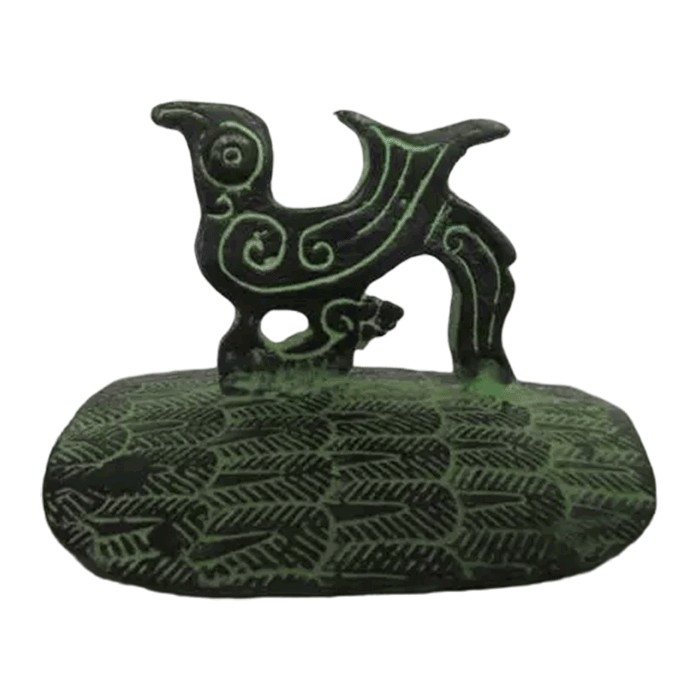
After being buried for over 3,000 years, Shang bronzes develop a distinctive patina. This is not a uniform layer of color but a complex, multi-layered surface. The most common colors are the malachite green, azurite blue, and sometimes cuprite red that result from the copper in the bronze alloy oxidizing. The patina can be smooth in some areas and crystalline or encrusted in others, depending on the soil conditions. Understanding the evolution of bronze culture over 2000 years provides context for how these artifacts aged.
Replicating Authenticity: The Art of Patination
A superior replica avoids simply painting the surface green. True patination is a chemical art form. It involves applying a series of chemical solutions and sometimes heat to the bronze surface to accelerate the natural oxidation process. This creates a deep, layered, and semi-translucent finish that mimics the genuine aging process. A key challenge for buyers is sourcing replicas with a consistent and believable color. Our workshop specializes in consistent patina color matching, ensuring that whether you order a single piece or a bulk run, the aesthetic quality remains uniform and meets your exact specifications.
The Role of Inscriptions (Jīnwén)
Inscriptions, known as jīnwén (金文, "text on metal"), provide direct insight into the vessel's purpose and owner. Their presence, style, and placement are critical historical markers.
The Evolution of Bronze Inscriptions
Inscriptions on Shang bronzes evolved significantly. On early- and mid-Shang vessels, they are often absent. When they do appear, they are typically very simple, consisting of one to three pictographic characters that represent a clan name or the name of an ancestor to whom the vessel was dedicated. Longer, more detailed inscriptions recounting historical events, royal appointments, or land grants became more common in the late Shang and flourished in the subsequent Western Zhou Dynasty. A famous example of a later, heavily inscribed vessel is the bronze statue and Mao Gong Ding from the Western Zhou.
Identifying Authentic-Style Inscriptions
When assessing a replica of a Shang ding, the inscription must be appropriate for the period it represents. An early-style ding with a long, narrative inscription is a historical contradiction. The characters themselves should appear as if they were cast with the vessel, not engraved or etched on afterward. This means the edges of the characters should be slightly rounded and integrated smoothly into the vessel's surface, reflecting the original piece-mold casting technique.
Sourcing a High-Fidelity Replica for Your Collection or Project
Identifying the features of a great replica is the first step. The second is finding a manufacturer capable of executing them. For museum shops, design firms, and collectors, partnering with a specialist producer is crucial for ensuring quality, authenticity, and reliability.
As an ISO 9001 certified manufacturer, we adhere to a strict quality management system for every piece we produce. We understand the specific needs of B2B clients, offering the flexibility to produce everything from a single custom prototype to large-scale production runs, with an MOQ from just one piece for custom sculptures. Whether you need an exact museum-quality reproduction or wish to customize a bronze sculpture from sculpmart.com, our team of over 30 skilled craftsmen has the expertise to bring your vision to life.
Finally, we recognize that sourcing fragile, high-value art pieces internationally presents logistical challenges. A common pain point is damage during transit. That is why we have perfected our export-compliant protective packaging, meticulously designed to ensure your sculptures arrive safely, no matter the destination. From initial design and casting to finishing and final delivery, our process is built on a foundation of quality, expertise, and trust.
In conclusion, a superior Shang ding replica is a masterful blend of historical accuracy and artistic craftsmanship. By carefully examining its form, motifs, patina, and inscriptions, you can confidently select a piece that honors the extraordinary legacy of the Shang Dynasty's bronze masters.