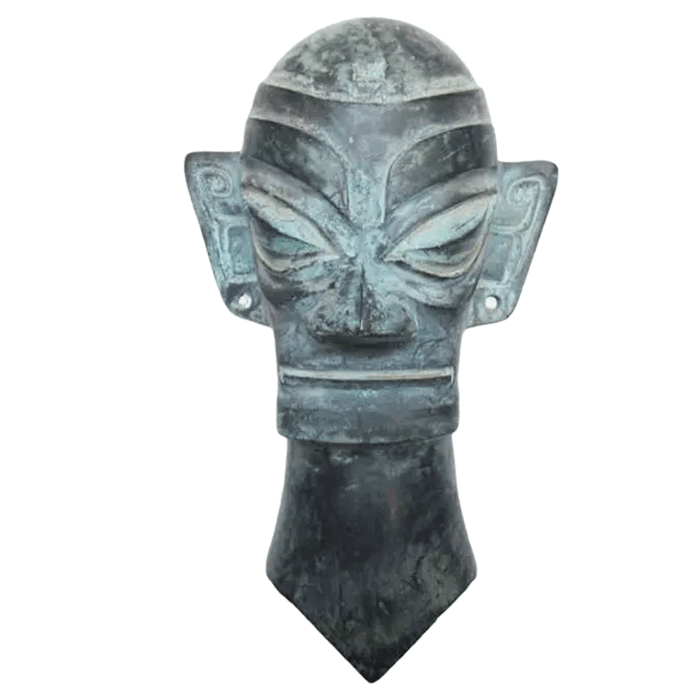
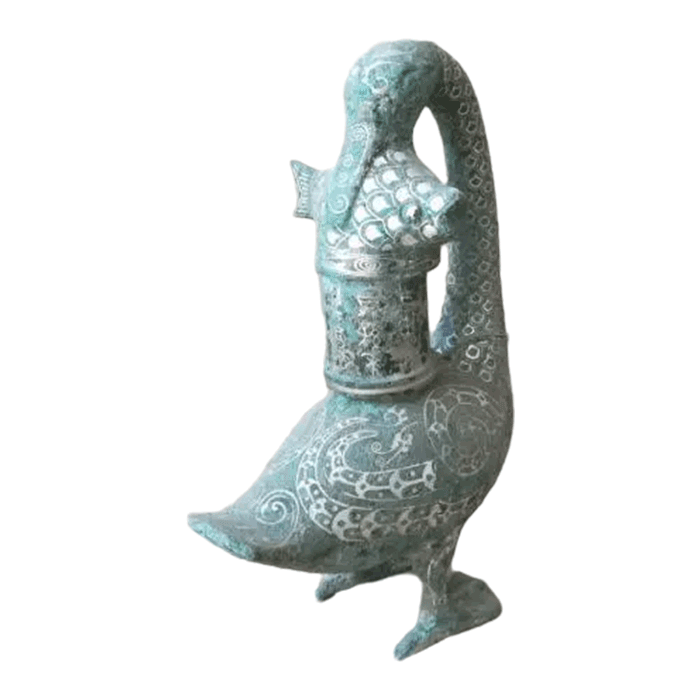
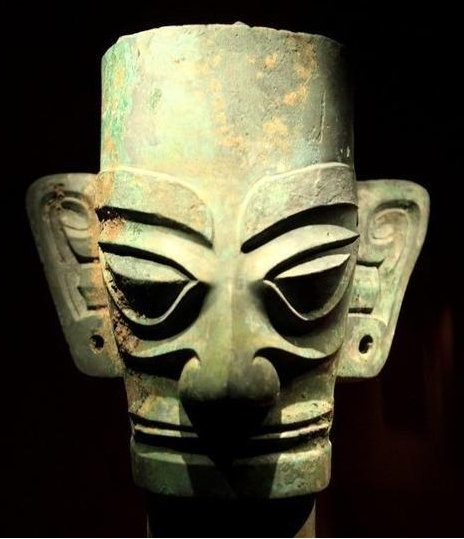
Exploring Bronze Zun Motifs Through Diverse Forms
Exploring Bronze Zun Motifs Through Diverse Vessel Forms
For collectors, curators, and cultural institutions, understanding the intricate relationship between vessel form and decorative motifs in ancient Chinese bronzes is paramount. Among these, the Bronze Zun stands as a particularly significant category of ritual wine vessels, renowned for its diverse shapes and the profound symbolism embedded within its ornamentation. At Luoyang Yichuan Bronze Craft Co., Ltd., we specialize in the meticulous replication and custom production of such exquisite pieces, ensuring historical accuracy and unparalleled craftsmanship. We aim to provide clarity on how various motifs are thoughtfully integrated into different forms of Bronze Zun, offering insights crucial for discerning buyers and educators.
Our commitment to excellence is deeply rooted in traditional techniques, combined with modern quality assurance. Certified under the ISO 9001 quality management system, our products consistently comply with export quality inspection standards for art crafts. We offer a robust production capability, with an annual output of over 50,000 bronze art pieces, supporting everything from a single custom prototype to extensive bulk production runs. Located in Yichuan County, Luoyang, Henan Province, our 3,000-square-meter facility houses over 30 skilled craftsmen, including bronze-casting masters and finishing artisans, dedicated to preserving and perpetuating the art of bronze making.
The Historical and Cultural Significance of Bronze Zun Vessels
The history of the Bronze Zun is deeply intertwined with the development of ancient Chinese civilization, particularly during the Shang and Zhou dynasties (c. 1600–221 BCE). These vessels were primarily used for holding wine during ancestral worship rituals, state ceremonies, and banquets, signifying the owner’s status, power, and connection to the divine. Beyond their practical function, Zun vessels served as profound artistic and spiritual statements, embodying the aesthetic sensibilities and cosmological beliefs of their time. Their forms evolved over centuries, reflecting changing ritual practices, metallurgical advancements, and artistic trends. The intricate motifs adorning each vessel were not merely decorative; they were imbued with symbolic meaning, intended to invoke protection, prosperity, and communion with ancestors and deities.
The study of these motifs provides a window into the rich mythological, religious, and social contexts of ancient China. From fearsome mythical creatures to intricate geometric patterns, each design element contributed to the vessel's overall narrative and ritual efficacy. The precise placement and execution of these motifs were crucial, often dictated by established conventions that ensured the vessel's authenticity and spiritual potency. Understanding these nuances is essential for anyone seeking to appreciate or reproduce these magnificent artifacts. Our expertise allows us to delve into this historical context, ensuring our reproductions faithfully capture the spirit and detail of the originals.
Mastering the Craft: Luoyang Yichuan Bronze Craft's Expertise in Bronze Zun Production
At Luoyang Yichuan Bronze Craft Co., Ltd., the creation of each Bronze Zun is a testament to our dedication to traditional artistry and modern precision. We utilize a premium bronze alloy (Cu-Sn) and the time-honored lost-wax casting method, a technique that allows for the capture of exceptionally fine details and intricate forms. This method, combined with the unparalleled skill of our bronze-casting masters, ensures that every component of the vessel, from its structural integrity to the minutest decorative element, meets the highest standards of quality.
Our production process goes beyond casting. Each piece undergoes intensive hand chasing, polishing, and patina finishing, available in a variety of antique or modern looks. This meticulous handwork is crucial for bringing out the depth and character of the motifs, creating a finish that is both durable and aesthetically authentic. We specialize in solving common custom bronze art sourcing pain points, such as achieving exact replication of antique bronzes, ensuring consistent patina color matching across multiple pieces, and providing export-compliant protective packaging specifically designed for fragile sculptures.
We stand by the quality of our work with stringent quality inspection before every shipment and offer free replacement for any casting defects. Furthermore, our commitment extends to comprehensive after-sales support, including guidance for patina touch-ups and restoration. Whether you require a single custom prototype with an MOQ from 1 piece or are planning bulk production runs, our capabilities are designed to meet diverse client needs, with bulk order pricing negotiable based on size and design complexity. Our objective is to serve as your trusted partner for customize a bronze sculpture from sculpmart.com, delivering artifacts that embody historical accuracy and artistic excellence.
Understanding Common Bronze Zun Vessel Forms and Their Associated Motifs
The classification of Bronze Zun vessels often begins with their fundamental forms, each of which dictated specific decorative conventions and carried distinct symbolic weight. Exploring these forms helps to decode the visual language of ancient Chinese bronzes.
The Cylindrical Zun (筒形尊 - Tǒngxíng Zūn): Austerity and Cosmic Order
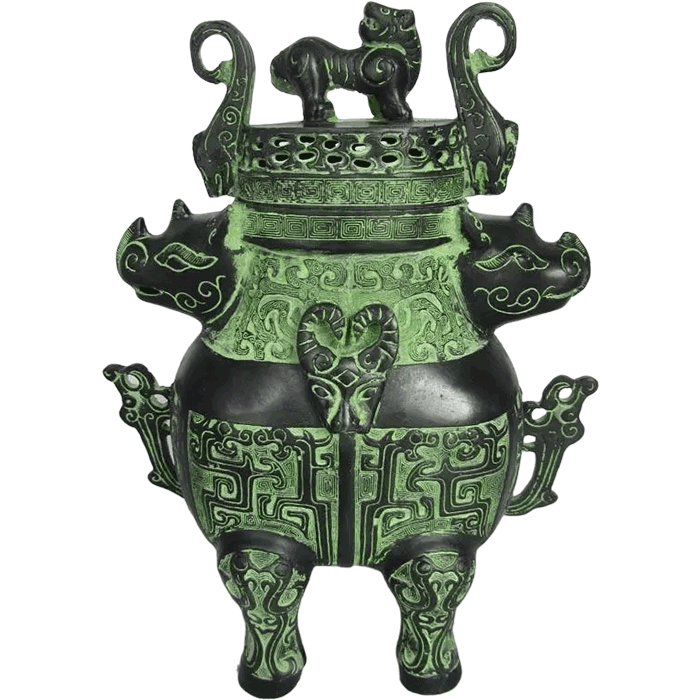
The cylindrical Zun, characterized by its straight, often tall body, sometimes with a slightly flared mouth and foot, represents one of the more austere yet powerful forms. These vessels often project a sense of stability and monumentality. The motifs found on cylindrical Zun frequently include the fearsome Taotie (饕餮) mask, a stylized mythical beast often associated with protection and the supernatural. These masks are typically symmetrical and highly detailed, often rendered in multiple registers around the vessel's body. Geometric patterns, such as the leiwen (雷紋, thunder pattern) – a dense, spiral motif – often fill the background, creating a sense of cosmic energy and continuous flow. Dragons (龍) and sometimes phoenixes (鳳凰) might also appear, their bodies intricately interwoven with the geometric patterns, symbolizing imperial power, celestial connection, and auspiciousness. The verticality of the cylindrical form often emphasized the upward aspiration of the rituals performed with these vessels, connecting earthly rites to the heavens.
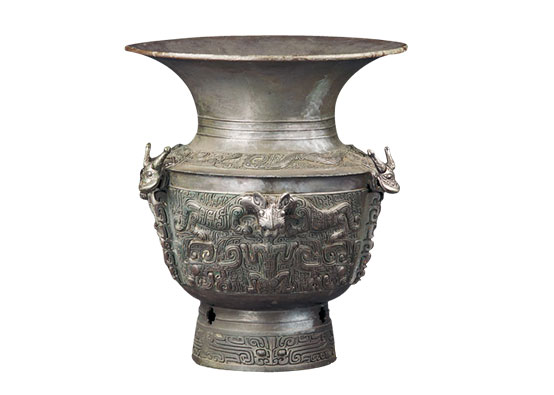
The Animal-Shaped Zun (鳥獸尊 - Niǎo Shòu Zūn): Power and Natural Spirit
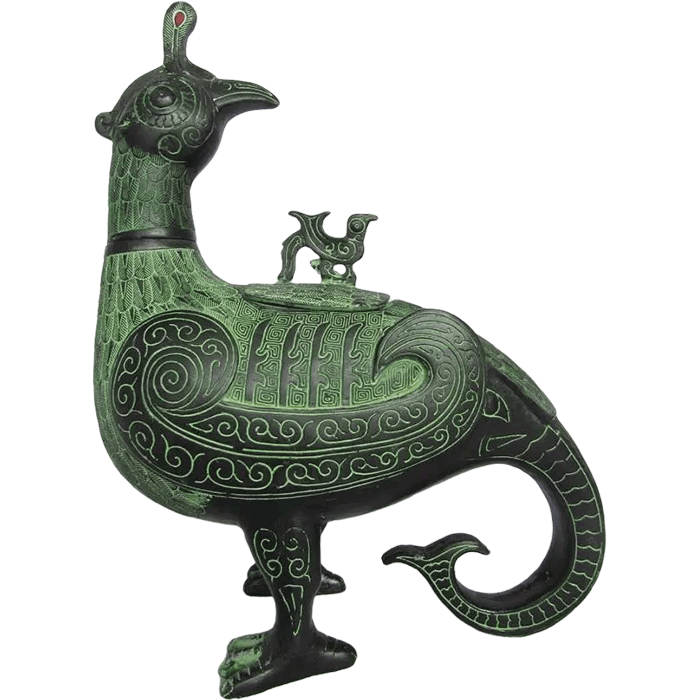
Perhaps the most visually captivating of the Zun forms, animal-shaped Zun vessels take the form of various creatures, both real and mythical. Common representations include rhinoceroses, elephants, owls, tigers, and even fantastical beasts. These three-dimensional sculptures seamlessly integrate the vessel's function with its animalistic form, with the pouring spout often cleverly incorporated into the animal's mouth or a stylized opening on its back. The motifs on these vessels are inherently linked to the animal itself. For example, a rhinoceros Bronze Zun might feature naturalistic details of its hide and horns, alongside stylized patterns that enhance its ritualistic power. Owl Zun might display prominent eyes and feathered textures. The symbolism here is direct: the strength of the tiger, the wisdom of the owl, the fertility of the elephant, or the protective qualities of mythical creatures. These animal forms were believed to embody specific spirits or powers, lending their attributes to the rituals in which the vessels were used. They represent a fascinating fusion of artistic realism and symbolic abstraction, often serving as powerful totems.
The Gu-Shaped Zun (觚形尊 - Gūxíng Zūn): Elegance and Ritual Precision
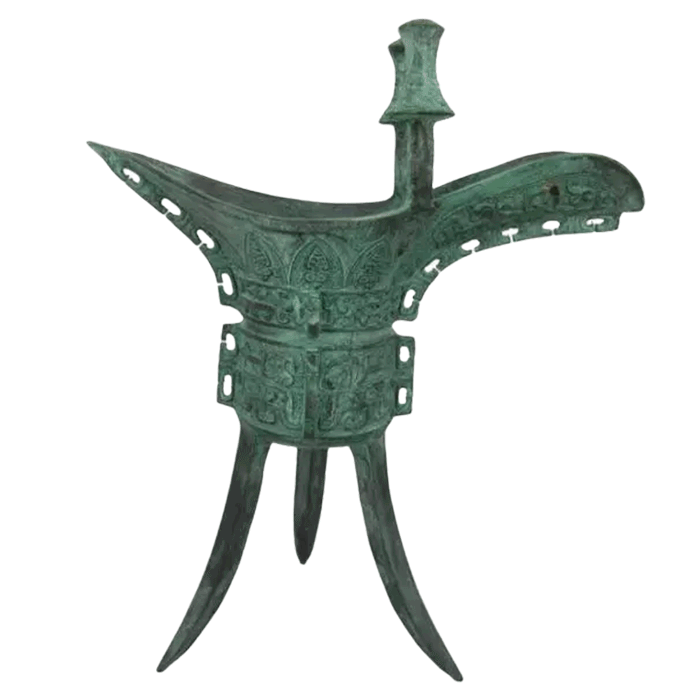
While the *gu* (觚) is often considered a distinct vessel type, there are many Zun vessels that adopt the slender, elegant profile of the *gu*, characterized by a wide, flared mouth, a constricted waist, and a flared foot. These forms are typically taller and more graceful than cylindrical Zun. The motifs on *gu*-shaped Zun often emphasize verticality and refinement. You might find simplified Taotie masks, often confined to the middle section, flanked by vertical ribs or flanges that accentuate the vessel's height. Intricate spirals and meanders might adorn the flared sections, subtly guiding the eye along the vessel's elegant curves. The decorative scheme on these forms tends to be less dense than on heavier vessels, allowing the elegant silhouette to speak for itself. This form suggests a focus on aesthetic balance and ritual precision, reflecting a more refined phase of bronze craftsmanship. For those interested in the broader range of chinese bronze sculpture, the *gu*-shaped vessels offer a compelling study in artistic evolution.
The Square Zun (方尊 - Fāng Zūn): Grandeur and Authority
The square Zun (fāng zūn) stands out for its imposing, often monumental presence. Unlike their round counterparts, square vessels were generally rarer and more difficult to cast, suggesting their use was reserved for the highest echelons of society. Their four-sided structure, often with prominent flanges at the corners and along the sides, conveys a sense of stability, grandeur, and unyielding authority. The motifs on square Zun are frequently elaborate and multi-layered. Dominant Taotie masks are common, often appearing larger and more intricate than on other forms, sometimes complemented by additional animal motifs such as dragons, phoenixes, or even elephants on the corners or feet. The decorative registers are typically well-defined, with each panel presenting a rich tapestry of mythical creatures and geometric patterns. The corners and flanges themselves are often decorated, adding to the vessel's overall complexity and visual weight. These vessels are powerful statements of imperial and aristocratic might, symbolizing the ruler's connection to the earth and cosmos through their structured, cardinal-direction-aligned form.
Other Notable Zun Forms: Diversity in Design
Beyond these primary categories, variations of the Zun form existed, sometimes blending characteristics or adopting unique features. For example, some Zun might incorporate elements of the *hu* (壺, wine pot) or *lei* (罍, large wine jar) in their overall design, albeit maintaining the Zun's primary function as a ceremonial wine container. These diverse forms underscore the rich creativity and evolving ritual requirements of ancient Chinese bronze casters. The exploration of bronze statues with different themes and vessels like the Zun provides an endless source of inspiration and historical inquiry for collectors and scholars alike.
The Art of Motif Interpretation and Custom Replication
The accurate interpretation and replication of bronze motifs are not merely technical challenges; they are acts of historical preservation. Each motif, from the fierce Taotie to the graceful dragon, tells a story of ancient beliefs, social structures, and artistic innovation. For institutions, collectors, and designers, sourcing custom bronze art that precisely captures these nuances is critical. Luoyang Yichuan Bronze Craft excels in this specialized field.
Our skilled artisans understand the subtle variations in motif styles across different dynasties and regions, ensuring that any custom piece we create is historically and stylistically accurate. Whether replicating a specific antique Bronze Zun from archaeological records or developing a new design inspired by historical precedents, our process is meticulous. We guarantee consistent patina color matching, a crucial detail often overlooked by less experienced manufacturers, and our export-compliant protective packaging ensures that even the most fragile sculptures arrive in pristine condition, ready for display or integration into collections.
For those seeking a truly authentic Bronze Zun or other bronze artifacts, our ability to combine traditional craftsmanship with modern project management ensures a seamless experience from design concept to final delivery. Our commitment to quality inspection before every shipment and comprehensive after-sales support, including guidance for patina touch-ups and restoration, provides peace of mind. Luoyang Yichuan Bronze Craft ensures that each bronze Zun, whether an exact replica or a new custom creation, stands as a testament to enduring artistry and historical significance.
At Luoyang Yichuan Bronze Craft Co., Ltd., we are dedicated to bringing the grandeur of ancient Chinese bronze art into the modern world. Our expertise in crafting high-quality bronze vessels, including the distinguished Bronze Zun, stems from centuries of tradition combined with contemporary precision and service. We invite you to explore our capabilities for custom bronze artworks, confident that our ISO 9001 certified processes, skilled artisans, and commitment to historical accuracy will meet and exceed your expectations. Partner with us to acquire or recreate bronze artifacts that carry profound cultural weight and timeless beauty, crafted for global appreciation and enduring legacy.