Defining Features of a Shang Dynasty Style Bronze Vessel
Understanding the Defining Characteristics of a Shang Dynasty Style Bronze Vessel
For design-led importers and product teams seeking to source historically accurate or inspired bronze artworks, a deep understanding of the stylistic nuances is paramount. Among the most iconic and historically significant artifacts are those from the Shang Dynasty (c. 1600–1046 BC) in ancient China. These ritual vessels, often cast in bronze, represent a pinnacle of early metallurgical and artistic achievement. This article delves into the distinctive features of a Shang Dynasty Style Bronze Vessel, focusing on its characteristic relief decorations, structural flanges, and diverse forms, providing a technical vocabulary for precise communication with manufacturers and suppliers.
The Historical and Cultural Significance of Shang Bronzes
The Shang Dynasty marked a pivotal era in Chinese civilization, characterized by the emergence of a sophisticated writing system, advanced social structures, and unparalleled mastery of bronze casting. Bronze, a premium alloy of copper and tin (Cu-Sn), was not merely a material for tools but a sacred metal, imbued with spiritual power and reserved for the elite. Shang bronzes were primarily ritual vessels, used in ceremonies to communicate with ancestors and deities, offer food and wine, and legitimize political power. Their function dictated their form and decoration, making them not just objects of art but potent symbols of authority and belief.
These vessels were often buried with royalty and high-ranking officials, serving as grave goods that reflected the deceased's status and ensured their well-being in the afterlife. The discovery of numerous Shang bronze hoards, such as those from Anyang, the last Shang capital, has provided invaluable insights into the dynasty's culture, technology, and artistic conventions. Their intricate designs and monumental scale testify to the highly organized workshops and skilled artisans of the period, whose techniques are meticulously studied and replicated by modern bronze craft companies today.
Understanding this backdrop is crucial for appreciating the technical and aesthetic choices embodied in each piece. The meticulous craftsmanship, the symbolic weight of the motifs, and the sheer scale of production at the time speak volumes about a civilization that placed immense value on these artifacts. Modern reproductions, therefore, aim not just for visual accuracy but also to capture the spirit of this ancient artistry.
Iconic Decorative Elements: Relief, Patterns, and Textures
The surface of a Shang Dynasty Style Bronze Vessel is rarely plain; instead, it is a canvas for rich and complex ornamentation, primarily executed in various forms of relief. These decorations are not merely aesthetic but carry deep symbolic meaning, often related to shamanistic beliefs, ancestor worship, and the natural world.
The Taotie Motif: A Central Icon
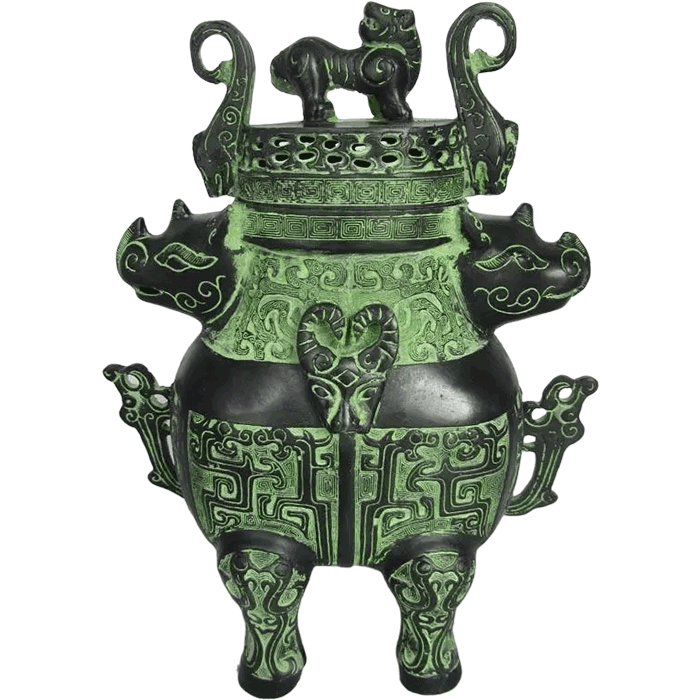
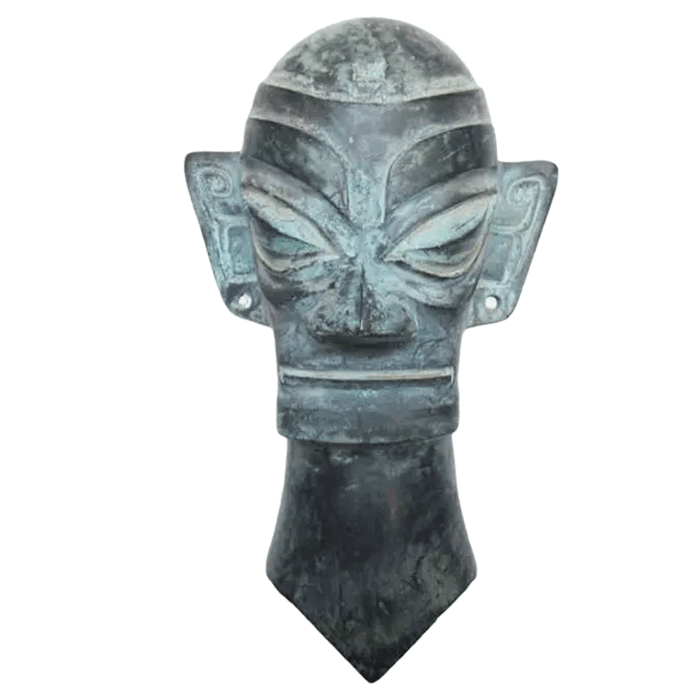
Perhaps the most recognizable and ubiquitous motif on Shang bronzes is the taotie. This zoomorphic mask typically features a symmetrical, frontal depiction of a mythical creature with prominent eyes, eyebrows, a snout, and often horns. While its exact meaning remains debated, it is widely believed to be a protective or apotropaic symbol, warding off evil spirits and signifying power. The taotie is often rendered in high relief, creating a striking visual presence. Its constituent parts—eyes, nose, mouth—are often separated by flanges or ridges, emphasizing its fearsome symmetry.
Other Zoomorphic and Geometric Patterns
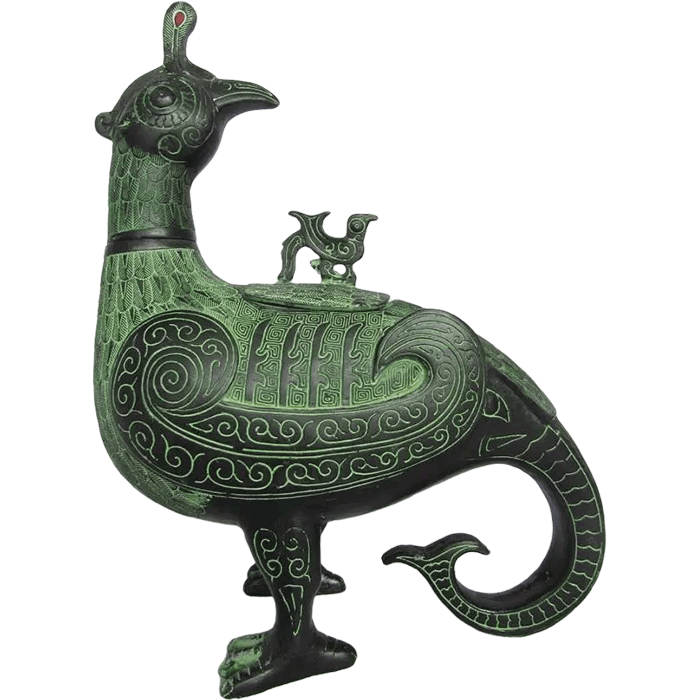
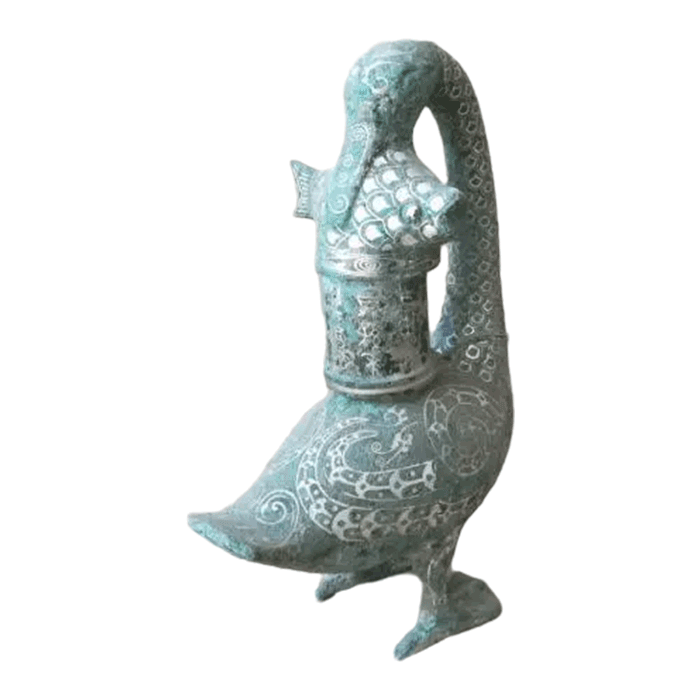
Beyond the taotie, Shang bronzes incorporate a repertoire of other animal motifs, including dragons (kui dragons), birds, tigers, and cicadas. These animals are often highly stylized, rendered in profile, and arranged in repeating patterns that fill the vessel's surface. The kui dragon, for instance, is typically depicted as a one-legged, horned creature with a long, undulating body, often appearing in bands around the vessel's neck or foot. Birds, particularly owls, are also common, sometimes forming the entire shape of a vessel.
Geometric patterns, such as spirals (leiwen or thunder patterns), lozenges, and meanders, frequently serve as ground patterns (background filler) or border designs. These intricate patterns not only add textural richness but also highlight the primary zoomorphic motifs. The interplay between the main motifs and the background patterns creates a sense of depth and complexity, a hallmark of Shang bronze aesthetics.
Relief Techniques: From Incised to High Relief
The relief on Shang bronzes varies significantly, from shallow incised lines to bold, projecting forms. Early Shang bronzes tended to feature flatter, more linear designs, often appearing almost two-dimensional against the vessel's surface. As the dynasty progressed, particularly during the middle and late Shang periods, the relief became increasingly pronounced. Motifs began to stand out more sharply from the background, sometimes reaching a height comparable to the flanges themselves. This evolution in relief technique demonstrates the growing sophistication of the lost-wax casting method and the artisans' ability to achieve greater three-dimensionality in their designs. When sourcing, specifying the desired level of relief—be it shallow, medium, or high—is crucial for achieving the desired historical accuracy or aesthetic impact.
Form and Structure: Typologies of Shang Vessels
Shang bronze vessels come in a wide array of standardized forms, each serving a specific ritual purpose. Understanding these typologies is essential for identifying and discussing specific pieces.
Food Vessels: Ding, Gui, and Yan
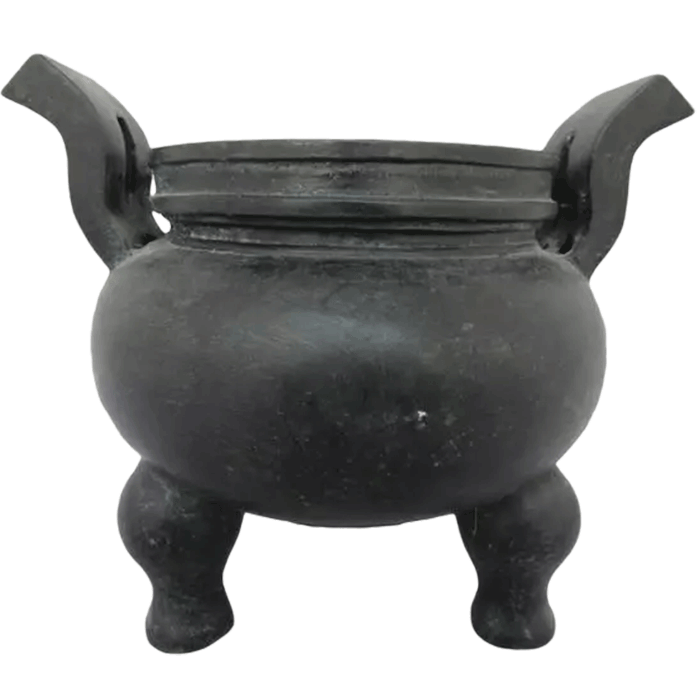
- Ding: The ding is arguably the most recognizable Shang vessel. It is a tripod cauldron, typically with a deep bowl, two loop handles on the rim, and three legs (either solid, cylindrical, or blade-like). Its primary function was for cooking and holding sacrificial food. The size and ornamentation of a ding often indicated the owner's status. For instance, the monumental "Houmuwu Ding" is a testament to the immense scale achievable.
- Gui: A gui is a circular food container, often with two handles, and resting on a ring foot or multiple legs. It was used for serving cooked grains.
- Yan: A steamer, the yan consists of two parts: a lower tripod cauldron for water and an upper bowl with a perforated bottom for steaming food, connected by a waist-like section.
Wine Vessels: Jue, Gu, Zun, and Hu
Wine played a significant role in Shang rituals, leading to a diverse range of specialized wine vessels.
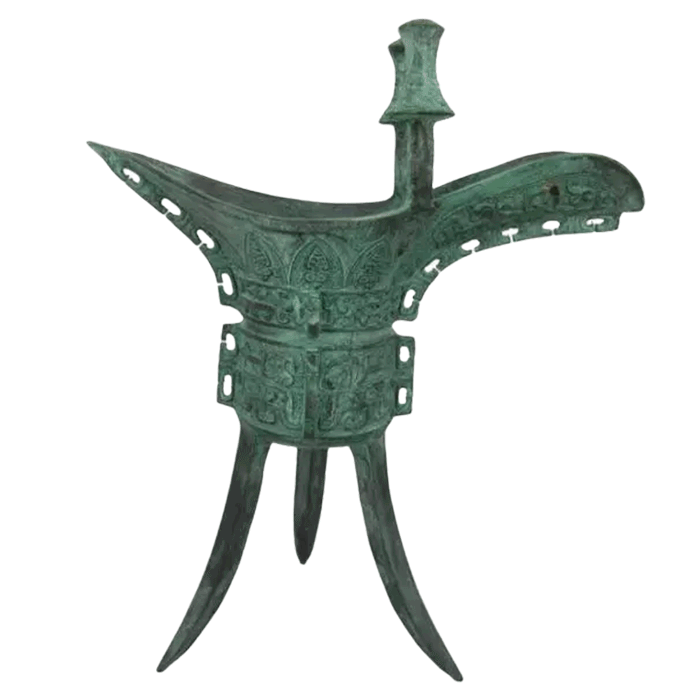
- Jue: A small, three-legged tripod cup with a spout, a 'tail' (a pointed projection), and a single loop handle. It was used for heating and drinking ritual wine.
- Gu: A tall, slender beaker with a trumpet-shaped mouth and foot, often featuring intricate decoration in bands. It was used for drinking wine.
- Zun: A larger, often elaborate wine vessel, typically with a wide mouth, a bulging body, and a flared foot. Many zun take on zoomorphic forms, such as owls or elephants.
- Hu: A壶 (hu) is a jar or vase, usually with a pear-shaped body, a narrow neck, and often two handles. It was used for storing wine.
Water Vessels: Pan and Yi
- Pan: A large, shallow basin with a flat bottom, used for holding water for washing hands during rituals.
- Yi: A pouring vessel with a spout and a handle, also used for ritual ablutions.
Each form has specific proportions and structural elements that contribute to its overall aesthetic and functional integrity. Replicating these forms accurately requires a deep understanding of traditional casting methods and a keen eye for historical detail.
The Distinctive Role of Flanges and Projections

One of the most visually striking and structurally defining features of many Shang bronzes are their prominent flanges and projections. These are vertical ridges or fins that protrude from the surface of the vessel, often running along seams or dividing decorative sections. They are not merely ornamental but were integral to the casting process and evolved to become a key stylistic element.
Function in Casting
In the piece-mold casting method prevalent during the Shang Dynasty, vessels were created by assembling multiple clay molds. Flanges often correspond to the seams where these mold sections met. Initially, they might have served a practical purpose, helping to align the molds and reinforce the structure. However, their artistic potential was quickly recognized.
Aesthetic Impact and Stylistic Evolution
Over time, flanges transformed from functional elements into elaborate decorative features. They became sharper, more angular, and often adorned with stylized motifs, such as serrated edges, small hooks, or even miniature animal heads. They serve to:
- Emphasize Form: Flanges accentuate the verticality and structural divisions of a vessel, breaking up its surface and giving it a more imposing presence.
- Enhance Relief: They often frame and define the primary decorative motifs, particularly the taotie, by separating different sections of the design and adding to its three-dimensional quality.
- Create Depth and Shadow: The projecting nature of flanges catches light and creates shadows, adding a dynamic interplay of light and dark across the vessel's surface, enhancing its dramatic effect.
The presence, size, and embellishment of flanges are critical indicators of a vessel's period and regional characteristics within the Shang Dynasty. When commissioning replicas, specifying the desired flange style—from subtle ridges to bold, serrated projections—is vital for achieving historical accuracy.
Producing Authentic Shang Dynasty Style Bronze Vessels Today
Replicating the intricate details, precise forms, and distinctive surface treatments of ancient Shang bronzes requires specialized expertise and adherence to traditional methods. Luoyang Yichuan Bronze Craft Co., Ltd. excels in this domain, offering solutions for design-led importers and product teams. Our facility in Yichuan County, Luoyang, Henan Province, spans 3,000 square meters and houses over 30 skilled craftsmen, including bronze-casting masters and finishing artisans, dedicated to preserving and perfecting these ancient techniques.
The Lost-Wax Method and Material Excellence
We utilize the traditional lost-wax method, a sophisticated casting process that allows for the faithful reproduction of complex designs, including the intricate relief and sharp flanges characteristic of a Shang Dynasty Style Bronze Vessel. Our commitment to quality begins with the material: we exclusively use premium bronze alloy (Cu-Sn), ensuring the authenticity and longevity of each piece. This alloy closely matches the composition of ancient bronzes, providing both structural integrity and the ideal substrate for traditional patination.
Precision in Finishing and Patination
After casting, each vessel undergoes meticulous hand chasing and polishing by our artisans to refine every detail and achieve the desired surface texture. Crucially, we offer various patina finishes, including traditional antique looks that mimic centuries of natural aging, as well as modern interpretations. We understand that consistent patina color matching across multiple pieces can be a significant pain point for importers, and we guarantee this consistency through our stringent quality control processes.
Quality Assurance and Customization
As an ISO 9001 quality management system certified company, our products consistently comply with export quality inspection standards for art crafts. We conduct thorough quality inspections before every shipment to ensure that each bronze vessel meets both historical accuracy and structural integrity requirements. In the rare event of casting defects, we offer free replacements, demonstrating our commitment to client satisfaction. Furthermore, our after-sales support extends to patina touch-ups and restoration guidance, ensuring the lasting beauty of your investment.
Whether you require a single custom prototype to exactly replicate an antique bronze or need bulk production runs of over 50,000 bronze art pieces annually, we are equipped to support your project. Our MOQ for custom sculptures starts from just 1 piece, with bulk orders negotiable based on size and design complexity. Our expertise in precise replication and our dedication to resolving sourcing challenges, such as consistent patina and export-compliant protective packaging for fragile sculptures, make us an ideal partner for your bronze art needs. Explore our capabilities to customize a bronze sculpture that meets your exact specifications.
Conclusion
The Shang Dynasty Style Bronze Vessel stands as a testament to an ancient civilization's artistic and technological prowess. Its defining characteristics—from the powerful taotie and intricate zoomorphic patterns executed in sophisticated relief, to the diverse functional forms and the distinctive, often serrated flanges—offer a rich vocabulary for appreciation and specification. For design-led importers, understanding these elements is crucial for sourcing authentic and high-quality reproductions. Partnering with experienced manufacturers like Luoyang Yichuan Bronze Craft Co., Ltd. ensures that every detail, from the selection of premium bronze alloy to the hand-finished patina and export-compliant packaging, contributes to a product that honors its ancient legacy while meeting modern standards of excellence.