Custom Ancient Bronze Casting: A Guide to Section Moulds
Mastering Authenticity: A Guide to Custom Ancient Bronze Casting with Section Moulds
The legacy of ancient bronze art is captured not only in its iconic forms but also in the very methods used to create it. For museums, collectors, architectural firms, and design studios seeking to commission historically inspired bronze works, understanding the fabrication process is paramount to achieving authenticity. While the lost-wax method is widely known, the piece-mould, or section mould, technique offers a distinct set of advantages, particularly for replicating the ritual vessels and geometric sculptures of antiquity.
Choosing the right casting method is a critical decision that impacts design fidelity, production efficiency, and historical accuracy. This guide provides a comprehensive overview of the section mould technique, helping sourcing teams and project managers determine when this traditional method is the ideal choice for their custom bronze art procurement needs.
Understanding the Piece-Mould Casting Technique
Piece-mould casting is one of the oldest and most influential metallurgical technologies in history, most famously perfected during China's Shang and Zhou dynasties. The fundamental principle involves creating a multi-part mould around a master model. Unlike the single-use ceramic shell of the lost-wax process, a piece-mould is composed of several interlocking sections, typically made of a clay or sand composite, that can be carefully disassembled and reassembled.
The process begins with a solid prototype of the final object. Craftsmen then meticulously pack the moulding material around this model, strategically dividing the mould into sections along natural lines of the design. These sections are engineered to fit together perfectly, like a three-dimensional puzzle. Once the outer mould sections are created, a central core is made to form the hollow interior of the vessel or sculpture. The sections are then fired for durability, precisely reassembled, and the molten bronze is poured into the cavity between the outer mould and the inner core. After cooling, the sections are removed, revealing the cast bronze object, which then proceeds to the finishing stages.
This technique's primary advantage over lost-wax casting in ancient times was its reusability. A single set of mould pieces could be used to produce multiple, nearly identical bronzes, enabling a form of early serial production for ritual vessels and weaponry. This repeatability makes it a highly relevant and cost-effective option for modern projects requiring limited production runs of the same design.
When to Choose Section Moulds for Your Bronze Project
The decision between piece-mould and lost-wax casting hinges on three key factors: the geometry of the design, the required production volume, and the desired level of historical authenticity. Evaluating your project against these criteria will clarify the most effective and efficient path forward.
Design Geometry and Complexity
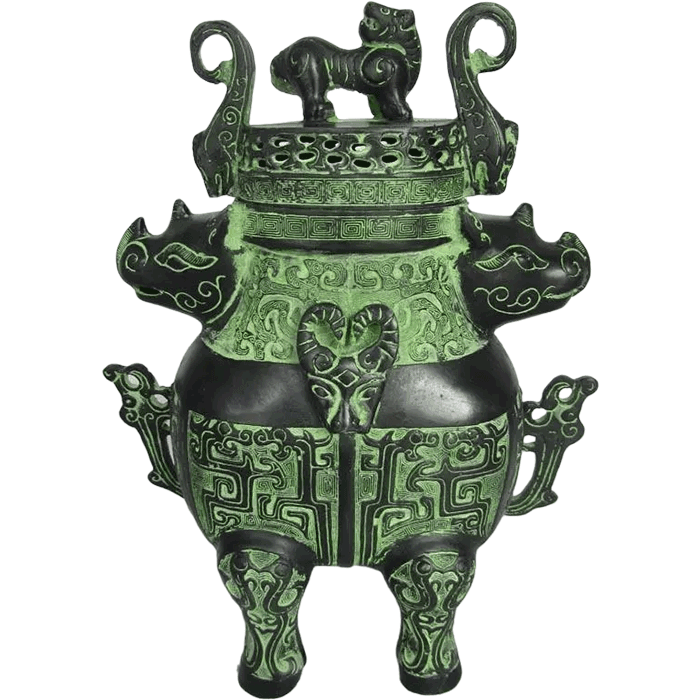
The section mould technique is exceptionally well-suited for objects with a certain degree of symmetry and clearly defined planes. It excels in the creation of traditional vessels that are central to the history of Chinese bronze sculpture, such as:
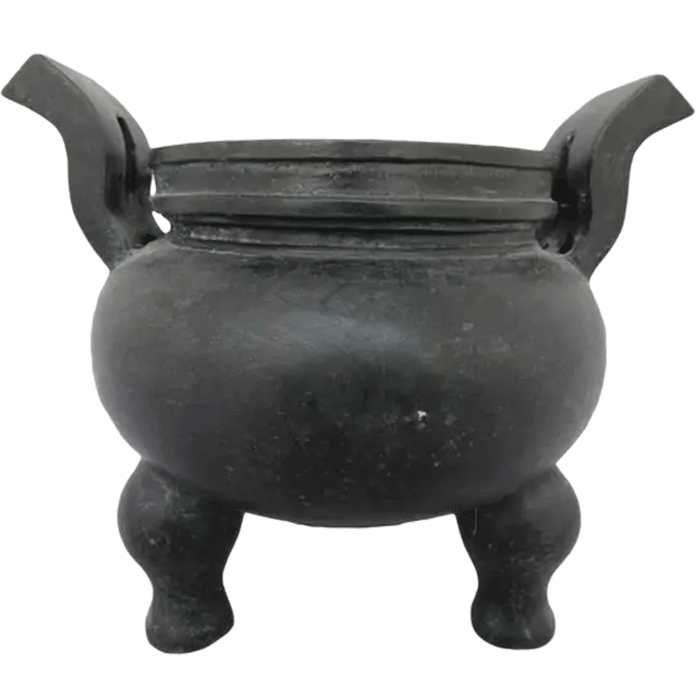
- Ding (鼎): Cauldrons, typically with a round body and three legs, or a rectangular body and four legs.
- Zun (尊) and Hu (壺): Tall, often ornate, wine vessels and vases with wide bodies and distinct necks.
- Gui (簋): Food vessels with a circular base and handles.
The logical divisions and symmetrical nature of these forms allow for straightforward and effective mould sectioning. Conversely, highly complex, asymmetrical, or deeply undercut sculptures—for instance, a dynamic statue with flowing robes or intricate, interlocking limbs—are often better candidates for the lost-wax method, which can capture more organic and unique forms without the constraint of mould seam lines.
A characteristic of piece-mould casting is the presence of fine mould lines or ridges on the final bronze where the sections met. While these are typically removed during the finishing process (known as "chasing"), for historical reproductions, they can be intentionally retained as an authenticating detail that speaks to the object's manufacturing heritage.
Production Volume and Repeatability
One of the most compelling B2B cases for section moulds is efficiency in batch production. If your project requires a series of identical pieces—for example, decorative elements for a hotel, awards for a corporate event, or a limited edition of a museum replica—the reusability of the mould offers significant advantages. After the initial investment in creating the master model and the mould sections, each subsequent casting has a lower marginal cost compared to the lost-wax process, where a new wax model and ceramic shell must be created for every single piece.
This scalability is crucial for managing project budgets and timelines. Whether you need a small batch of ten or are planning a larger run, understanding the efficiency of section moulds is key. At our 3,000-square-meter facility, we are equipped to support diverse production scales. Our annual output of over 50,000 bronze art pieces is a testament to our capacity to handle everything from a single prototype to substantial bulk orders, ensuring consistency across every piece in a series.
Achieving Historical Authenticity
For projects focused on creating faithful reproductions of historical artifacts, using the period-correct manufacturing technique is the ultimate mark of authenticity. A replica of a Shang dynasty vessel cast using the piece-mould method is not just a visual copy; it is a recreation of the historical process. This level of detail is invaluable for museum exhibits, academic studies, and high-end collectors who appreciate a deeper connection to the object's origins.
The subtle surface characteristics, the nature of the seam lines, and the overall feel of a piece-mould bronze are distinct. An expert foundry can replicate these nuances, producing a work that is true to its inspiration in both form and spirit. This approach honors the ingenuity of ancient craftsmen and brings artifacts like the famous Houmuwu square cauldron to life with unparalleled fidelity.
The Modern Piece-Mould Process: From Digital Design to Finished Bronze
While the principles of piece-mould casting are ancient, modern technology has refined the process for greater precision and quality control. At Luoyang Yichuan Bronze Craft Co., Ltd., we merge time-honored techniques with contemporary standards.
1. Master Model Creation: The process begins with a perfect master model. This can be a traditional sculpture hand-carved from wood or clay by our artisans, or it can be developed from a client's 3D CAD files and produced via high-resolution 3D printing. This hybrid approach ensures absolute accuracy to the client's specifications.
2. Mould Sectioning Strategy: This is where artistry meets engineering. Our team of over 30 skilled craftsmen, including bronze-casting masters, analyzes the model to devise the optimal sectioning plan. The goal is to create a mould that captures all details perfectly while minimizing the visibility of seam lines and ensuring a smooth flow of molten bronze.
3. Mould Fabrication and Core Creation: The mould sections are carefully formed around the model using a refined composite material that ensures durability and a smooth surface finish. A separate inner core is crafted to define the hollow interior of the final piece. Each component is fired in a kiln to create a hard, refractory mould capable of withstanding the extreme heat of the casting process.
4. Casting with Premium Alloy: The fired mould sections are meticulously assembled and secured. We then pour a premium bronze alloy (Cu-Sn), which is renowned for its strength, corrosion resistance, and excellent casting properties. The precise temperature and pouring speed are carefully controlled to prevent defects.
5. Demoulding and Finishing: Once the bronze has cooled and solidified, the mould sections are carefully removed. The raw casting is then transferred to our finishing department. Here, artisans perform chasing to smooth over seam lines, followed by meticulous polishing and the application of a patina. Whether you require a classic antique green finish or a modern polished look, our specialists can achieve consistent, beautiful results.

Partnering with an Expert Foundry for Your Casting Needs
Executing a successful project in custom ancient bronze casting requires a manufacturing partner with deep technical knowledge, rigorous quality control, and the flexibility to meet unique project demands. When vetting potential foundries, consider the following critical capabilities.
Technical Expertise and Material Quality
A reliable partner must demonstrate mastery of both historical methods and modern quality standards. Look for a foundry that understands the subtleties of different casting techniques and can advise on the best approach for your specific design. Material integrity is non-negotiable. Ensure your partner uses high-quality bronze alloys and has transparent quality control procedures. As an ISO 9001 certified company, our entire production process, from raw material sourcing to final inspection before shipment, is governed by a stringent quality management system.
Solving Common Sourcing Challenges
The right foundry does more than just cast metal; it solves problems. Key challenges in sourcing custom bronze art include achieving exact replication of an original, ensuring consistent patina color across a batch, and guaranteeing safe transit for fragile, high-value items. We directly address these pain points through the skill of our artisans, our standardized patina application processes, and our use of export-compliant protective packaging designed to withstand the rigors of international shipping. We stand by our work, offering free replacement for any casting defects and providing after-sales support for patina maintenance.
Scalability and Customization
Your needs may range from a single, monumental sculpture to hundreds of smaller decorative pieces. An ideal manufacturing partner should offer the flexibility to accommodate this spectrum. We have structured our operations to be highly adaptable, making it possible to customize a bronze sculpture from sculpmart.com at any scale. Our minimum order quantity (MOQ) starts from a single piece for custom prototypes, allowing you to validate a design before committing to a larger run, while our production capacity ensures we can meet the demands of high-volume orders.
By choosing a partner who combines traditional craftsmanship with modern B2B service standards, you can confidently bring your vision for historically significant bronze art to life. The piece-mould technique, in the hands of skilled artisans, remains a powerful and relevant method for creating works of enduring beauty and authenticity.