Comparing Shang and Zhou Bronze Zun Forms | Luoyang Bronze
Understanding the Evolution of the Bronze Zun from the Shang to the Zhou Dynasty
The zun is one of the most iconic and historically significant vessels in the vast legacy of Chinese bronze art. Primarily used as a ritual wine container, its form and decoration underwent a profound transformation between the Shang (c. 1600–1046 BCE) and Zhou (c. 1046–256 BCE) dynasties. For collectors, museums, and designers seeking to source or commission historically accurate replicas, understanding these stylistic shifts is crucial. This article provides a detailed comparison of Shang and Zhou zun forms, offering insights into the cultural, technological, and aesthetic changes that defined China's Bronze Age and how those details are preserved in modern craftsmanship.
At Luoyang Yichuan Bronze Craft Co., Ltd., we are situated in the heart of a region with a 3,000-year bronze culture. This heritage informs our meticulous approach to creating everything from custom prototypes to bulk production runs of ancient Chinese bronze handicrafts. Our expertise in the traditional lost-wax casting method allows us to faithfully recreate the distinct characteristics of each historical period.
The Shang Dynasty Zun: Raw Power and Mythological Imagery
The Shang Dynasty represents the zenith of early Chinese bronze casting. The ritual vessels from this era, including the zun, are characterized by a sense of raw, almost spiritual power. They were not mere containers but vital instruments in ceremonies connecting the Shang kings with their ancestors and the spirit world. This function is directly reflected in their robust construction and dramatic, often intimidating, decoration.
Defining Forms and Shapes
Shang zun vessels typically appeared in two primary forms:
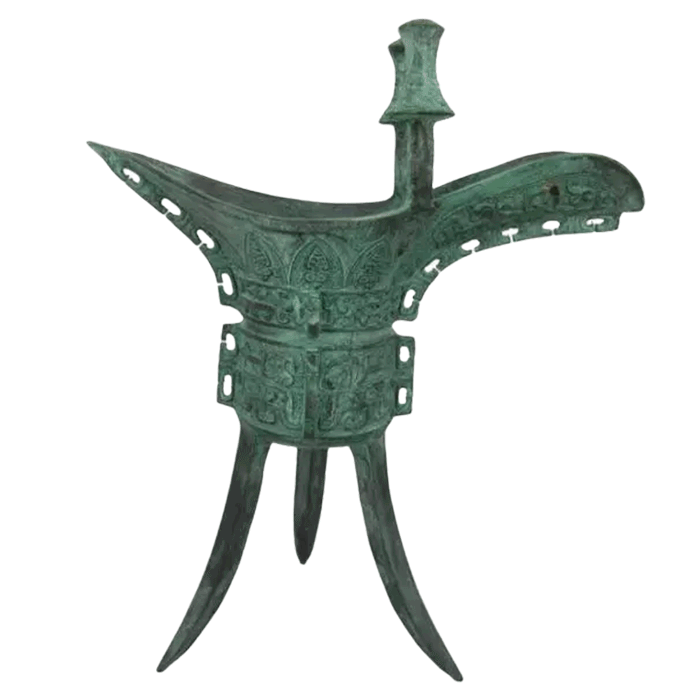
- Cylindrical or Gube-shaped Zun: This is the most common type, featuring a wide, trumpet-like mouth, a bulging central section, and a high, splayed foot. The silhouette is tripartite, clearly demarcating these three sections, with each serving as a canvas for dense decoration. The proportions are often heavy and stable, conveying a sense of permanence and authority.
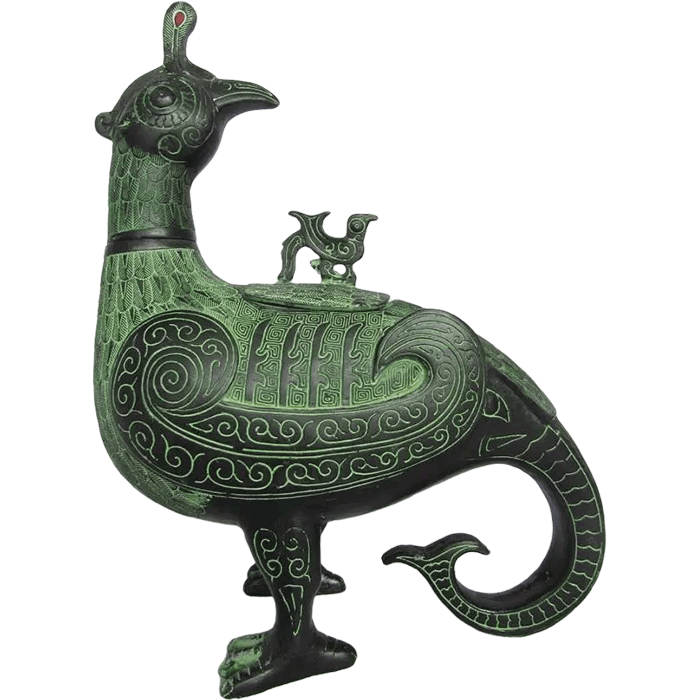
- Zoomorphic Zun: Perhaps the most spectacular creations of Shang bronze art, these vessels were cast in the realistic or stylized shapes of animals. Elephants, rams, owls, and mythical beasts were common subjects. These pieces were technical marvels, demonstrating the casters' complete mastery over the piece-mold or lost-wax casting process. The famous four-ram square zun is a prime example of this form, combining vessel function with powerful sculptural presence.
Dominant Decorative Motifs
Shang decoration is dense, highly structured, and deeply symbolic. The surfaces of a Shang zun are rarely left plain. The primary motif is the taotie, a stylized, symmetrical mask of a mythical creature, often interpreted as a protective guardian or a representation of gluttony to warn against overindulgence. The taotie is typically characterized by prominent eyes, horns, a snout, and a jaw, but lacks a lower mandible. This central mask is almost always surrounded by a background of fine, incised spirals known as leiwen ("thunder pattern"), which creates a shimmering, textured effect.
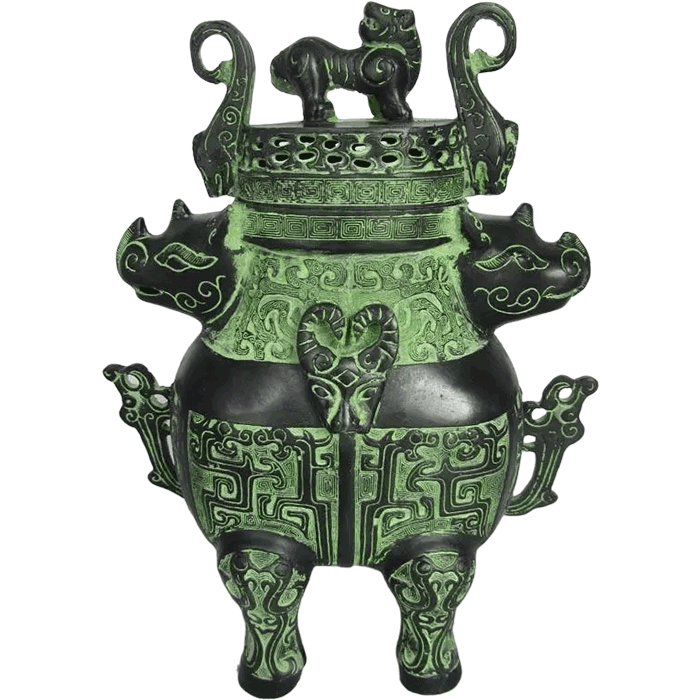
Other common motifs include the kui (a one-legged dragon or serpent shown in profile) and various bird and cicada patterns. A defining structural and decorative element is the presence of heavy, segmented flanges. These vertical ridges run along the primary axes of the vessel, accentuating its shape and dividing the decorative space into distinct panels. They add to the vessel's formidable and architectonic quality.
The Zhou Dynasty Zun: A Shift Towards Order and Elegance
When the Zhou people overthrew the Shang, they inherited and continued the bronze-casting tradition. However, they also initiated a significant "ritual reform," which brought about changes in the types, quantities, and styles of bronze vessels. The Zhou aesthetic gradually moved away from the Shang's ferocious spiritual energy toward a more ordered, hierarchical, and worldly expression of power and status.
Stylistic Changes Through the Western and Eastern Zhou
The evolution of the Zhou zun can be traced through its major periods:
- Western Zhou (c. 1046–771 BCE): Early Western Zhou bronzes continued the Shang style, often with less technical precision. However, by the middle period, a distinct Zhou identity emerged. The taotie mask became less prominent, often dissolving into abstract patterns or being replaced by new motifs. Large, flamboyant bird designs with long, curling crests and tails became particularly popular. Flanges became more decorative and less structural, sometimes taking on a wavy or rococo-like appearance. The overall feeling is one of grandeur and confidence.
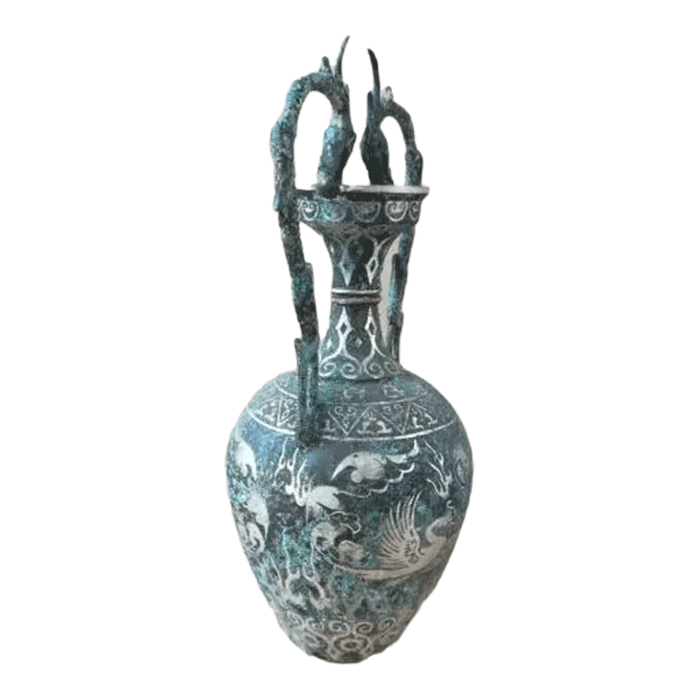
- Eastern Zhou (771–256 BCE): This period, encompassing the Spring and Autumn and Warring States periods, saw dramatic changes. The older, heavy ritual vessels gave way to lighter, more elegant forms. Decoration became more intricate and refined, with the introduction of new techniques like inlay with gold, silver, or turquoise. The panchi or intertwined serpent/hydra motif became widespread, covering vessel surfaces with a dense, flowing network of abstract patterns. The overall aesthetic is less about divine communication and more about sophisticated worldly display. The traditional zun form became less common, with other vessel types like the hu vase gaining prominence.
The Growing Importance of Inscriptions
One of the most significant developments of the Zhou Dynasty was the proliferation of long, detailed inscriptions cast into the bronze vessels. While Shang inscriptions were typically short, often just a clan name, Zhou inscriptions became historical documents. They recorded royal appointments, land grants, military victories, and ancestral honors. These texts were meant to be read by future generations, solidifying the owner's status and family legacy. The placement of the inscription, usually on the interior of the vessel, underscores its importance as a permanent record for the ancestors. This focus on text reflects a more humanistic and historical consciousness compared to the Shang's focus on the spirit world.
Key Distinctions: A Comparative Analysis of Shang and Zhou Vessels
For businesses seeking to commission a historically accurate replica, understanding the specific differences is paramount. Whether you require a single prototype for a museum exhibit or a bulk order of decorative pieces, Luoyang Yichuan Bronze Craft Co., Ltd. has the expertise to capture the unique spirit of each dynasty. Our process, certified under the ISO 9001 quality management system, ensures every detail is considered.
Here is a summary of the key differences:
- Overall Spirit: Shang zun vessels feel powerful, spiritual, and sometimes ferocious, designed to mediate with the supernatural. Zhou zun vessels, especially from the middle and late periods, feel more ordered, secular, and rational, designed to proclaim social status and historical achievements. - Primary Motifs: The Shang is dominated by the symmetrical taotie mask set against a leiwen background. The Zhou introduces flamboyant bird motifs, and later, the interlaced dragons and serpents of the Eastern Zhou. The evolution of bronze culture shows a clear move from mythological creatures to more stylized and abstract patterns.
- Form and Profile: Shang forms are typically robust and heavily built with a clear tripartite structure. While Zhou forms inherit this structure, they tend to become more refined and elegant over time, with less dramatic angles and a more fluid silhouette.
- Flanges: Shang flanges are thick, segmented, and structural, adding to the vessel's powerful presence. Zhou flanges become more ornamental, often thinner and more decorative, eventually disappearing in later periods.
- Inscriptions: Shang inscriptions are rare and very short. Zhou inscriptions are common and can be extensive, serving as vital historical records. This is a critical distinguishing feature.
Sourcing and Replicating the Bronze Zun with Authenticity
Recreating a historical vessel is a challenge that goes beyond simply copying a shape. It requires a deep understanding of the original techniques and an artistic sensibility to capture its spirit. At Luoyang Yichuan Bronze Craft Co., Ltd., we address the key pain points in sourcing high-quality bronze replicas.
Our team of over 30 skilled craftsmen, including bronze-casting masters, utilizes the traditional lost-wax method. This technique, which allows for intricate, one-piece casting, is ideal for reproducing the complex details of both Shang and Zhou designs. We use a premium bronze alloy (Cu-Sn) that is compositionally similar to ancient materials, ensuring durability and an authentic appearance.
One of the most difficult aspects of replication is achieving the correct patina. Our finishing artisans are experts in hand-chasing, polishing, and patina application, allowing us to offer consistent color matching for both antique and modern finishes. This solves a common problem for clients who need multiple pieces with a uniform look. Furthermore, every piece undergoes a strict quality inspection before shipment, and we provide free replacement for any casting defects. We understand the fragility of these artworks, which is why we have perfected export-compliant protective packaging to ensure your order arrives safely, anywhere in the world.
Whether you require an exact replica of a famous Shang zoomorphic zun or a series of elegant Zhou-style vessels for a design project, our facility is equipped to handle your needs. With a minimum order quantity starting from just one piece for custom sculptures, you can customize a bronze sculpture to your exact specifications. We are dedicated to keeping the art of Chinese bronze alive by blending traditional craftsmanship with modern production capabilities.