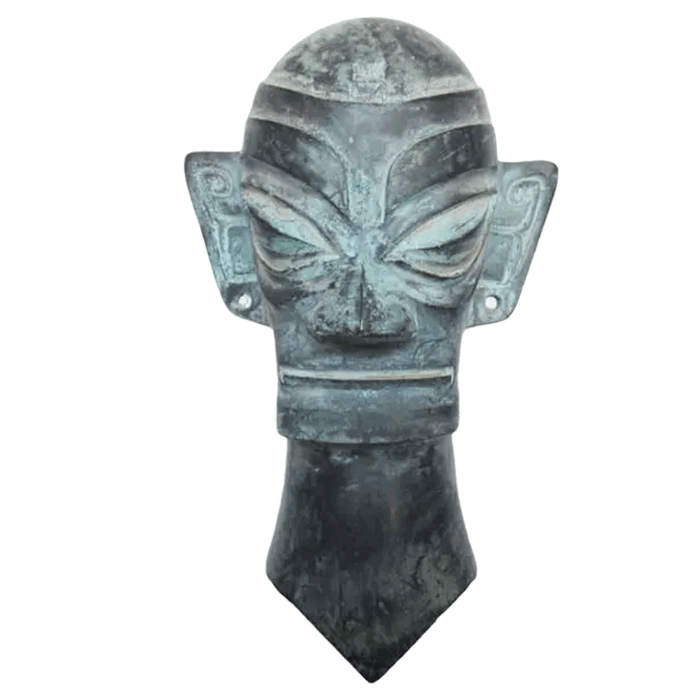
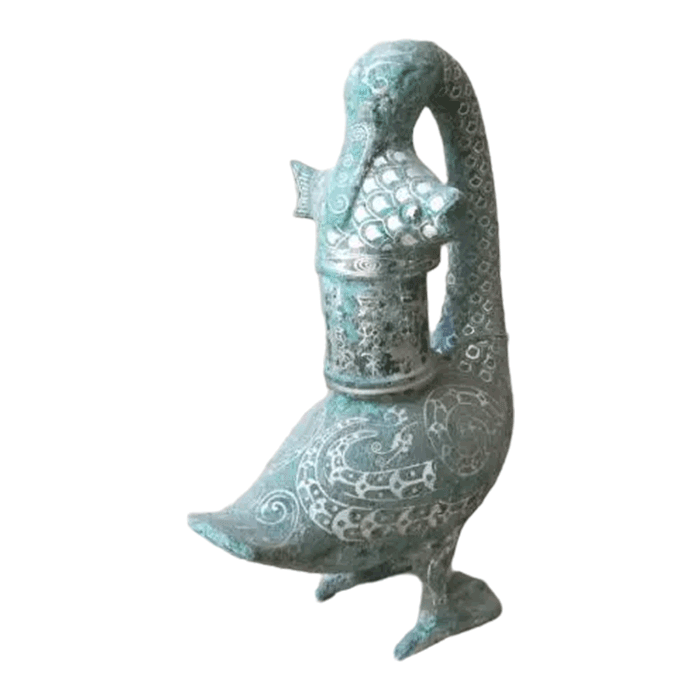
Comparing Archaic and Qing Revival Antique Style Chinese Bronze
Antique Style Chinese Bronze Buyers Should Understand the Difference Between Archaic and Qing Revival Motifs
For procurement teams, gallery curators, and interior design buyers sourcing bronze pieces for museums, hospitality projects, or private collections, visual accuracy matters as much as craftsmanship. Two dominant stylistic families shape most bronze reproductions available on the market today: the archaic motifs originating from the Shang and Zhou dynasties, and the Qing dynasty revival style that reinterpreted those ancient forms centuries later. Knowing how to tell them apart — and how to specify the correct one when placing a custom order — helps buyers avoid costly mismatches between a piece and its intended historical context.
This guide breaks down the defining characteristics of each period, explains how reputable workshops replicate them using the lost-wax casting method, and offers practical guidance for shortlisting decor or collection pieces that need to match a specific reference era.
Understanding Two Eras of Bronze Art
Archaic bronzes refer to ritual vessels, weapons, and ceremonial objects cast during the Shang (c. 1600–1046 BCE) and Zhou (1046–256 BCE) dynasties. These pieces were made for ancestor worship, state ceremonies, and burial rites, and their designs carried symbolic and cosmological meaning. Readers interested in the deeper cultural background can review the evolution of bronze culture over 2000 years for a fuller timeline.
Qing revival bronzes, by contrast, were produced primarily during the 18th and 19th centuries, when scholars, emperors, and wealthy collectors developed a strong interest in antiquarianism. Craftsmen of the Qing court and private workshops deliberately recreated Shang and Zhou forms, but filtered them through a more refined, decorative aesthetic suited to imperial taste. Understanding this distinction is the foundation for evaluating any modern reproduction described as an Antique Style Chinese Bronze.
Archaic Motifs: Shang and Zhou Dynasty Characteristics
Taotie and Zoomorphic Patterns
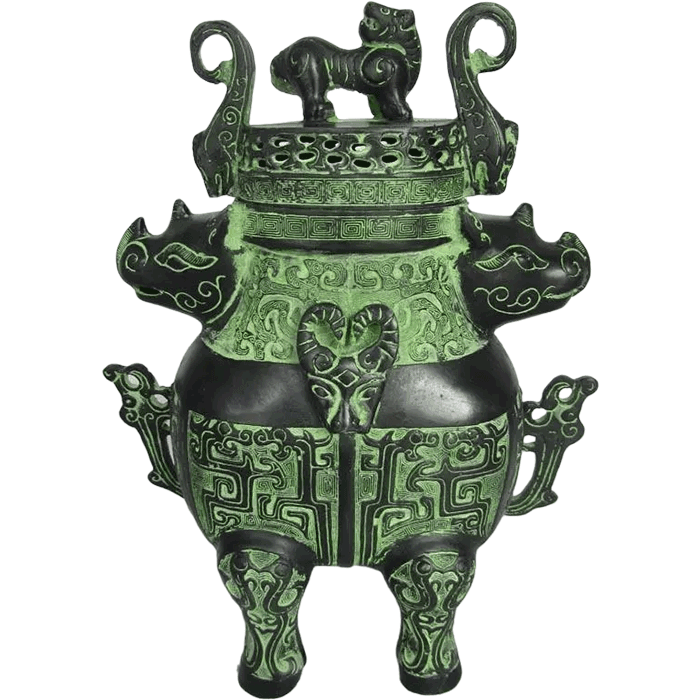
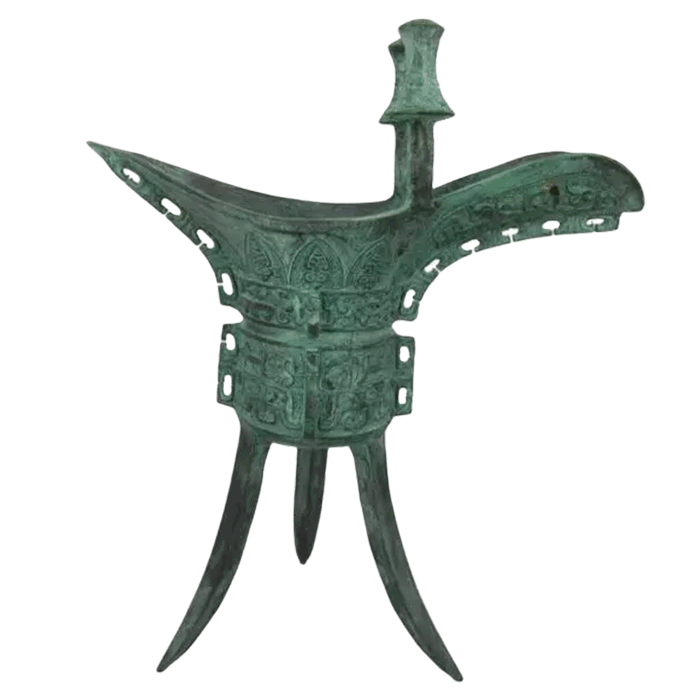
The most recognizable archaic motif is the taotie, a stylized animal mask with bulging eyes, often flanked by symmetrical dragon or bird forms. On Shang-era ding tripods and zun wine vessels, these patterns appear in high relief, densely packed, and slightly asymmetrical due to hand-carved piece-mold casting techniques. Zhou dynasty pieces gradually simplified these patterns into more geometric, linear bands as ritual bronze production shifted toward practical and political display.
Surface Texture and Patina
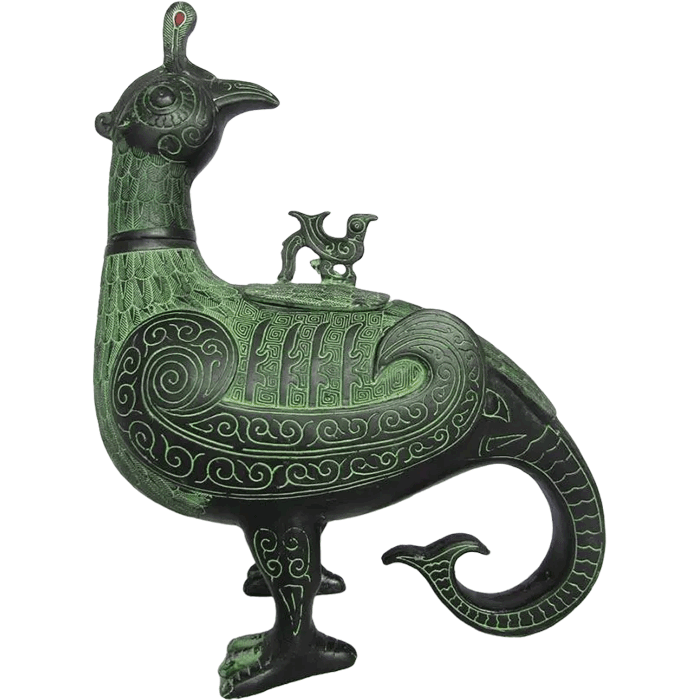
Genuine archaic bronzes buried for millennia develop a natural patina ranging from malachite green to azurite blue, with uneven corrosion patterns and mineral crusts. Reproductions aiming for this look require careful, layered patina application rather than a single uniform coating, since collectors and designers can quickly spot an artificially flat finish.
Inscriptions and Casting Marks
Many archaic ritual vessels bear cast inscriptions inside the vessel body, commemorating ancestors or recording ceremonial events. Reproductions intended for serious collectors often replicate these inscriptions precisely, which requires close reference to rubbings or museum photographs rather than free interpretation.
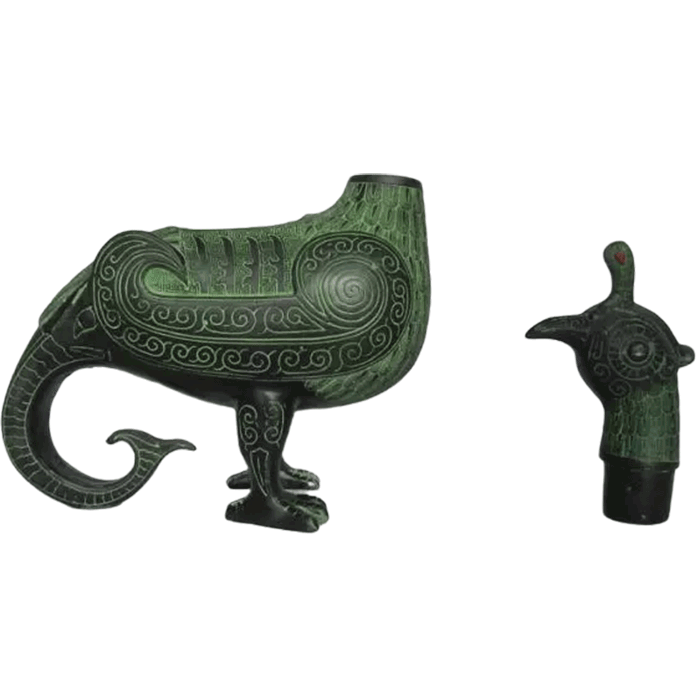
Qing Revival Motifs: Reinterpreting the Ancient
Refined Symmetry and Decorative Balance
Qing dynasty craftsmen admired archaic forms but adapted them to contemporary aesthetic standards. Taotie masks became more symmetrical and rounded, dragon motifs gained flowing, elegant lines, and overall vessel proportions were often adjusted to feel more balanced and visually pleasing to the eye than their rougher archaic predecessors.
Combination with Later Decorative Elements
Qing revival pieces frequently blend archaic motifs with decorative elements from later periods — cloud scrolls, lotus patterns, or auspicious symbols borrowed from Ming dynasty aesthetics. This layering makes Qing revival bronzes visually richer but historically "mixed," which is an important detail for buyers who need strict period accuracy for museum-grade replicas.
Patina and Finishing Techniques
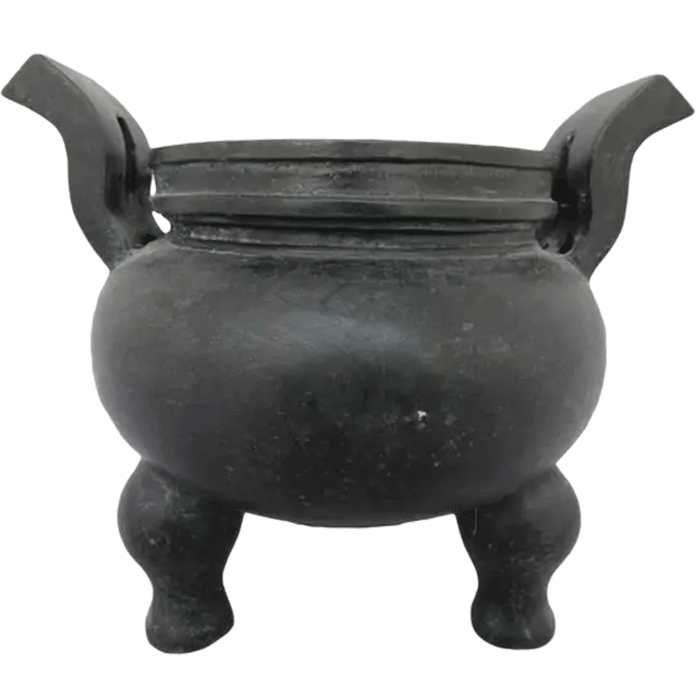
Qing craftsmen often favored a darker, more uniform brown-black patina achieved through controlled chemical treatment rather than the mottled green corrosion of true archaic pieces. This gives Qing-style bronzes a polished, almost lacquered appearance that differs noticeably from the rugged surface of earlier ritual vessels. For a closer look at how patina and metal composition affect authenticity, see the difference between bronze and brass.
Side-by-Side Comparison for Buyers
| Feature | Archaic Style | Qing Revival Style |
|---|---|---|
| Motif complexity | Dense, symbolic, slightly asymmetrical | Balanced, decorative, symmetrical |
| Patina color | Mottled green, blue, or brown corrosion | Dark brown-black, more uniform |
| Inscriptions | Ritual or ancestral text, cast internally | Sometimes added for decorative authenticity |
| Typical use case | Museum replicas, academic collections | Interior decor, gift pieces, hospitality projects |
Buyers researching specific vessel types before finalizing a design brief may also find it useful to browse introduction to several bronze wares, which outlines the functional differences between ding, zun, hu, and other classic forms still reproduced today.
How to Specify Your Reference Period When Ordering
When requesting a custom bronze piece, it helps to provide the workshop with clear reference material rather than a general request for an "ancient-looking" bronze. Useful specifications include:
- A target dynasty or reference period (Shang, Zhou, or Qing revival)
- Reference photographs of museum pieces or rubbings of inscriptions, if applicable
- Desired patina tone — mottled green-blue for archaic authenticity, or dark brown-black for Qing-style finishing
- Intended use — display piece, ceremonial replica, or decorative interior accent
At Luoyang Yichuan Bronze Craft Co., Ltd., our team of more than 30 skilled craftsmen, including dedicated bronze-casting masters and finishing artisans, works from a 3,000-square-meter production facility in Yichuan County, Luoyang, to translate these references into accurate castings. Because we support custom orders starting from a single prototype piece, buyers can commission a trial casting to confirm motif accuracy and patina color before committing to a larger production run.
Quality Assurance and Working With a Trusted Workshop
Reproducing archaic and Qing revival motifs correctly depends on both artistic skill and consistent quality control. Our facility is ISO 9001 certified, and every piece undergoes inspection before shipment, with export-compliant protective packaging designed for fragile sculptures and vessels. In cases of casting defects, we provide free replacement, and our after-sales team offers guidance for patina touch-ups and long-term restoration, which is particularly important for pieces intended for long-term display or collection storage.
With an annual output exceeding 50,000 bronze art pieces, we are equipped to handle both single custom commissions and bulk orders for hospitality groups, galleries, or wholesale buyers, with pricing negotiated according to size and design complexity. For buyers exploring figural work alongside vessels, our range extends to bronze statues with different themes, covering both historical and contemporary subjects finished in matching antique tones.

Choosing the Right Style for Your Project
Ultimately, the choice between archaic and Qing revival aesthetics depends on the purpose of the piece. Academic institutions and serious collectors typically require strict archaic accuracy, down to inscription placement and corrosion patterns. Interior designers, hospitality venues, and corporate gifting programs, on the other hand, often prefer the more polished, symmetrical appeal of Qing-style bronzes, which read as elegant and refined rather than archaeological.
Whichever direction fits your project, working with a workshop experienced in both traditions ensures the finished piece reads as intentional and historically coherent rather than a generic decorative object. If you would like to discuss a specific reference period, vessel type, or patina finish for your next order, our team can walk through the process to customize a bronze sculpture from sculpmart.com tailored to your exact specifications.
Whether your project calls for a museum-accurate archaic ding or a decorative Qing-style incense burner, understanding these motif differences upfront will save time during design review and help ensure the final bronze piece meets both aesthetic and historical expectations.