Chinese Bronze Wine Vessel: Wine vs Food Vessels
Understanding the Chinese Bronze Wine Vessel: Distinguishing It from Food Vessels
The study and collection of ancient Chinese bronze artifacts present a fascinating journey into millennia of cultural heritage, artistic innovation, and sophisticated craftsmanship. Among the most iconic categories of these treasures are ritual vessels, which served pivotal roles in ceremonies, banquets, and ancestral worship. For researchers, collectors, and institutions exploring these magnificent pieces, a common point of inquiry often arises: how to differentiate between a Chinese Bronze Wine Vessel and those designed for food. This distinction is not merely academic; it unlocks deeper insights into the societal structures, ritual practices, and daily lives of ancient Chinese civilizations. This article aims to clarify these differences, providing a comprehensive guide for those navigating the intricate world of Chinese bronzes.
Luoyang Yichuan Bronze Craft Co., Ltd. specializes in the meticulous creation of bronze art pieces, including precise reproductions of historical vessels. Our commitment to preserving the authenticity and intricate details of ancient designs ensures that each piece, whether a custom prototype or a bulk production run, meets stringent quality standards. With an annual output of over 50,000 bronze art pieces, our capabilities span a wide range, from human and animal statues to intricate bronze vessels like ding, zun, and hu tripods and vases. Our processes adhere to the ISO 9001 quality management system, guaranteeing that all products comply with export quality inspection standards for art crafts, providing peace of mind to our global clientele.
The Enduring Legacy of Chinese Bronze Vessels
The Bronze Age in China, primarily spanning the Shang (c. 1600–1046 BCE) and Western Zhou (1046–771 BCE) dynasties, heralded an era of unparalleled artistic and technological advancement. Bronze casting became a highly refined art form, with vessels serving not just practical functions but also as powerful symbols of status, authority, and spiritual connection. These artifacts were central to ritualistic practices, used in offerings to ancestors and deities, as well as in grand feasts and ceremonies that solidified social hierarchies and political power. The sheer volume, diversity, and artistic complexity of these vessels underscore their profound significance in ancient Chinese society.
The designs on these vessels often incorporated intricate patterns, mythical creatures, and symbolic motifs, reflecting the cosmological beliefs and artistic sensibilities of their time. From geometric patterns to zoomorphic designs like the taotie mask, each element tells a story, offering clues to the cultural narratives of the past. Understanding the context in which these vessels were created and used is crucial for appreciating their form and function. For an in-depth look at the broader historical context, consider exploring the evolution of bronze culture over 2000 years, which illuminates the rich tapestry of this artistic tradition.
Distinguishing Key Chinese Bronze Wine Vessels
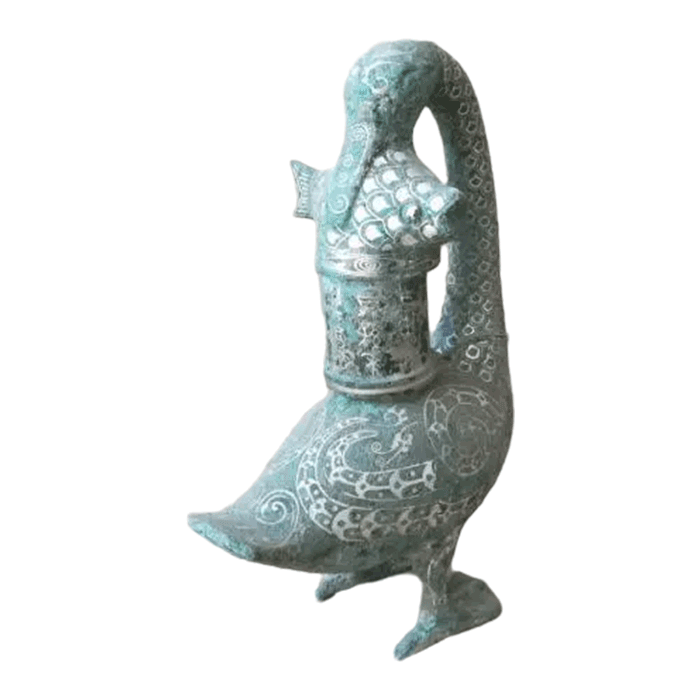
Chinese bronze wine vessels were specifically designed for the preparation, heating, serving, and consumption of alcoholic beverages, primarily millet wine. Their forms are often characterized by slender profiles, spouts for pouring, and sometimes intricate handles or legs. The intricate artistry of a Chinese Bronze Wine Vessel often reflects the dynasty and regional style of its creation, with distinct types emerging over centuries.
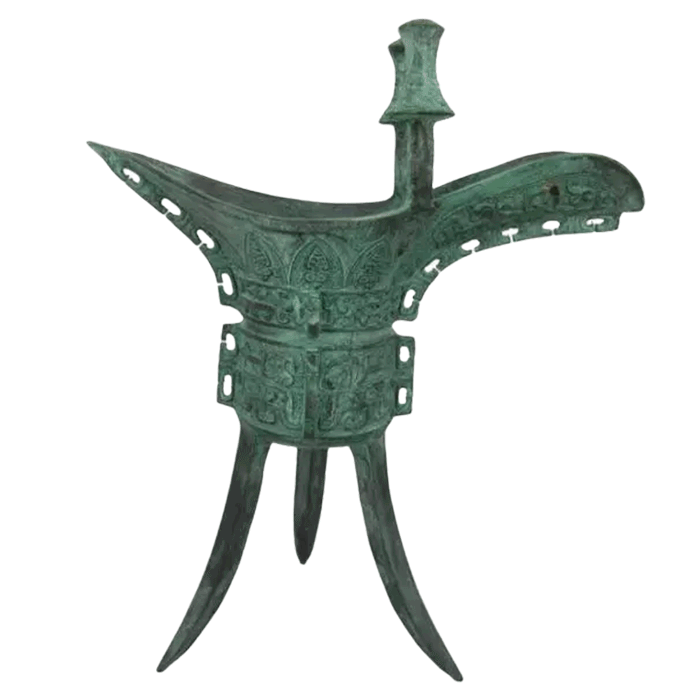
- Jue (爵): One of the earliest and most distinctive wine vessels, the jue is a tripod cup with a pouring spout (liu) and an extended tail (wei) on the opposite side, along with two mushroom-shaped posts (zhu) on the rim. Its design suggests its use for heating and pouring wine during rituals.
- Gu (觚): A tall, slender beaker with a flared mouth and foot, the gu was primarily used for drinking wine. Its elegant, minimalist form emphasizes verticality and balance.
- Zun (尊): A broad category encompassing various shapes, zun generally refers to ritual wine containers. Early zun were often shaped like animals (e.g., elephant zun, owl zun), while later forms were typically cylindrical or square with a wide mouth and foot. They served for storing and serving wine.
- Hu (壺): A pear-shaped or globular pot with a lid and often two ring handles, the hu was used for storing and pouring wine. Its versatile design allowed for various decorative motifs and often featured chain attachments for the lid.
- Lei (罍): A large, wide-mouthed jar with a constricted neck and a rounded body, the lei was used for storing large quantities of wine. It often featured elaborate handles and sometimes a lid.
- Fangyi (方彝): A rectangular, box-like vessel with a lid, often resembling a miniature house or shrine, the fangyi was used for storing wine. Its angular form and intricate surface decoration make it highly distinctive.
The meticulous craftsmanship involved in recreating these vessels, such as the premium bronze alloy (Cu-Sn) cast with the traditional lost-wax method, is paramount to capturing their original essence. Our skilled craftsmen, including bronze-casting masters and finishing artisans, ensure that each reproduction carries the weight of history and the beauty of its ancient counterpart. Whether for a museum exhibit or a private collection, the authenticity of a replicated Chinese Bronze Wine Vessel is critical.
Understanding Chinese Bronze Food Vessels
In contrast to wine vessels, food vessels were designed for the preparation, cooking, serving, and storage of various foodstuffs, ranging from grains and meats to soups. Their forms tend to be more robust, often featuring wide mouths, deep bowls, and stable bases, reflecting their practical utility in culinary and ceremonial settings.
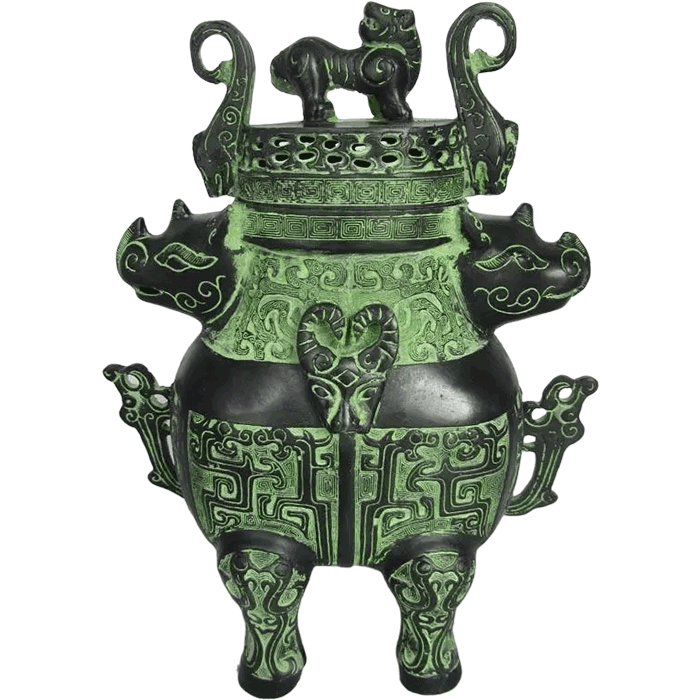
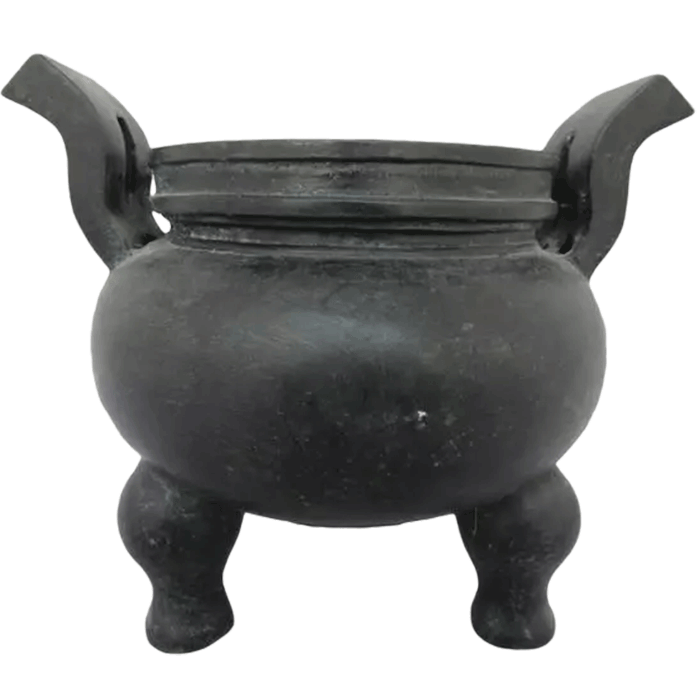
- Ding (鼎): Perhaps the most famous of all Chinese bronzes, the ding is a tripod (or sometimes quadruped) cauldron with a rounded body, two upright handles on the rim, and three solid legs. It was primarily used for cooking and serving meat during sacrificial ceremonies. Its size and ornamentation often denoted the owner's status. For instance, the Houmuwu square cauldron is a prime example of its monumental significance.
- Gui (簋): A bowl-shaped vessel with two or four handles and a foot ring or pedestal, the gui was used for serving cooked grain, especially millet or rice. Its wide mouth and stable base made it ideal for presenting staple foods.
- Yan (甗): A steamer vessel composed of two parts: a lower tripod cauldron (li) for boiling water and an upper bowl with a perforated bottom (zeng) for steaming food. This ingenious design highlights the advanced culinary techniques of ancient China.
- Dou (豆): A stemmed serving dish with a shallow bowl and a tall foot, often with a lid, the dou was used for serving pickled vegetables, sauces, or ceremonial offerings. Its elegant form suggests a more refined presentation.
When sourcing reproductions, the pain points often include achieving exact replication of antique bronzes and ensuring consistent patina color matching. Our expertise addresses these challenges directly, offering precise, historically accurate replicas. For example, the distinctive forms and functions of vessels like the Mao Gong Ding highlight the intricate details we painstakingly reproduce.
Craftsmanship and Production: Bringing Ancient Forms to Modern Collections
The creation of high-quality bronze reproductions, whether a Chinese bronze sculpture or a vessel, is a sophisticated process that honors ancient traditions while incorporating modern precision. Luoyang Yichuan Bronze Craft Co., Ltd. is located in Yichuan County, Luoyang, Henan Province, within a production area of 3,000 square meters. Here, over 30 skilled craftsmen, including revered bronze-casting masters and meticulous finishing artisans, dedicate themselves to their craft.
Our process begins with the selection of premium bronze alloy (Cu-Sn), chosen for its durability and aesthetic qualities. The traditional lost-wax method, a time-honored technique, is then employed. This intricate process involves:
- Mold Making: Creating a detailed wax model of the desired vessel.
- Investment: Encasing the wax model in a heat-resistant ceramic shell.
- Burnout: Heating the mold to melt away the wax, leaving a hollow cavity in the shape of the original model.
- Casting: Pouring molten bronze into the ceramic mold.
- Demolding and Chasing: Breaking away the mold to reveal the bronze casting, followed by meticulous hand chasing to refine details and remove imperfections.
- Polishing and Patina Finishing: The surface is then polished to achieve the desired luster, and a patina is applied. This crucial step, available in antique or modern looks, determines the final color and aged appearance of the bronze, requiring expert knowledge and artistic sensibility to ensure consistency and historical accuracy.
Our commitment to quality is unwavering. We maintain an ISO 9001 quality management system certification, ensuring that every stage of production, from initial design to final packaging, adheres to the highest international standards. This rigorous oversight means products consistently comply with export quality inspection standards for art crafts, providing confidence to our clients worldwide. The expertise of our craftsmen is especially evident in the consistent patina color matching, a critical aspect for collectors of Chinese bronze antique reproductions.
Why Precision Matters: Sourcing Authentic Bronze Artworks
For institutions, galleries, and private collectors, the authenticity and quality of bronze reproductions are paramount. The challenges of sourcing custom bronze art, particularly exact replication of antique bronzes and consistent patina color matching across multiple pieces, can be significant. Furthermore, ensuring export-compliant protective packaging for fragile sculptures is a crucial logistical consideration.
At Luoyang Yichuan Bronze Craft Co., Ltd., we address these pain points directly. Our capabilities include supporting everything from a single custom prototype to large bulk production runs, with a minimum order quantity (MOQ) starting from 1 piece for custom sculptures. Bulk order pricing is negotiable, based on the size and design complexity, ensuring flexibility for diverse project needs. Our dedicated team specializes in precise historical replication, ensuring that every curve, motif, and proportion of an original artifact is faithfully reproduced.
Beyond production, our commitment extends to comprehensive after-sales support. Every shipment undergoes thorough quality inspection before dispatch. In the rare event of casting defects, we offer free replacement, underscoring our confidence in our craftsmanship. We also provide after-sales support for patina touch-ups and restoration guidance, helping clients maintain the beauty and integrity of their bronze pieces for generations. Our goal is not just to sell a product, but to provide a complete solution for sourcing exceptional bronze artworks. If you wish to customize a bronze sculpture from sculpmart.com, our team is ready to assist you through every step of the process.
Conclusion
Differentiating between various categories of Chinese bronze vessels, particularly those for wine and food, is essential for a deeper appreciation of their historical context, cultural significance, and artistic merit. While a Chinese Bronze Wine Vessel often features elegant, slender forms designed for pouring and drinking, food vessels tend to be more robust, with wider openings suited for cooking and serving. Both categories, however, represent the pinnacle of ancient Chinese metallurgical and artistic achievement.
As a leading manufacturer, Luoyang Yichuan Bronze Craft Co., Ltd. is dedicated to continuing this legacy through the creation of high-fidelity bronze reproductions. Our blend of traditional lost-wax casting, premium materials, skilled craftsmanship, and stringent quality control ensures that each piece we produce is not only an artwork but also an authentic link to a profound historical tradition. Whether you are a scholar, a collector, or an institution, we provide reliable, high-quality solutions for all your custom bronze art needs, upholding the integrity and beauty of these timeless artifacts.