Chinese Bronze Wine Vessel Types & Craftsmanship
Understanding the Diverse Forms and Historical Significance of the Chinese Bronze Wine Vessel
The history of China is inextricably linked with its remarkable bronze tradition, an artistic and technological zenith that commenced during the Shang Dynasty (c. 1600–1046 BCE) and continued through subsequent eras. Among the myriad of bronze objects produced, ancient Chinese bronze wine vessels stand out as particularly significant. These artifacts were not merely utilitarian containers; they were powerful symbols of status, ritual, and spiritual connection, integral to ceremonies, feasts, and ancestral worship. Their intricate designs, robust forms, and sophisticated casting techniques reflect the aesthetic sensibilities and advanced metallurgical knowledge of ancient Chinese civilizations.
For collectors, museum curators, and interior decor importers, understanding the distinct types of these ancient bronze vessels is crucial for appreciation, authentication, and informed acquisition. Each vessel type served a specific purpose in the elaborate rituals of the time, leading to a rich diversity in shapes, sizes, and decorative motifs. This article delves into the primary forms of these historical artifacts, exploring their unique characteristics and the cultural contexts that shaped them.
The Enduring Legacy of Ancient Chinese Bronze Ware
The Chinese Bronze Age, spanning roughly from the second millennium BCE to the Qin Dynasty (221–206 BCE), represents a period of unparalleled innovation and artistic achievement. Bronze, an alloy primarily of copper and tin (Cu-Sn), was a revolutionary material, enabling the creation of tools, weapons, and ceremonial vessels of unprecedented durability and beauty. The mastery of bronze casting had profound implications for ancient Chinese society, influencing its political structures, religious practices, and artistic expressions.
Early bronze vessels were characterized by their solemnity and often intimidating grandeur, adorned with mythological creatures like the taotie (a monstrous mask motif) and intricate geometric patterns. These designs were not merely decorative; they were imbued with symbolic meaning, intended to ward off evil spirits and communicate with the ancestors and deities during sacrificial rites. As dynasties evolved, so too did the stylistic conventions, with later bronzes exhibiting greater naturalism, elegance, and a broader range of decorative themes, including hunting scenes, banquet scenes, and inscriptions commemorating important events.
The enduring appeal of these vessels lies not only in their historical value but also in their unparalleled craftsmanship. Each piece tells a story of an ancient civilization's beliefs, social structures, and artistic prowess. They serve as tangible links to a distant past, offering insights into the rituals, banquets, and everyday life of ancient Chinese elites. For those looking to understand the broader context of these revered objects, exploring the evolution of bronze culture over 2000 years provides invaluable insights.
Deciphering the Archetypes of Chinese Bronze Wine Vessels
The classification of Chinese bronze vessels is primarily based on their function and form. While many categories exist, several types were specifically designed for the storage, heating, mixing, and serving of wine (often a fermented grain beverage) during ritualistic feasts. Here, we explore the most prominent forms:
Jue (爵)
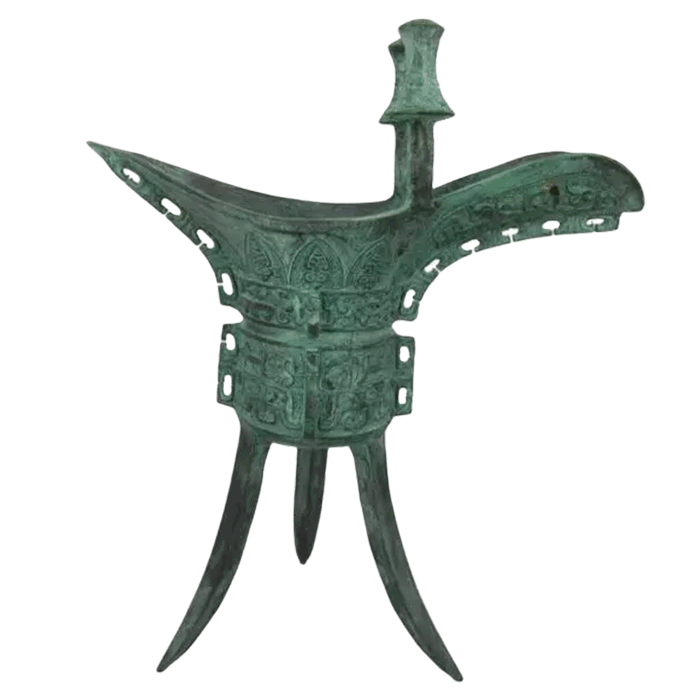
The Jue is one of the earliest and most distinctive bronze wine vessels, typically featuring a tripod base, a long spout (liu) for pouring, and a pointed tail (wei) often balanced by two prominent cap-like posts (zhu) on the rim. A single loop handle (pan) usually adorns one side. The Jue was primarily used for heating and drinking wine. Its unique shape facilitated heating over a flame, and the spout allowed for precise pouring or drinking directly from the vessel. Early Shang Dynasty Jue are often relatively plain, while later examples become increasingly ornate with complex taotie masks and geometric patterns. Its ritualistic importance is underscored by its frequent presence in sets of vessels found in aristocratic tombs.
Gu (觚)
A tall, slender beaker with a flared mouth and base, the Gu was exclusively a drinking vessel. Its elegant, trumpet-like form makes it easily recognizable. While initially robust during the Shang period, its proportions became more refined and elongated in the Western Zhou Dynasty. The central section of the Gu is typically constricted, providing a comfortable grip, and often decorated with geometric patterns or simplified animal motifs. The absence of handles or spouts indicates its direct use for imbibing ritual wine. Its presence alongside other vessels like the Jue and Zun was commonplace in ceremonial contexts.
Zun (尊)
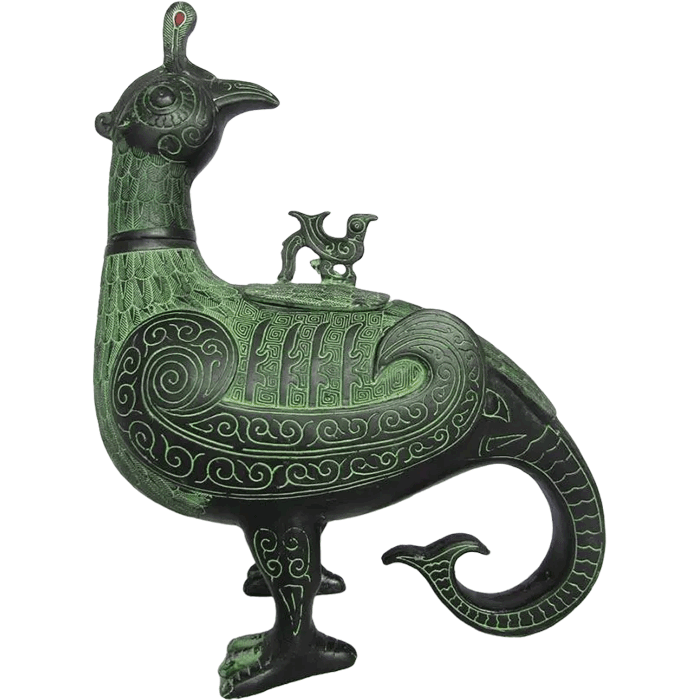
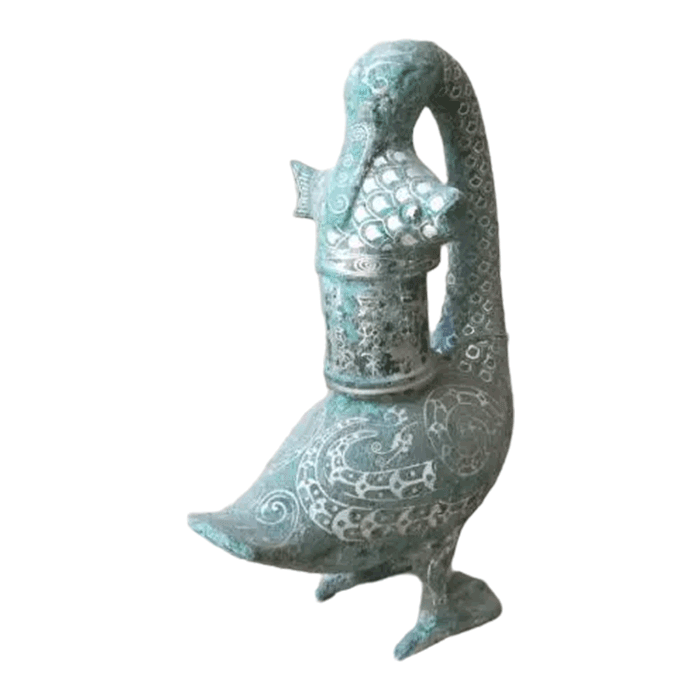
The Zun is a broad-mouthed, often highly decorative vessel primarily used for holding and presenting wine. Its forms are remarkably varied, ranging from simple, cylindrical shapes to elaborate zoomorphic figures depicting animals such as elephants, rhinos, oxen, or birds. These animal-shaped Zun are among the most celebrated examples of ancient Chinese bronze art, showcasing an incredible fusion of naturalistic representation and stylized ornamentation. The more conventional Zun often feature a wide, flaring mouth, a bulbous body, and a sturdy foot. They were typically placed on altars or ceremonial tables, serving as central pieces in ritual arrangements. Their surface decoration frequently includes multiple registers of intricate patterns, including mythical beasts, thunder patterns (leiwen), and sometimes even human figures.

Hu (壺)
The Hu is a versatile storage and serving vessel, typically pear-shaped or globular, often equipped with a lid and two handles, frequently in the form of animal heads or rings. Its form is one of the most enduring, evolving significantly over centuries. Early Hu from the Shang and Zhou periods are often quite squat and heavily decorated, while those from the Spring and Autumn and Warring States periods (c. 771–221 BCE) become more slender, elegant, and sometimes inlaid with gold, silver, or precious stones. The Hu could hold substantial quantities of wine, making it suitable for larger gatherings and extended ceremonies. It often served as a counterpart to other drinking or pouring vessels.
Ding (鼎)
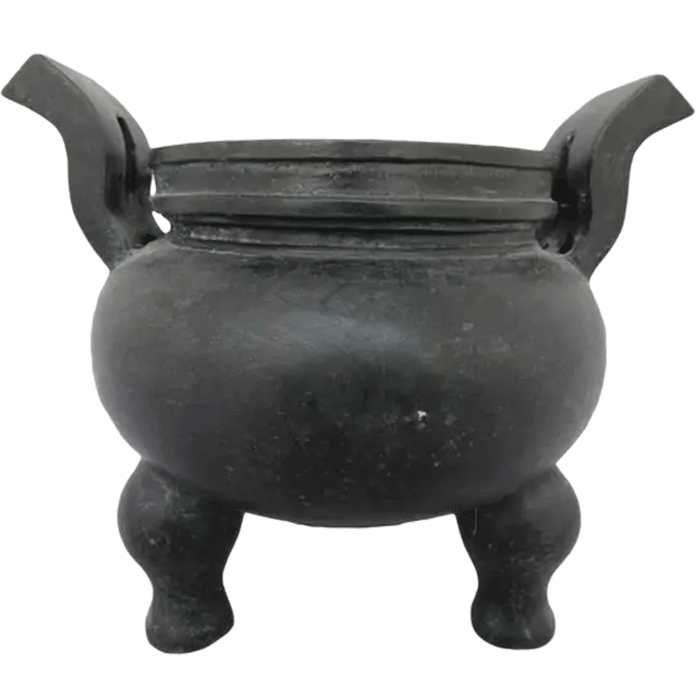
While primarily known as a food vessel for cooking and serving sacrificial offerings, smaller Ding with tripod or four-legged bases were occasionally used in wine rituals, particularly those involving ritual feasting. Its robust form, typically with two upright handles and three or four legs, makes it one of the most iconic bronze vessel types. Though not exclusively a wine vessel, its omnipresence in ancient Chinese ritual makes it worth mentioning in context of ceremonial practices where wine would undoubtedly have been present.
Lei (罍)
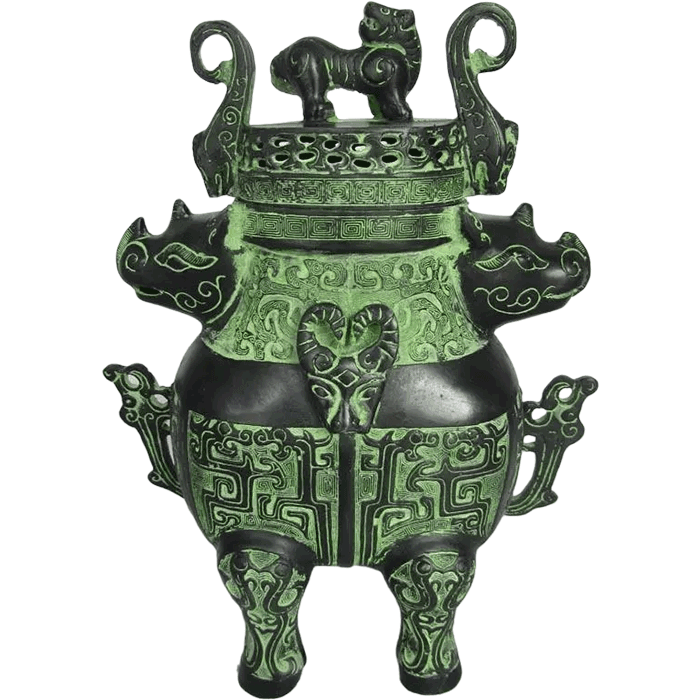
The Lei is a large, wide-mouthed vessel primarily used for storing wine or water. It often has a squat, round body with a short neck and a wide opening, sometimes accompanied by a lid. Handles, often in the form of animal masks, are typically found on the shoulders of the vessel. Its substantial size suggests its role in holding significant quantities of liquid for large-scale rituals or banquets. The decorations on Lei can be as elaborate as on other vessel types, featuring complex animal motifs and geometric patterns.
Fangyi (方彝)
Distinctive for its rectangular, casket-like body and a lid that mirrors the body's pyramidal or gabled shape, the Fangyi was an important ritual wine vessel. Its architectural form, often with a knob on the lid and sometimes handles, gives it a solemn and imposing presence. The entire surface, including the lid, is typically covered with intricate designs, making it a masterpiece of bronze artistry. Its square form is unique among many other rounder vessels, reflecting a specific aesthetic and possibly symbolic significance.
You (卣)
The You is a covered bucket-shaped vessel, often distinguished by a swing handle that arcs over the top. It was used for storing and serving wine. Its body can be oval, round, or even square, with a tight-fitting lid that often features a knob. The swing handle allowed for easy transport and pouring. Decorations on You vessels are often highly detailed, including zoomorphic elements, geometric patterns, and occasionally inscriptions. The elegance of its form combined with its practical handle made it a sophisticated addition to ritual paraphernalia.
Gong (觥)
The Gong is one of the most imaginative and sculpted wine vessels, often characterized by an oval body and a lid shaped like an animal head at one end and an animal tail or another stylized form at the other. It typically has a handle, sometimes cast in the form of an animal. The spout is often integrated into the animal's mouth or a stylized beak. These vessels were used for pouring wine, and their zoomorphic forms suggest a strong connection to nature and animal symbolism in ancient rituals. Each Gong is a unique sculptural masterpiece, reflecting the artistry of its creators.
He (盉)
A tripod vessel with a spout and a lid, the He was primarily used for mixing water with wine. Its form often resembles a teapot or a pitcher, with a prominent spout for pouring and a handle for holding. The lid ensures the contents remain uncontaminated during the mixing process. Like other ritual bronzes, the He can be found with elaborate decorations, emphasizing its ceremonial role in preparing the ritual beverage.
The Art and Precision of Bronze Vessel Craftsmanship
The creation of a Chinese Bronze Wine Vessel was an arduous process, demanding exceptional skill and precision. The traditional lost-wax casting (cire perdue) method was central to achieving the intricate details and complex forms seen in these artifacts. This technique involved creating a wax model of the desired object, encasing it in clay, melting out the wax, and then pouring molten bronze into the resulting mold. After cooling, the clay mold was broken, revealing the bronze piece.
At Luoyang Yichuan Bronze Craft Co., Ltd., we uphold these time-honored traditions. Our bronze art pieces are cast using premium bronze alloy (Cu-Sn), ensuring both authenticity and durability. Our facility, spanning 3,000 square meters in Yichuan County, Luoyang, is home to over 30 skilled craftsmen, including revered bronze-casting masters and finishing artisans. These experts meticulously perform hand chasing to refine details, polish surfaces to bring out the metal's luster, and apply patina finishes that can range from antique green and brown tones to modern, sleek looks. This dedication to craftsmanship ensures that each piece not only meets but often exceeds expectations.
Our commitment to quality is further underscored by our ISO 9001 quality management system certification. All products comply with stringent export quality inspection standards for art crafts, guaranteeing that every piece leaving our workshop is of the highest caliber. We understand the pain points associated with sourcing custom bronze art, particularly the need for exact replication of antique bronzes and consistent patina color matching across pieces. Our rigorous quality inspection before every shipment addresses these concerns, providing clients with confidence in their acquisitions.
Sourcing and Customizing Exquisite Bronze Wine Vessels
For institutions, collectors, and businesses seeking to acquire or commission bronze vessels, the ability to source authentic, high-quality pieces, and to customize designs, is paramount. Whether replicating a specific historical artifact or developing a contemporary interpretation, expertise in bronze casting is non-negotiable.
Luoyang Yichuan Bronze Craft Co., Ltd. specializes in solving these complex sourcing challenges. We support everything from a single custom prototype to extensive bulk production runs, offering a remarkable MOQ from just 1 piece for custom sculptures. This flexibility allows clients to realize unique visions without prohibitive initial costs. Our annual output capacity of over 50,000 bronze art pieces demonstrates our capability to handle projects of any scale, from individual collector items to large-scale museum commissions or decorative series for importers.
Beyond production, we prioritize the secure and compliant delivery of our art. We employ export-compliant protective packaging specifically designed for fragile sculptures, ensuring that each Chinese Bronze Wine Vessel arrives in pristine condition, regardless of its destination. Our after-sales support includes free replacement for casting defects, as well as guidance for patina touch-ups and restoration, ensuring the longevity and continued beauty of your investment. This comprehensive approach, from initial design to post-delivery care, sets us apart as a trusted partner in the world of bronze art.
The world of Chinese bronze wine vessels is rich with history, artistry, and cultural significance. Each type, from the elegant Gu to the formidable Zun, offers a unique window into ancient rituals and aesthetic values. By understanding their distinct forms and the meticulous craftsmanship involved in their creation, collectors and enthusiasts can truly appreciate the profound legacy of these magnificent artifacts. Our commitment to excellence ensures that this ancient art form continues to thrive, offering both historical accuracy and contemporary beauty.