Bronze Taotie Motif Vessel: Relief, Symmetry & Casting Guide
Bronze Taotie Motif Vessel Production Depends on Relief Depth, Symmetry Control, and Casting Method
For designers and procurement teams evaluating a bronze Taotie motif vessel at the specification stage, the central question is rarely aesthetic — it is technical. Can the foundry reproduce the motif's relief depth with fidelity, maintain bilateral symmetry across a curved or faceted surface, and deliver a casting method that preserves the crispness of ancient line work? This article walks through the three variables that determine whether a Taotie vessel reads as a faithful reproduction or a flattened approximation, and what buyers should ask for in a technical brief.
What the Taotie Motif Requires From a Foundry
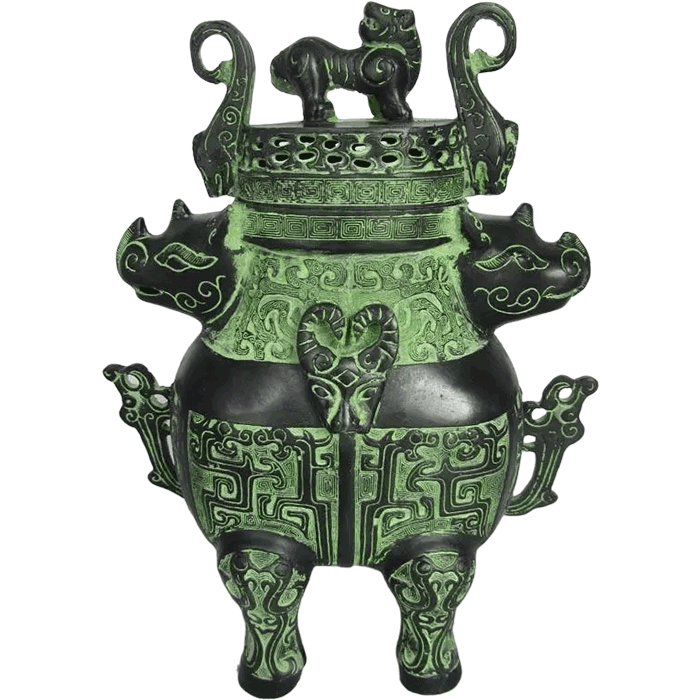
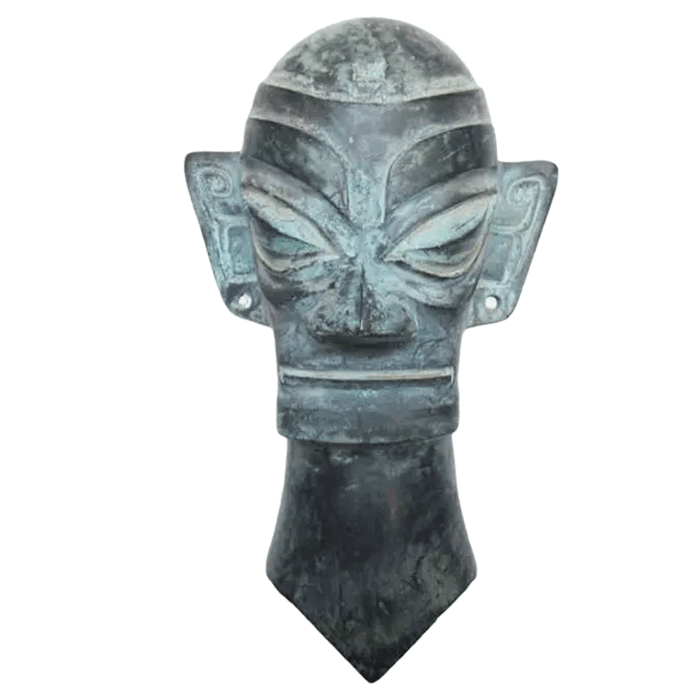
The Taotie, a stylized zoomorphic mask associated with Shang and Zhou dynasty ritual bronzes, is defined less by narrative imagery than by structural discipline. Its eyes, horns, and brow ridges are arranged along a strict central axis, with the pattern often extending into a continuous band around the vessel body. Reproducing this motif in cast bronze is fundamentally a relief-sculpture problem before it is a metallurgical one. A foundry that treats the Taotie as decorative surface texture — rather than as an architecture of raised and recessed planes — will produce a vessel that looks correct in photographs but reads as shallow and lifeless in person.
Buyers researching motif accuracy often find it useful to review how bronze decorative language evolved across dynasties, since the depth conventions of the Taotie shifted over time. A brief overview is available in the evolution of bronze culture over 2000 years, which is a helpful reference point before finalizing a motif brief.
Relief Depth as a Specification, Not a Style Choice
Relief depth on a Taotie band typically ranges from shallow (2–4mm) for smaller vessels such as incense burners, to pronounced high relief (8–15mm) on larger ding or zun forms where the mask needs to remain legible from a distance. Depth is not simply a stylistic preference — it dictates mold complexity, wax model thickness, and the amount of hand-chasing required after casting. When specifying a bronze Taotie motif vessel, buyers should request:
- A sectional drawing or physical maquette showing relief depth at the highest and lowest points of the motif
- Confirmation of whether the design will be modeled directly in wax or built up from a master mold
- Sample photographs of the foundry's prior relief work under raking light, which reveals depth accuracy far better than front-on photography
Shallow relief reduces casting risk and cost but sacrifices the dramatic shadow play that makes antique Taotie bands so visually commanding. High relief is closer to museum-grade reproductions but demands greater skill in wax modeling and post-cast chasing to avoid porosity or blurred edges.
Symmetry Control Across the Vessel Body
Because the Taotie is built on a mirrored central axis, even minor asymmetry becomes immediately visible to a trained eye — a horn set slightly higher on one side, or an eye socket that doesn't align with its mirror twin, undermines the entire piece. Symmetry is especially difficult to control on vessels with compound curvature, such as a hu vase with a swelling belly, compared to flatter forms like a rectangular ding panel.
How Foundries Maintain Axial Accuracy
Experienced workshops manage symmetry through several overlapping controls rather than relying on freehand carving alone:
- Template transfer — a half-motif template is cut and flipped along the vessel's vertical axis to guide wax modeling on both sides
- Grid referencing — a light grid is scored into the wax surface so the modeler can check horn height, eye spacing, and brow curvature against fixed coordinates
- Master mold duplication — for vessels produced in a production run rather than as a single prototype, a validated master mold ensures every unit shares identical symmetry, removing variation that would otherwise creep in through repeated hand modeling
Institutional buyers commissioning a matched set — for example, a pair of vessels flanking an altar or gallery entrance — should specifically request master-mold production rather than independently hand-modeled duplicates, since even skilled artisans working freehand will introduce small variances between pieces.
For buyers wanting to compare how symmetry and motif conventions vary across categories of ritual bronzes, some ancient chinese bronze miscellaneous vessels offers useful context on how form dictates decorative treatment.
Casting Method: Why Lost-Wax Remains the Standard
The lost-wax (investment casting) method remains the industry standard for reproducing Taotie motifs with archaeological accuracy, because it allows the sharp undercuts and layered relief of the motif to be captured directly in wax before being lost during the burnout stage and replaced by molten bronze. Sand casting, by comparison, struggles to hold the fine linear detail of Taotie horns and eye scrollwork, often requiring extensive post-cast re-carving that can drift from the original design intent.
The Production Sequence for a Bronze Taotie Motif Vessel
- Sculptural modeling of the motif in wax or clay, referencing the approved sectional drawing
- Mold construction and wax injection, with the Taotie band modeled or transferred onto the vessel wall
- Investment shell building and wax burnout
- Bronze alloy pouring (typically a Cu-Sn alloy selected for surface hardness and patina response)
- Shell removal, rough finishing, and hand chasing to sharpen relief edges softened during casting
- Polishing and patina application, matched to either an antique or a contemporary finish specification
Each stage carries its own risk to motif fidelity. Wax burnout can cause micro-shrinkage that softens fine detail; pouring temperature affects how well the alloy fills thin relief channels; and hand chasing, while essential for sharpening the final motif, requires an artisan who understands the original iconography well enough not to "correct" it into a different visual language. This is where craftsman experience matters as much as equipment — a foundry with 30+ skilled bronze-casting and finishing artisans is better positioned to catch and correct these issues before shipment than a shop relying on a small, generalist team.
Alloy, Patina, and Finish Considerations
A premium Cu-Sn bronze alloy is generally preferred over brass for Taotie vessels because of its casting behavior and its response to patina chemistry — a distinction worth understanding before finalizing material specifications, and covered in more detail in the difference between bronze and brass. Patina finish is where a bronze Taotie motif vessel either convincingly evokes antiquity or looks artificially aged. Buyers should specify:
- Whether the desired finish is antique (dark green-brown oxidation, sometimes with deliberate surface unevenness) or modern (uniform satin or polished bronze)
- Color-matching references, ideally physical swatches rather than photographs, since screen color rendering is unreliable for patina tones
- Whether the vessel will be displayed indoors or outdoors, which affects the protective lacquer or wax sealing applied over the patina
Consistent patina color matching across a multi-piece order is a common sourcing pain point, particularly when units are cast in separate batches. Requesting a single reference batch approval before full production run casting helps avoid visible color drift between pieces delivered months apart.
Specification Checklist Before Placing an Order
Before committing to a production run, designers and institutional buyers evaluating a bronze Taotie motif vessel should confirm the following with their foundry:
- Relief depth range, documented with sectional drawings or a physical sample
- Symmetry method — template transfer, grid referencing, or master mold — appropriate to order volume
- Confirmation of lost-wax casting rather than sand casting for motif-heavy surfaces
- Alloy composition and patina finish, with physical color references
- Quality inspection protocol prior to shipment, and the foundry's policy on casting defects
- Export packaging suited to the vessel's weight and relief fragility, since raised motif details are vulnerable to abrasion in transit
Luoyang Yichuan Bronze Craft Co., Ltd. supports this specification process from a single custom prototype through to bulk production, with quality inspection performed before every shipment and free replacement offered for casting defects. Our team can also provide after-sales guidance on patina touch-ups should a vessel require restoration after years of display.
Buyers wanting to see how Taotie and related motifs are applied across other ritual forms — including chinese bronze sculpture pieces and vessel types such as ding, zun, and hu — can review our broader catalogue, or begin a conversation about a project through our page to customize a bronze sculpture with specification support from our production team.
Why Relief, Symmetry, and Casting Must Be Specified Together
Treating relief depth, symmetry, and casting method as independent variables is a common mistake at the specification stage. In practice, they are interdependent: a deeper relief demands tighter symmetry control because shadow variation makes asymmetry more visible, and both depend on lost-wax casting to be preserved through to the finished bronze. A bronze Taotie motif vessel commissioned without addressing all three at once is likely to require costly rework or produce a piece that falls short of institutional display standards.
For buyers researching related ritual bronze forms before finalizing a brief, our archive on introduction to several bronze wares provides additional background on how motif, form, and function historically intersected — context that can sharpen a specification before it reaches the foundry floor.