Bronze Taotie Motif Vessel: Meaning, Motif and Ritual Use
Understanding the Bronze Taotie Motif Vessel and Its Place in Ancient Ritual Life
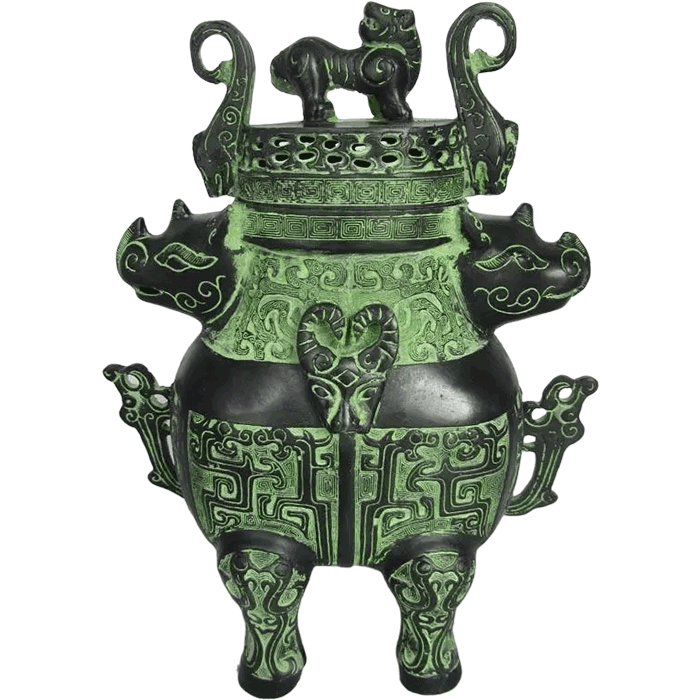
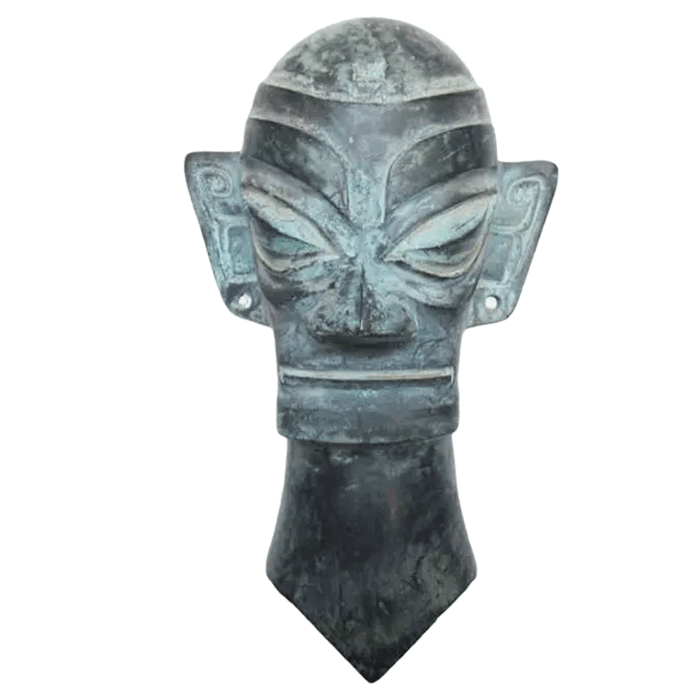
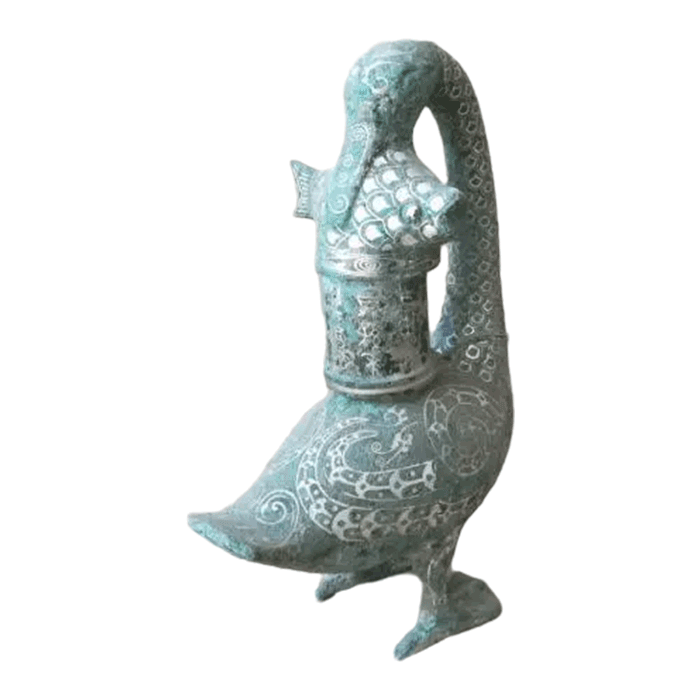
Few images in the history of Chinese art are as instantly recognizable as the taotie face — a stylized animal mask with bulging eyes, curling horns, and a symmetrical composition that stares outward from the surface of ancient bronzes. For researchers, museum curators, and heritage buyers exploring how ritual bronzes were made and what they meant, the taotie motif offers one of the richest entry points into early Chinese material culture. This article explains the origin of the design, its symbolic role on ceremonial vessels, and how a modern Bronze Taotie motif vessel is produced for collectors, institutions, and interior heritage projects today.
What Is the Taotie Motif? Origins and Visual Language
The taotie pattern first appears on Chinese bronze vessels during the late Neolithic and early Bronze Age, becoming a defining decorative feature of Shang and early Zhou dynasty ritual objects. The motif is typically rendered as a frontal animal face split along a central vertical axis, with each half mirrored to form a complete symmetrical mask. Characteristic elements include:
- Large, protruding eyes positioned at the center of the design
- Curved or ram-like horns extending upward or outward
- A pronounced brow ridge and nose bridge dividing the composition
- Interlocking spirals, hooks, and thunder patterns (leiwen) filling the background
Scholars have long debated the origin of the name "taotie," which literally translates to "glutton" or "devouring beast." The term was first recorded in later Zhou and Han period texts describing the motif as a mythical creature associated with excess and warning. Whether the design originated as a totemic animal symbol, a stylized dragon, or an abstract composite of several creatures remains an open question, but its consistent placement on ritual bronzes points to a role far more significant than pure ornament. For a broader timeline of how this visual tradition developed alongside other bronze forms, see the evolution of bronze culture over 2000 years.
Symbolic Meaning of the Taotie Motif in Ritual Bronze Vessels
A Guardian and Mediator Between Realms
Most bronze scholars interpret the taotie as a protective or mediating presence rather than a purely decorative pattern. Positioned on vessels used in ancestral sacrifice and ceremonial feasting, the motif is thought to have served as a guardian face watching over the ritual, or as a symbolic bridge between the human and spirit worlds. Its placement on the body of a ding tripod or zun wine vessel was deliberate — the face often appears directly on the section of the vessel that would have been most visible during a ceremony, reinforcing its role as an active participant in the ritual rather than background decoration.
Power, Authority, and Lineage
Bronze vessels themselves were markers of status in Shang and Zhou society, commissioned by ruling families and used in ceremonies that reinforced political and ancestral authority. A vessel bearing an elaborate taotie motif required significant casting skill and material investment, so the decoration itself became a visual statement of the owner's rank. Later cataloging traditions, including inscriptions found on ritual bronzes discussed in Bronze Statue and Mao Gong Ding, show how closely bronze ownership was tied to lineage and ceremonial obligation.
A Warning Against Excess
Later interpretations, particularly from the Han dynasty onward, framed the taotie as a cautionary emblem — a beast so consumed by appetite that it devoured its own body, leaving only the head. Under this reading, the motif served as a moral reminder displayed prominently on vessels used during feasts, warning participants against gluttony and excess even as they partook in ceremonial food and wine offerings.
Common Vessel Forms Bearing the Taotie Design
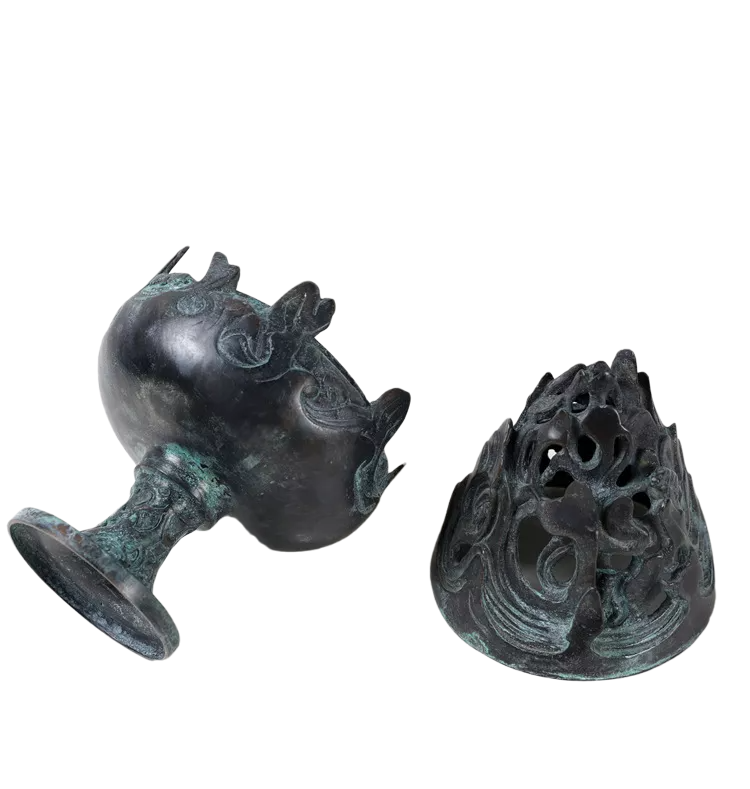
The taotie motif was not restricted to a single vessel type. It appears across nearly every major category of Shang and Zhou ritual bronze, each associated with a specific ceremonial function:
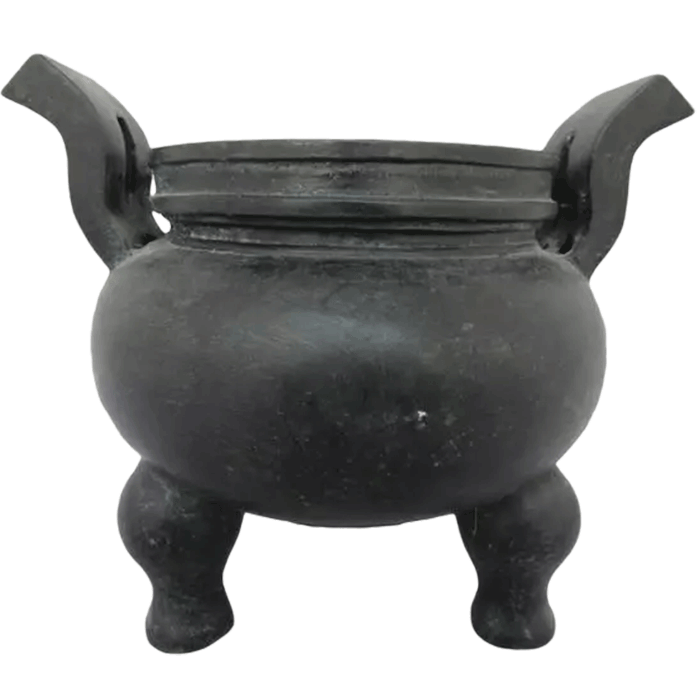
- Ding tripods — used for cooking and presenting meat offerings during ancestral rites; often the largest and most heavily decorated vessels in a set.
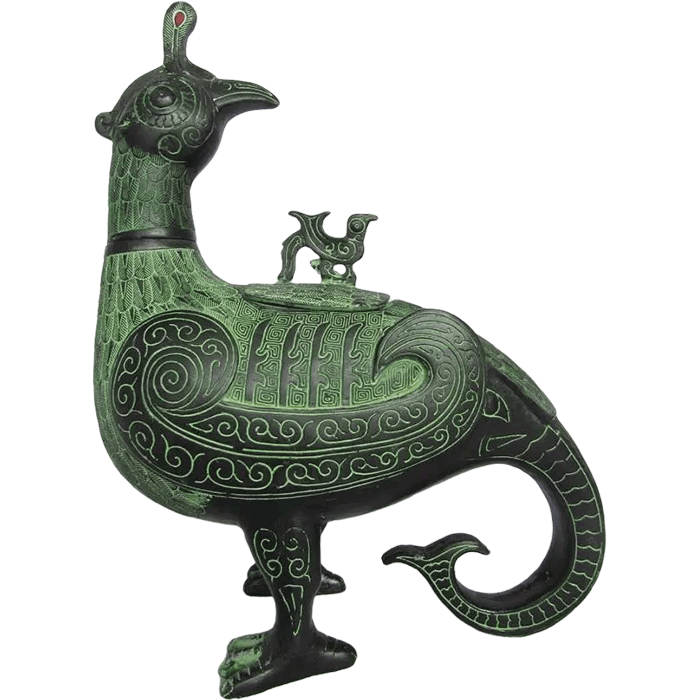
- Zun and hu vessels — wine containers used in libation ceremonies, frequently combining taotie faces with dragon or bird motifs along the neck and shoulder.
- Gui bowls — used for serving grain offerings, typically paired with ding tripods in ritual sets according to rank.
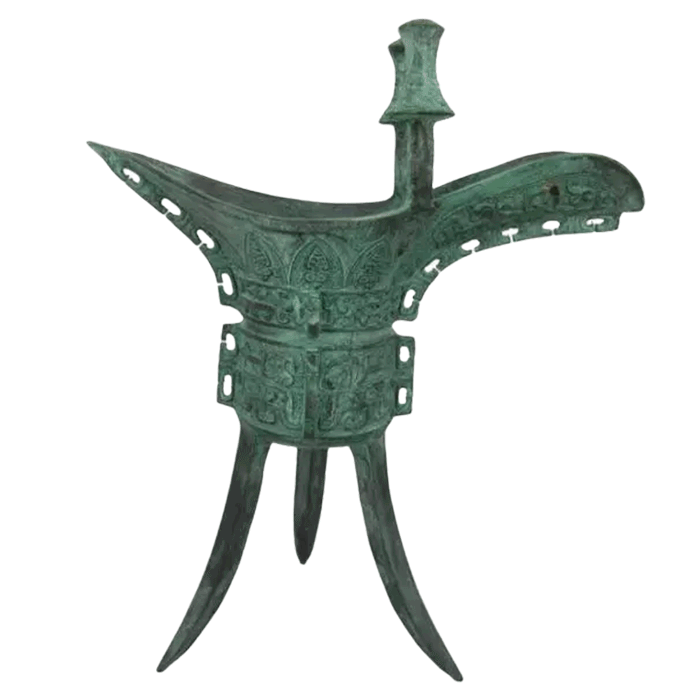
- Jue and gu cups — smaller drinking vessels where the motif appears in a more compact, condensed form.
Each of these forms carried its own ritual protocol, and the number of vessels in a set was itself a marker of the owner's social rank. Readers interested in how specific vessel types were classified and named can find further detail in Introduction to Several Bronze Wares.
How a Bronze Taotie Motif Vessel Is Cast Today
Reproducing a historically accurate taotie design requires the same core techniques used by ancient foundries, adapted with modern quality controls. At Luoyang Yichuan Bronze Craft Co., Ltd., production of a taotie-decorated vessel follows several stages:
Mold Design and Wax Modeling
Craftsmen begin by studying reference proportions from archaeological examples or client-provided imagery, then sculpt the taotie relief into a wax model using the traditional lost-wax casting method. This step determines the depth and symmetry of the mask, the curl of the horns, and the density of the surrounding spiral patterns.
Casting in Cu-Sn Bronze Alloy
The wax model is encased in a ceramic shell, then the wax is melted out and replaced with molten bronze alloy. This produces a solid casting that captures fine surface detail, including the sharp ridges and recessed grooves that define a well-executed taotie face.
Hand Chasing and Patina Finishing
After casting, skilled finishing artisans hand-chase the surface to sharpen details lost in the casting process, then apply a patina finish. Depending on the intended use, a client may request an antique green or brown patina consistent with archaeological pieces, or a cleaner modern bronze finish suited to contemporary interiors. Consistent patina color matching across a full vessel set is one of the more technically demanding parts of this stage, particularly for buyers assembling matched displays.
Every piece produced under this process undergoes inspection before shipment, in line with the company's ISO 9001 quality management certification, with protective packaging designed to withstand export transit for fragile cast bronze surfaces.
Sourcing a Bronze Taotie Motif Vessel for Museums, Collections, or Display
Heritage buyers approaching a foundry for the first time typically fall into a few categories: museums seeking accurate replica pieces for education, private collectors wanting a decorative interpretation of a historical form, and designers incorporating a taotie vessel into a heritage-themed interior. Each of these buyers benefits from different levels of customization:
- Exact archaeological replication — precise scaling and motif reproduction based on a known excavated vessel, often requested by institutions.
- Stylized reinterpretation — a taotie pattern adapted in proportion or finish for a modern setting, common among interior designers.
- Small-batch or single-piece orders — since MOQ begins at one piece for custom sculptures, individual collectors can commission a single vessel without needing to meet a bulk production minimum.
Because taotie decoration ranges from simple linear relief to highly complex layered spiral work, pricing and lead time vary with design density and vessel size. Buyers considering a themed collection alongside vessels may also review related bronze forms, including Chinese bronze sculpture pieces that pair well with ritual-style vessels in a shared display context, or explore customize a bronze sculpture options for adapting a taotie design to a specific size or finish requirement.
Why the Taotie Motif Still Matters for Modern Bronze Craft
The persistence of the taotie face across three millennia of Chinese art history speaks to its adaptability as a symbol — read variously as guardian, warning, or emblem of authority depending on the era and audience. For today's heritage buyers, a well-cast Bronze Taotie motif vessel functions simultaneously as an educational object, a decorative centerpiece, and a tangible link to one of the oldest continuous bronze-casting traditions in the world. Understanding the motif's layered symbolism helps buyers communicate more precisely with a foundry about proportion, finish, and the level of archaeological accuracy they need, whether the goal is a museum-standard reproduction or a design-forward interpretation for a contemporary space.
Working with a foundry that understands both the historical weight of the design and the practical demands of export-grade production — from alloy composition to patina consistency to protective crating — helps ensure that a taotie vessel arrives in the condition its craftsmanship deserves, ready to serve its role as either a scholarly reference piece or a striking addition to a private collection.