Bronze Jue vs Gu Vessel: Key Differences Explained
How a Bronze Jue Differs From a Gu Vessel in Shape, Function, and Ritual Use
Collectors, museum curators, and cultural-goods importers researching ancient Chinese ritual bronzes often encounter two vessel types that look superficially similar but serve very different purposes: the tripod wine vessel known as a Jue and the tall cylindrical goblet called a Gu. Understanding the distinction is essential not only for identification but also for sourcing accurate reproductions that respect historical proportions and casting traditions. This guide breaks down the structural, functional, and technical differences buyers should know before adding either form to a collection.

Understanding Ancient Chinese Ritual Wine Vessels
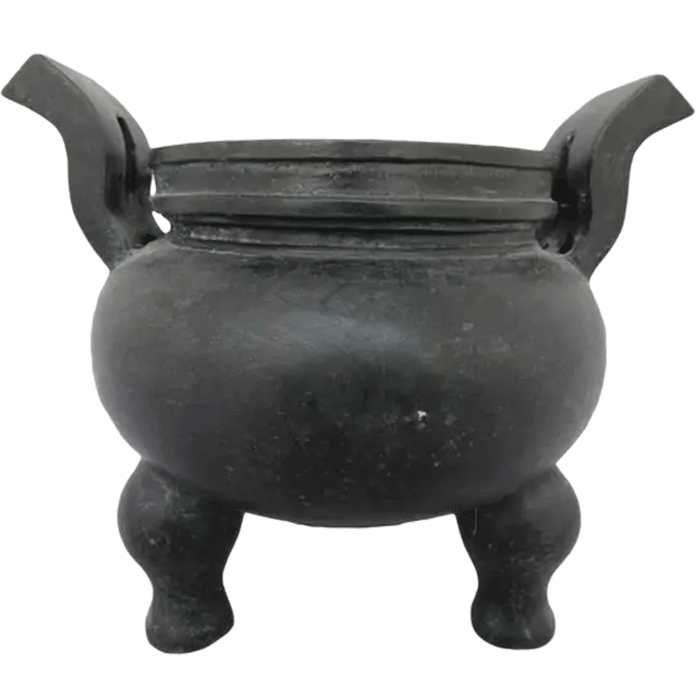
Bronze wine vessels occupied a central place in Shang and Zhou dynasty ceremonial life, used in ancestral rites, court banquets, and state sacrifices. Archaeological finds from tombs across Henan Province and beyond reveal an entire vocabulary of vessel shapes, each with a distinct role in the ritual sequence. Vessels like the Zun, Hu, and Ding vessels appear frequently in this system alongside smaller drinking and pouring wares. For readers building foundational knowledge, our overview of the evolution of bronze culture over 2000 years traces how these forms developed across centuries of metallurgical refinement.
Two of the most commonly confused vessel types in this category are the Jue and the Gu. Both were used for wine-related rituals, both date to similar periods, and both feature slender profiles—yet their construction and ceremonial roles diverge significantly.
What Is a Bronze Jue? Form, Function, and Symbolism
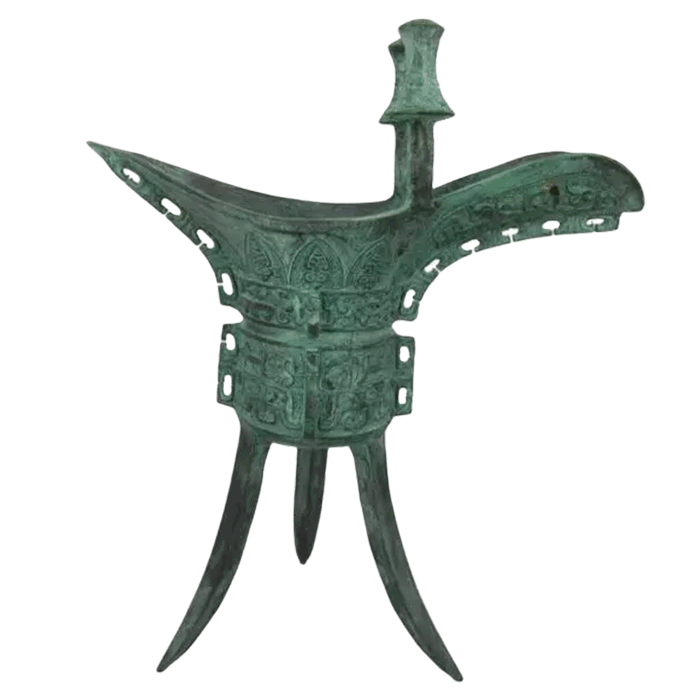
A Bronze Jue is a tripod vessel typically standing on three slender, outward-splayed legs. Its most recognizable features are a long pouring spout on one side, a pointed tail-like projection on the opposite side, and a loop handle attached to the body for lifting. Many examples also include two small mushroom-shaped studs, called "caps," positioned near the rim—thought to have served either a decorative or functional purpose during pouring. The Jue was primarily used for warming and pouring wine during ancestral offerings. Its tripod base allowed it to be placed directly over heat, a practical feature that distinguishes it functionally from flat-bottomed drinking vessels. In terms of ritual hierarchy, the Jue often appears in sets alongside vessels like the Zun and Ding, and surviving examples show significant variation in surface decoration, from restrained geometric bands to elaborate taotie motifs.
What Is a Gu Vessel? Distinct Features and Purpose
The Gu, by contrast, is a tall, slender drinking vessel with a distinctive trumpet-shaped silhouette: a flared, wide mouth, a narrow waisted midsection, and a flared, trumpet-like foot. Unlike the Jue, the Gu has no legs, no spout, and no handle. It was designed purely as a drinking cup, used to hold and serve wine during ceremonial toasts rather than to warm or pour it over an open flame. Because the Gu lacks a tripod base, it cannot stand on heat and was likely filled from another vessel before use. Its elegant, elongated proportions made it a popular subject for elaborate surface ornamentation, and archaeologists frequently find Gu vessels paired with Jue vessels in tomb assemblages—together they represent a complementary pouring-and-drinking set used in the same ritual sequence.
Bronze Jue vs Gu Vessel: Key Differences Collectors Should Know
While both vessels belong to the same ritual wine-vessel family, their structural and functional differences are significant enough that experienced collectors should never confuse the two when cataloging or sourcing reproductions.
Shape and Structure
The most obvious distinction is the base. A Bronze Jue stands on three splayed legs and includes a spout, tail, and handle—features entirely absent from the Gu, which instead has a smooth, footed trumpet form with no protruding elements. Anyone examining silhouettes side by side will notice the Jue's asymmetrical, almost architectural profile compared to the Gu's symmetrical, vertical elegance.
Ritual Function
The Jue served a dual purpose: warming wine over heat and pouring it into other vessels or directly into ritual libations. The Gu, meanwhile, functioned strictly as a drinking cup for consuming or offering wine during ceremonies. This functional split means the two vessels were rarely interchangeable in ritual practice, even though they often appear together in ceremonial sets alongside Ding tripods and Zun vessels.
Casting Techniques
Both forms were traditionally produced using the piece-mold and later lost-wax casting methods, but the Jue's protruding spout, tail, and legs present greater technical challenges than the Gu's continuous curved body. Achieving crisp definition at the spout tip and maintaining even wall thickness across three thin legs requires precise mold work and controlled pouring temperatures—skills that remain relevant today when reproducing historically accurate pieces. Readers interested in the metallurgical side of this distinction may find our article on the difference between bronze and brass useful for understanding why alloy composition affects castability and surface finish.
Sourcing Authentic-Style Bronze Jue Reproductions for Collections
For museum buyers and cultural-goods importers assembling reference collections or retail inventories, sourcing a well-proportioned Bronze Jue reproduction requires attention to several details beyond general shape accuracy:
- Leg proportion and splay angle — authentic Jue vessels have a specific outward taper that affects visual balance; poorly cast reproductions often appear top-heavy.
- Spout and tail symmetry — these elements should align with the vessel's central axis to reflect period-accurate craftsmanship.
- Surface patina consistency — whether an antique verdigris finish or a modern polished look is desired, color matching across a full vessel surface is a common quality issue with lower-tier suppliers.
- Alloy composition — a genuine copper-tin (Cu-Sn) bronze alloy produces different resonance, weight, and oxidation behavior than brass substitutes.
Buyers assembling comparative displays often pair a Bronze Jue with a Gu-form vessel, a Ding tripod, or a decorative Zun to illustrate the range of ancient wine-vessel typology. Our catalog of chinese bronze handicrafts includes vessel reproductions suited to this kind of educational or retail pairing.
Quality Assurance and Custom Options from Luoyang Yichuan Bronze Craft
Luoyang Yichuan Bronze Craft Co., Ltd. operates a 3,000-square-meter production facility in Yichuan County, Luoyang, Henan Province, staffed by more than 30 skilled craftsmen, including dedicated bronze-casting masters and finishing artisans. Our workshop produces over 50,000 bronze art pieces annually, ranging from single custom prototypes to full production runs, which allows us to accommodate both individual collectors seeking one exact-replica Bronze Jue and importers placing larger inventory orders.
Each vessel is cast using premium bronze alloy (Cu-Sn) through the traditional lost-wax method, followed by hand chasing, polishing, and patina finishing in either antique or modern styles. Because Jue vessels present specific challenges around leg thickness and spout definition, our casting team pays particular attention to mold precision at this stage to avoid the warping or asymmetry that commonly affects lower-quality reproductions.
As an ISO 9001 certified manufacturer, we maintain quality inspection procedures before every shipment and comply with export quality inspection standards for art crafts. Every order includes free replacement coverage for casting defects, and our after-sales team provides patina touch-up and restoration guidance should a piece require adjustment after long-distance shipping. Custom orders start from a minimum quantity of one piece for individual sculptures, with bulk pricing negotiated based on size and design complexity—an arrangement that suits both first-time collectors and established importers building recurring supply relationships.
For buyers who want to explore how a Bronze Jue might be adapted to specific dimensions, patina tones, or decorative motifs, our team can walk through the process to customize a bronze sculpture from sculpmart.com, including reference-based replication for museum-standard accuracy.
Final Notes for Buyers Comparing Ritual Vessel Types
Distinguishing a Bronze Jue from a Gu vessel comes down to recognizing three core signals: the presence or absence of legs, the spout-and-tail configuration unique to the Jue, and the differing ritual functions of warming-and-pouring versus drinking. For collectors and importers building historically grounded inventories, sourcing from a manufacturer that understands these structural nuances—and backs production with certified quality standards—reduces the risk of receiving reproductions with inaccurate proportions or inconsistent finishing. Whether the goal is a single museum-grade Bronze Jue or a coordinated set including Gu, Ding, and Zun forms, working with an experienced bronze foundry ensures both historical fidelity and export-ready packaging for safe international delivery.