Bronze Jue Styles: Erlitou to Late Shang Guide
Tracing the Evolution of the Bronze Jue From Erlitou to Late Shang
Among the earliest ritual wine vessels of ancient China, the Bronze Jue occupies a special place in the history of Chinese metallurgy. As one of the first cast-bronze forms to appear at the dawn of the Bronze Age, its silhouette recorded nearly a thousand years of technical progress and artistic change. For buyers and resellers sourcing historically informed replicas, understanding how this vessel shifted in proportion, decoration, and casting method from the Erlitou period through the Late Shang dynasty is essential before selecting a production style. This guide walks through that evolution stage by stage, offering the kind of detail that supports confident purchasing decisions.
What Makes the Bronze Jue Significant
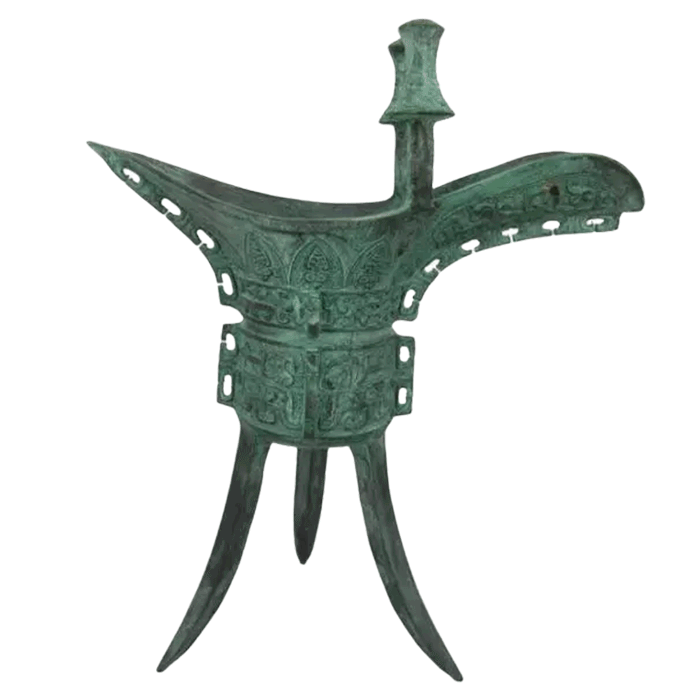
The jue is a three-legged wine-warming vessel with a spouted mouth, a loop handle, and two small posts on the rim. It was primarily used in ancestral offering ceremonies, where warmed wine was poured as part of ritual sacrifice. Its shape is distinctive among ancient Chinese bronzes, and its long production history—spanning roughly from 1900 BCE to 1000 BCE—makes it a useful reference point for anyone studying the broader trajectory of the evolution of bronze culture over 2000 years.
Because the vessel evolved continuously, no single "authentic" jue design exists. Instead, there are recognizable phases, each with its own characteristics in wall thickness, leg shape, decoration density, and casting precision. Buyers choosing a replica for museum-style display, educational collections, or resale should understand which phase best matches their intended use case.
Erlitou Period: The Earliest Cast Forms
Thin Walls and Minimal Ornamentation
The earliest known bronze jue vessels come from the Erlitou culture, generally dated to around 1900–1500 BCE. These pieces are notably thin-walled, a result of early piece-mold casting techniques that had not yet achieved the structural sophistication seen in later dynasties. Surface decoration on Erlitou jue is minimal or entirely absent, with some examples showing only faint raised lines or small studs.
Slender, Elongated Legs
Erlitou-period jue typically feature long, slender, slightly outward-splayed legs and a narrow body. The spout is elongated and the handle is small in proportion to the vessel. This gives the overall form a fragile, almost skeletal appearance compared to later versions. For reproduction purposes, this style appeals to buyers seeking to represent the very origins of Chinese bronze ritual culture, though the thin casting can present more delicate handling requirements in transit.
Early to Middle Shang: Increasing Structural Confidence
Thicker Casting and Broader Bodies
By the Early Shang period (roughly 1600–1400 BCE), bronze casting workshops had matured considerably. Jue vessels from this phase show thicker walls, broader bodies, and a more stable tripod stance. Craftsmen began incorporating simple taotie (animal mask) motifs in low relief bands around the neck, a decorative practice that would become far more elaborate in later centuries.
Introduction of Rim Posts
The two small mushroom-shaped posts on the rim, a feature later closely associated with the jue form, become more consistently present during the Middle Shang period. Their function remains debated among scholars—possibly ritual, possibly practical for lifting the heated vessel—but their appearance marks a clear stylistic milestone useful for dating and replicating pieces accurately.
Late Shang: Peak Ornamentation and Technical Mastery
Dense Taotie and Cicada Motifs
The Late Shang period, centered around the Anyang capital, represents the technical and artistic high point of jue production. Vessels from this era display dense, high-relief taotie patterns, interlaced with cicada motifs, kui dragons, and finely incised background spirals known as leiwen. The decoration often wraps the entire body, leaving little undecorated surface.
Refined Proportions and Heavier Casting
Late Shang jue are noticeably heavier and more structurally robust, reflecting advances in piece-mold casting that allowed for thicker, more even walls without sacrificing detail. The legs become more triangular and stable, the spout more pronounced, and the handle often cast with its own decorative band. This is the style most frequently referenced in museum collections and is a common request among buyers seeking a historically "classic" bronze jue for display or educational purposes.
Inscriptions Begin to Appear
Toward the very end of the Shang dynasty, some jue vessels begin to carry short cast inscriptions—often a clan emblem or a dedication to an ancestor. While brief, these inscriptions mark the beginning of a practice that would become extensive in Western Zhou bronzes, and they offer an additional layer of authenticity for buyers interested in inscribed replica pieces.
Comparing the Three Phases
| Feature | Erlitou | Early-Middle Shang | Late Shang |
|---|---|---|---|
| Wall thickness | Thin | Moderate | Thick, robust |
| Decoration | Minimal or none | Simple taotie bands | Dense taotie, cicada, leiwen |
| Legs | Slender, splayed | Broader, more stable | Triangular, sturdy |
| Rim posts | Rare | Increasingly common | Standard feature |
| Inscriptions | None | None | Occasional short clan marks |
Choosing the Right Bronze Jue Style for Your Collection
Matching Style to Purpose
Buyers sourcing pieces for educational displays often prefer a range spanning all three phases, allowing viewers to observe the vessel's stylistic progression firsthand. Resellers targeting collectors of Shang-dynasty art typically gravitate toward the Late Shang style, given its visual complexity and closer association with well-known excavated pieces such as those discussed in introduction to several bronze wares.
Casting Method and Surface Finish
At Luoyang Yichuan Bronze Craft Co., Ltd., each replica jue is produced using the traditional lost-wax casting method with a premium copper-tin bronze alloy, allowing for the fine relief detail characteristic of Late Shang ornamentation as well as the simpler surfaces of earlier phases. Hand chasing and patina finishing are applied afterward, giving buyers a choice between an antique weathered appearance or a cleaner modern bronze tone, depending on the intended display setting.
Because the workshop supports orders from a single custom prototype up to bulk production runs, buyers can commission a single museum-accurate Erlitou-style jue for a study collection, or a full comparative set spanning all three periods for teaching purposes. Every piece undergoes quality inspection before shipment, and casting defects are covered by free replacement, which matters particularly for buyers ordering detailed replica sets where consistency across pieces is critical.
Sourcing Considerations for Resellers and Educational Buyers
Patina Consistency Across Batches
One recurring challenge for resellers is achieving consistent patina color across multiple units of the same design, especially when selling matched sets. Manual patina work, when done by experienced artisans, allows closer color matching between pieces than mass-chemical treatments, which is a relevant factor when ordering jue vessels intended to be displayed side by side.
Packaging for Fragile Forms
The jue's slender legs and protruding rim posts, particularly in the Erlitou and Early Shang styles, make it more vulnerable to damage during shipping than bulkier vessel forms like the ding or zun featured in the company's chinese bronze sculpture range. Export-compliant protective packaging designed for fragile bronze sculptures reduces this risk substantially, and should be a standard requirement when evaluating any supplier for this vessel type.
Custom Requests
Buyers with specific research or display needs can also work directly with the workshop's design team to customize a bronze sculpture from sculpmart.com, whether that means replicating a particular excavated jue with precise dimensions or adjusting the patina tone to match an existing collection.
Why Historical Accuracy Matters in Replica Sourcing
For educational buyers, small stylistic inconsistencies—an anachronistic rim post, an overly dense decoration pattern on what should be an early-style piece—can undermine the teaching value of a replica. Working with a manufacturer that understands the phase-by-phase evolution of forms like the bronze jue, and can execute those details accurately in casting and finishing, is what separates a generic decorative object from a genuinely useful study piece. With over 30 skilled craftsmen, including bronze-casting masters and finishing artisans, and a production heritage rooted in Luoyang's 3,000-year bronze tradition, the workshop is positioned to deliver both single custom prototypes and larger educational sets with consistent historical fidelity.
Whether the goal is a single Erlitou-style prototype for a teaching module or a full comparative set illustrating the vessel's transformation into the Late Shang dynasty, understanding these stylistic markers ensures buyers can communicate precise requirements and evaluate supplier samples with confidence. The bronze jue remains one of the clearest windows into early Chinese metallurgical history, and sourcing it accurately preserves that educational value for the next audience it reaches.