Bronze Jue Ritual Wine Vessel Guide
How a Bronze Jue Served Ritual Wine in Early Chinese Ceremonies
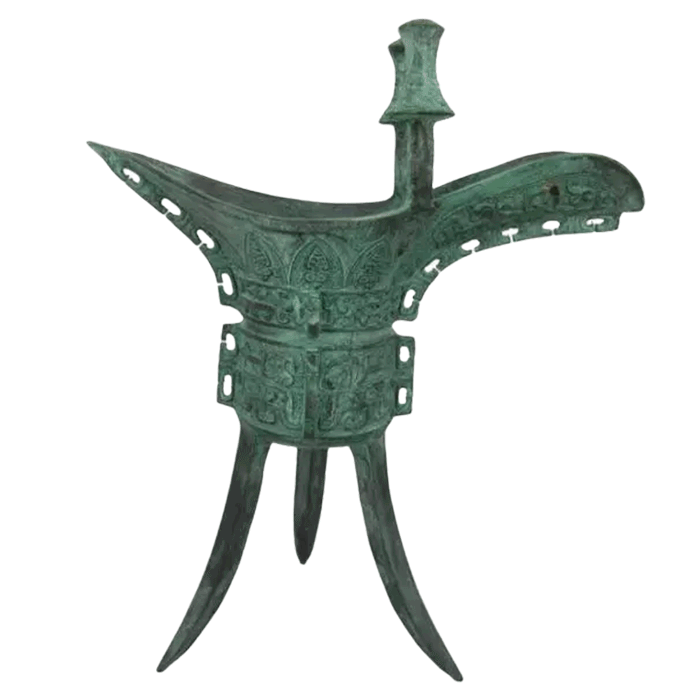
A Bronze Jue is one of the most recognizable early Chinese ritual wine vessels. Its tall tripod legs, pointed pouring spout, side handle, and two posts rising from the rim create a silhouette that differs clearly from later bronze cups, bowls, and storage vessels. For museum retailers, cultural-decor buyers, and collectors, understanding this form begins with its original ceremonial purpose. It was not simply a container for liquid. Its shape supported the controlled heating, presentation, and pouring of wine during formal offerings and elite ritual activities.
In early Chinese bronze culture, vessel design often communicated both practical use and social meaning. A jue combined a small wine cup with a stable three-legged base that could be placed near heat. The vessel’s narrow body, long spout, and carefully positioned handle helped a ritual attendant manage warmed wine without treating the object as an ordinary drinking cup. For buyers researching historical reproductions, these functional details are essential because they explain why an authentic-looking form must be evaluated as a complete structure rather than as a decorative outline alone.
Understanding the Form and Function of a Bronze Jue
The basic form of a Bronze Jue is compact but highly purposeful. Most examples are characterized by a rounded or slightly flared body, three long legs, a forward-facing spout, a rear handle, and two upright posts near the rim. Each feature contributes to the vessel’s ceremonial role.
- Tripod legs: The three legs raise the body above a surface and help keep it stable. They also make visual sense in the context of warming wine over or near a heat source.
- Pouring spout: The elongated front spout allows wine to be directed into another vessel or offered in a controlled stream during a ceremony.
- Rear handle: The handle gives the user a safer gripping point when the vessel contains warmed liquid.
- Rim posts: The two posts, often topped with small caps or finials, are among the most distinctive features of the form. Their precise historical purpose is still discussed by researchers, but they may have helped guide handling, mark the pouring side, or assist with the vessel’s use around heat.
- Compact capacity: The relatively small body suggests measured serving or offering rather than long-term storage of large quantities of wine.
The result is a vessel designed for action. It could be carried, heated, presented, and poured with deliberate movements. This is why the jue remains important in collections of Chinese bronze sculpture and decorative arts: it represents the close relationship between ritual practice, skilled metalworking, and symbolic form.
How Ritual Wine Was Prepared and Served
Ritual wine service in early Chinese contexts involved more than filling a vessel and passing it to a guest. Wine could be associated with ancestral offerings, formal gatherings, courtly ceremonies, and other occasions where rank and procedure mattered. The jue’s design indicates a role connected with warming and dispensing a small portion of wine.
A likely sequence began with wine being kept in a larger storage or presentation vessel. It could then be transferred into the jue for warming, serving, or offering. The tripod feet elevated the body, while the handle allowed an attendant to lift or position the vessel. Once the liquid was ready, the long spout could be used to pour it in a controlled manner into a cup, onto an offering surface, or into another ritual container.
It is important not to treat every surviving object as evidence of one identical ritual procedure. Ancient bronze vessels were used across long periods, regions, and social settings. Their functions may have evolved, and archaeological context can affect interpretation. However, the physical features of the jue strongly support its association with heated wine and ceremonial pouring rather than bulk storage.
The vessel’s small scale also matters. A large storage jar or wine container serves a different stage of a ritual sequence. The jue appears suited to a more immediate moment: the preparation and presentation of a portion of wine. This distinction helps buyers understand why a display grouping may include several related forms, such as a jue, a zun, a hu, or a ding, each contributing a different visual and historical role.
Why the Spout, Legs, and Posts Matter
When viewing a Bronze Jue, it is tempting to focus only on its dramatic spout. Yet the vessel’s usefulness comes from the relationship among all of its components. The spout directs the liquid; the handle supports lifting; the three legs raise the body; and the rim posts create a recognizable ceremonial profile. If one proportion is altered significantly, the object may still resemble an ancient vessel, but it may lose the visual balance that makes the form convincing.
The forward spout is often wider and more open than the rear side of the vessel. This asymmetry gives the form direction. In ritual use, direction matters because pouring is a visible gesture. A straight-sided cup can hold liquid, but it does not guide the eye toward the act of presentation in the same way. The jue’s profile turns a practical action into a formalized one.
The legs are equally significant. They do not merely decorate the underside of the vessel. Their triangular arrangement provides support while creating open space beneath the body. This space has long been associated with the possibility of warming the contents. For display buyers, the legs also create a strong sense of elevation and shadow, making the vessel visually different from a flat-bottomed bowl or vase.
The pair of posts near the rim remains an especially intriguing feature. On some examples, they are plain; on others, they may be finished with decorative caps. Their presence makes the silhouette immediately identifiable even from a distance. For reproduction research, the height, spacing, and alignment of these posts deserve close attention. Posts that are too short, too widely spaced, or poorly integrated with the rim can weaken the period character of the piece.
Ritual Meaning Beyond the Wine Itself
A Bronze Jue held meaning beyond its material contents. In early Chinese ritual culture, bronze vessels could connect households, rulers, lineages, ancestors, and ceremonial obligations. Their production required valuable metal, specialist knowledge, and substantial labor. Owning or commissioning such objects could therefore reflect status as well as participation in formal traditions.
Wine offerings were often connected to remembrance and communication with ancestors. In this context, the vessel did not need to be large to be significant. A small pouring vessel could play a central role because it carried the offering at the decisive moment of the ceremony. The act of pouring could express respect, continuity, and proper observance.
Decorative patterns can add another layer of meaning. Early bronze wares often feature masks, animal motifs, geometric bands, or stylized relief details. These designs should not be treated as simple ornament. They contributed to the vessel’s visual authority and could make the object appropriate for a formal setting. Buyers interested in design development may also find useful context in the evolution of bronze culture, which traces how bronze traditions changed across long historical periods.
How Jue Vessels Differ from Other Bronze Wine Forms
Early Chinese bronze collections include many vessel types, and each has a distinct shape and ceremonial association. Confusing these forms can make it difficult to assess whether a reproduction is historically coherent. The jue is particularly easy to identify because of its tripod configuration and front spout, but comparison with other forms provides useful context.
| Vessel Form | General Visual Features | Typical Functional Association |
|---|---|---|
| Jue | Tripod legs, long spout, handle, paired rim posts | Warming and pouring ritual wine |
| Zun | Taller body, often broad-shouldered or flared | Wine presentation or storage |
| Hu | Jar-like profile, narrow neck, rounded body | Storage or presentation of wine and other liquids |
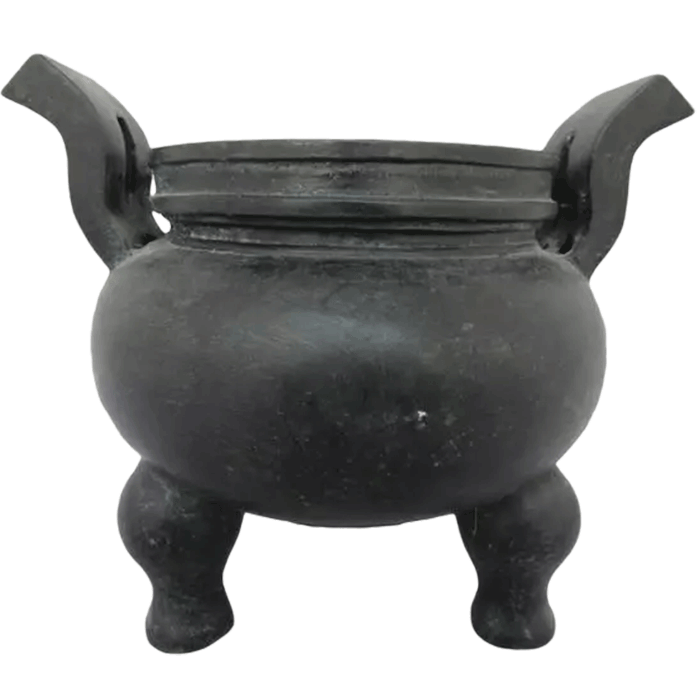
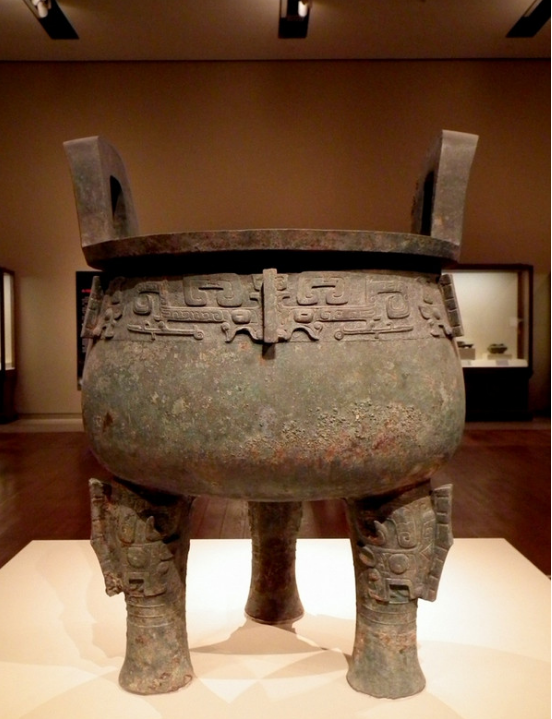
| Ding | Round or rectangular body on legs, usually with handles | Cooking, food offerings, and ritual display |
| Gu | Slender body with flared mouth and foot | Drinking or presentation of wine |
These distinctions are useful for museum shops and cultural-decor programs assembling coordinated displays. A jue can work as a focal object because its silhouette is instantly recognizable, while a zun or hu may provide height and volume within the same arrangement. For broader vessel reference, the article on ancient Chinese bronze wine vessels offers further background on the variety of forms associated with ritual wine culture.
What to Examine in a Reproduction or Decorative Interpretation
Collectors and retail buyers researching reproductions should first decide whether their priority is historical resemblance, decorative impact, educational display, or a custom interpretation inspired by ancient forms. These goals may overlap, but they require different choices in proportion, surface treatment, and finishing.
Proportion and Structural Balance
The legs should support the body naturally without appearing too thin or overly heavy. The spout should project forward with a controlled curve or taper, and the handle should visually counterbalance the spout. The rim posts should sit in a position that looks integrated with the vessel’s profile. A well-balanced form remains visually stable from the front, side, and three-quarter view.
Surface Detail and Patina
Surface finish influences whether a piece appears antique-inspired, contemporary, or purely decorative. Hand chasing can clarify relief patterns after casting, while polishing can emphasize selected edges and planes. Patina may be developed in darker brown, green, black, or mixed tones depending on the intended visual direction. Color consistency is especially important for multi-piece displays where vessels must work together rather than appear unrelated.
Material and Casting Method
For bronze art objects, the alloy and casting method affect both appearance and durability. Luoyang Yichuan Bronze Craft Co., Ltd. uses premium copper-tin bronze alloy and the traditional lost-wax method for custom bronze artworks and vessel forms. This process supports detailed modeling, hand finishing, polishing, and patina work. The company can support orders from a single custom prototype to larger production requirements, with bulk quantities discussed according to size and design complexity.
For a buyer planning a custom collection piece, it is helpful to provide reference images, target dimensions, desired surface color, intended display environment, and packaging requirements early in the discussion. A project may also include matching figures, animal forms, incense burners, mirrors, or other bronze home decor pieces to create a unified cultural display.
Using the Form in Museum Retail and Cultural Decor
In museum retail, a jue-inspired vessel can be presented with concise interpretive text explaining its role in ritual wine service. This helps visitors appreciate that the object’s unusual shape is functional as well as decorative. A label can point out the tripod legs, spout, handle, and rim posts, then connect these features to warming and pouring wine in an ancient ceremonial setting.
For cultural-decor buyers, the form works well on a shelf, console, study display, reception area, or curated hospitality interior. Its vertical posts and projecting spout create a sculptural outline that remains interesting even when viewed in silhouette. It can be displayed alone or paired with a larger vessel to create contrast in scale.
Collectors may prefer a more historically informed finish, including restrained decorative bands and an antique-style patina. Others may choose a modern interpretation with cleaner surfaces and simplified details. The key is clarity of intent. A carefully designed interpretation should respect the recognizable structure of the original vessel type while making its intended setting clear.
Choosing a Knowledgeable Bronze Craft Partner
A historically inspired vessel requires attention to more than casting alone. Reference review, wax pattern development, metal casting, chasing, polishing, patina application, quality inspection, and export-protective packaging all contribute to the final result. Luoyang Yichuan Bronze Craft Co., Ltd. operates in Yichuan County, Luoyang, Henan Province, with a 3,000-square-meter production area and more than 30 skilled craftsmen, including bronze-casting masters and finishing artisans.
The company is ISO 9001 certified, and its art craft products comply with export quality inspection standards. Each shipment receives quality inspection, and casting defects are covered by free replacement. After-sales support is also available for patina touch-ups and restoration guidance. Buyers seeking a tailored vessel, sculpture, or coordinated display concept can customize a bronze sculpture or discuss an original bronze artwork based on supplied specifications.
Understanding how the jue served ritual wine gives the form greater value than a simple decorative description can provide. Its tripod base, heating-friendly structure, controlled spout, and ceremonial visual language explain why it remains one of the most compelling forms in the study of early Chinese bronze vessels.