Bronze Goose-fish Lamp Decor: A Han Dynasty Masterpiece
What Makes the Bronze Goose-fish Lamp Decor a Masterpiece of Han Dynasty Ingenuity?
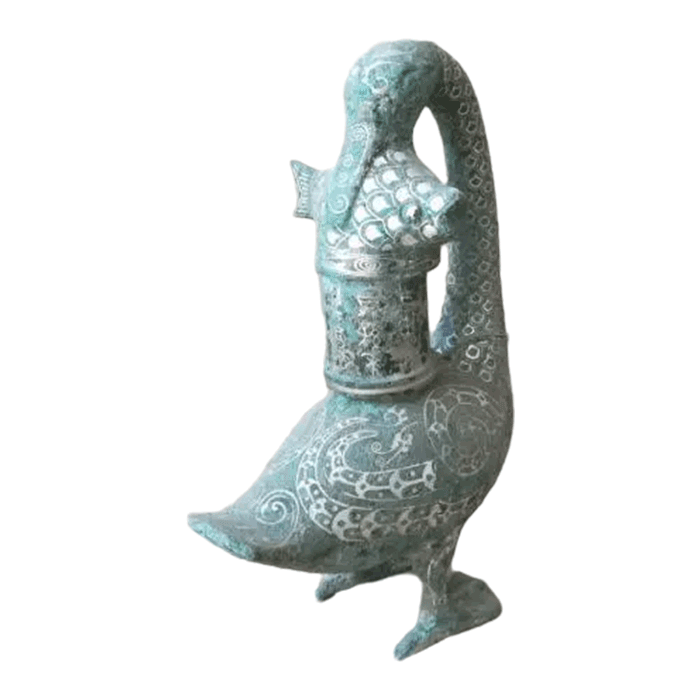
The Han Dynasty (206 BCE – 220 CE) is renowned as a golden age in Chinese history, a period of immense artistic innovation and technological advancement. Among the most celebrated artifacts from this era is a unique lamp, ingeniously designed in the form of a goose with a fish in its beak. More than just a source of light, this object is a testament to the sophisticated craftsmanship, aesthetic sensibilities, and practical problem-solving of ancient artisans. Its enduring appeal lies in its perfect fusion of form and function, a principle that continues to inspire art collectors, historians, and interior designers today. As a company rooted in the 3,000-year bronze heritage of Luoyang, we are dedicated to preserving the techniques required to faithfully reproduce such historical treasures for a global clientele.
What is the Origin and Symbolism of the Goose-and-Fish Motif?
To fully appreciate this remarkable artifact, one must understand its cultural and symbolic context. The original goose-and-fish lamps were discovered in the tombs of Han Dynasty nobility, indicating their status as luxury items reserved for the elite. Their placement in burial sites suggests they were intended to light the way for the deceased in the afterlife, carrying with them potent symbols of prosperity and good fortune.
Symbolic Meanings in Han Art
Every element of the lamp's design was carefully chosen for its symbolic meaning. The goose (雁, yàn) was a powerful symbol in ancient China. As migratory birds, they represented the cyclical nature of the seasons and the passage of time. They were also seen as messengers, capable of traversing long distances, and were admired for their loyalty, as they were believed to mate for life. In a broader sense, the goose symbolized fidelity, communication, and reliability.
The fish (鱼, yú) is a homophone for the word for "surplus" or "abundance" (余, yú). This simple linguistic connection made the fish one of the most popular symbols of wealth, prosperity, and good fortune in Chinese culture. A depiction of a fish was a direct and potent wish for a life of plenty. When combined, the goose holding the fish creates a powerful rebus, or visual pun, representing a wish for continuous abundance, marital fidelity, and a harmonious, prosperous household. This intricate layering of meaning elevates the lamp from a simple utilitarian object to a piece of art imbued with cultural significance, a hallmark of many great masterpieces of Chinese bronze sculpture.
How Did the Lamp's Design Combine Aesthetics with Practical Functionality?
While the symbolism is profound, the lamp's most celebrated feature is its brilliant engineering. The artisans of the Han Dynasty were not just artists; they were innovators who sought practical solutions to everyday problems. The goose-and-fish lamp is a prime example of an environmentally conscious design, created nearly two millennia before the concept became a global concern.
An Ingenious Smoke-Trapping System
Ancient lamps typically used animal or vegetable oils as fuel, which produced a significant amount of soot and smoke when burned. In enclosed spaces, this would quickly lead to poor air quality and blackened walls. The creators of the goose-and-fish lamp devised a clever solution. The lamp itself is the fish, which holds the oil and wick. The smoke and soot rising from the flame would be drawn into the goose's beak and down its long, curved neck. This neck acted as a flue, channeling the particulates into the hollow body of the goose, which was designed to be filled with water. The soot would then dissolve into the water, effectively trapping it and preventing it from polluting the air. This self-cleaning, smoke-reducing mechanism was a remarkable feat of fluid dynamics and a testament to the advanced understanding of the artisans.
Modular and Adjustable Design
The lamp was also designed for convenience. Most original examples were cast in several separate pieces: the goose's head and neck, its body, the lamp plate (the fish), and sometimes a screen. This modular construction made it easy to disassemble the lamp for cleaning and to refill the body with fresh water. Furthermore, the head of the goose was often designed to rotate, allowing the user to adjust the direction and intensity of the light. A sliding screen could be moved to further control the brightness. This combination of an air-purifying system, modularity, and adjustability showcases a level of user-centric design that feels surprisingly modern.
The Art of Replication: How is a Faithful Bronze Replica Created Today?
Recreating a historical artifact like the goose-and-fish lamp requires more than just technical skill; it demands a deep respect for the original craftsmanship and an unwavering commitment to authenticity. At Luoyang Yichuan Bronze Craft Co., Ltd., our process is a blend of ancient tradition and modern quality control, ensuring every piece we produce honors its historical counterpart.
Our facility, located in the heart of China's bronze culture cradle, spans 3,000 square meters and is home to over 30 skilled artisans, including bronze-casting masters who have dedicated their lives to this art form. The creation of a museum-quality replica follows a meticulous process.
- Model Creation: The process begins with a master model. This can be sculpted from clay or wax based on detailed historical references, photographs, and schematics of original artifacts. For custom projects, we work directly from client designs to create a precise prototype. Our minimum order quantity (MOQ) of just one piece allows for unparalleled flexibility in creating bespoke artworks.
- The Lost-Wax Method: We exclusively use the traditional lost-wax casting method (cire-perdue), a technique that has been employed for thousands of years. A wax replica is made from the master model and then coated in a ceramic shell. The shell is fired in a kiln, which hardens the ceramic and melts out the wax—the "lost wax." This leaves a perfect, hollow mold.
- Bronze Casting: Molten, premium bronze alloy (a high-quality copper-tin blend) is poured into the heated ceramic mold. Understanding metallurgy is crucial here; knowing the essential difference between bronze and brass and other alloys ensures the final piece has the correct strength, color, and aging properties. After cooling, the ceramic shell is carefully broken away to reveal the raw bronze casting.
- Chasing and Finishing: This is where true artistry comes to the fore. Our finishing artisans meticulously hand-chase the raw casting, refining every detail—the delicate feathers on the goose, the scales on the fish, and the subtle curves of the form. The surface is then polished to a smooth finish, preparing it for the final step.
- Patination: The patina is the final layer that gives the bronze its color and character. Our masters are experts at creating a wide range of finishes, from the verdigris and earthy tones of an ancient artifact to sleek, modern patinas. We specialize in consistent color matching across bulk orders, solving a common sourcing pain point for B2B clients who require uniformity for interior design projects or retail collections.
Sourcing High-Quality Bronze Replicas for Your Collection or Business
For collectors, interior designers, museum shops, and resellers, sourcing high-quality bronze reproductions requires a partner with proven expertise, reliable production capacity, and a commitment to quality. Luoyang Yichuan Bronze Craft Co., Ltd. is structured to meet the demanding needs of the B2B market, offering a seamless experience from initial design to final delivery.
Our operations are backed by an ISO 9001 certified quality management system, and all products are manufactured to meet stringent export quality inspection standards for art crafts. We understand the challenges of sourcing custom art, which is why we have built our services to address key client pain points:
- Exact Replication: Our craftsmen possess the skill to replicate antique bronzes with exceptional fidelity, capturing the spirit and detail of the original.
- Production Scalability: With an annual output of over 50,000 bronze pieces, we can support everything from a single custom prototype to large-scale production runs for hospitality or retail.
- Quality Guarantee: Every piece undergoes a rigorous quality inspection before shipment. We stand by our work, offering a free replacement for any casting defects and providing after-sales support for patina touch-ups and restoration guidance.
- Protective Packaging: We have developed export-compliant protective packaging solutions specifically designed to safeguard fragile sculptures during international transit, ensuring your investment arrives in perfect condition.
Whether you are seeking a single, stunning replica of a Han Dynasty lamp or wish to develop a line of custom bronze art, our team is equipped to bring your vision to life. We invite you to explore the possibilities and customize a unique bronze sculpture that reflects a legacy of timeless artistry and innovation. The Bronze Goose-fish Lamp Decor is more than an object; it is a story of ingenuity and culture, a story we are proud to help retell through the enduring medium of bronze.