Bronze Goose-fish Lamp Decor: A Buyer's Guide
Understanding the Intricate Design of Bronze Goose-fish Lamp Decor
Among the vast treasury of Chinese antiquities, few objects so perfectly blend artistic elegance with scientific ingenuity as the Goose-fish Lamp. Originating from the Han Dynasty, this remarkable artifact is more than a simple light source; it is a masterpiece of early environmental design, a vessel of rich symbolism, and a testament to the sophisticated craftsmanship of ancient bronze artisans. For B2B buyers, decor distributors, and curators of cultural gifts, understanding the layers of meaning and function behind this piece is crucial to appreciating its value and presenting it effectively to a discerning market.
This guide addresses the most frequently asked questions about the iconic Goose-fish Lamp, exploring its historical context, symbolic iconography, and the brilliant engineering behind its "smokeless" design. As a specialist manufacturer of high-fidelity bronze reproductions, Luoyang Yichuan Bronze Craft Co., Ltd. provides this insight to help our partners make informed sourcing decisions, ensuring the products they select carry the weight of authenticity and exceptional quality.
What is the Historical Origin and Significance of the Goose-Fish Lamp?
The Goose-fish Lamp is a celebrated artifact dating back to China's Western Han Dynasty (206 BCE – 9 CE), a period of significant economic prosperity, cultural advancement, and technological innovation. The most famous example was unearthed in 1968 from the tomb of Dou Wan, wife of the feudal prince Liu Sheng, in Hebei Province. This discovery, along with others, showcased the luxurious lifestyles of the Han nobility and their appreciation for objects that were both beautiful and highly functional.
In Han society, bronze lamps were not merely utilitarian. They were prominent symbols of wealth, status, and scholarly pursuit. Lavishly designed lamps like the Goose-fish model would have illuminated the opulent chambers of aristocrats, imperial officials, and wealthy merchants. Their presence signified the owner's ability to afford not only the expensive bronze material and craftsmanship but also the costly fuel—typically animal fat or vegetable oil—to keep them lit after dark. The intricate design and clever smoke-capturing mechanism elevated it from a simple household item to a piece of high art and a topic of conversation, reflecting the owner's sophisticated taste.
The lamp's enduring legacy is rooted in this duality. It represents a pinnacle moment in the evolution of bronze culture over 2000 years, moving beyond the ritual vessels of the earlier Shang and Zhou dynasties to more personal, domestic, and ingeniously engineered objects. For today's market, a high-quality reproduction of a Goose-fish lamp is not just a decorative item; it is a connection to this golden age of Chinese history, embodying a story of artistry, innovation, and cultural refinement that continues to captivate audiences worldwide.
Deconstructing the Design: What Do the Goose and Fish Symbolize?
Every element of the Goose-fish Lamp was carefully chosen for its symbolic meaning, creating a multi-layered narrative of prosperity and harmony. The combination of the two creatures is a classic example of auspicious symbolism in Chinese art, where visual puns and positive associations convey blessings and good fortune.
The Symbolism of the Goose
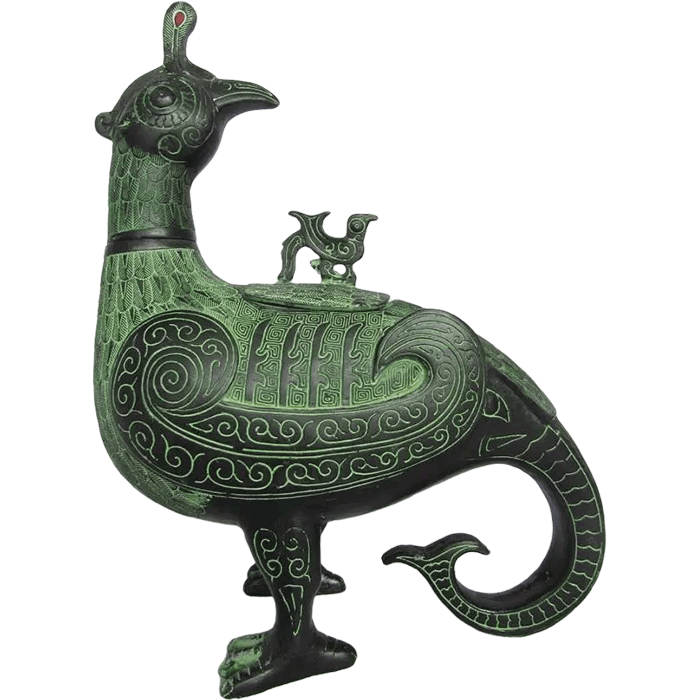
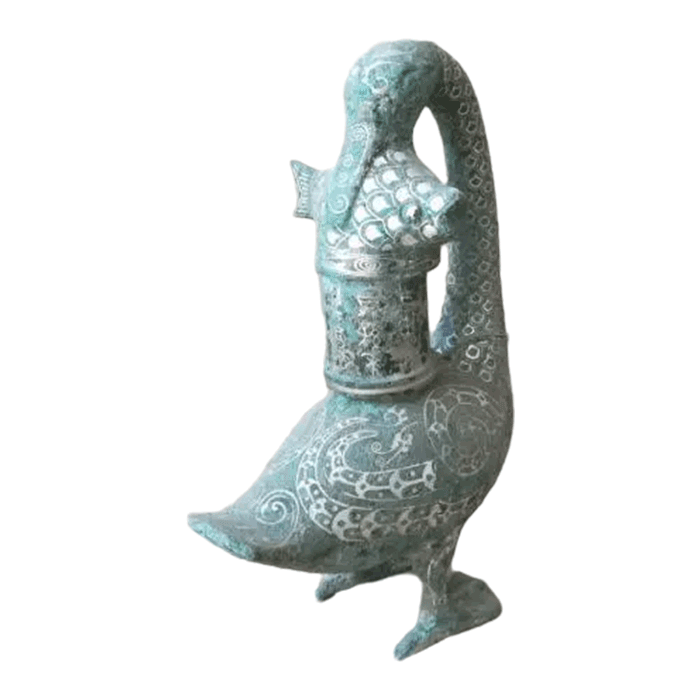
The lamp is sculpted in the form of a wild goose, its head gracefully turned back as if looking over its shoulder, holding a fish in its beak. In Chinese tradition, the wild goose (雁, yàn) is a potent symbol with several positive connotations:
- Loyalty and Marital Fidelity: Wild geese are known to be monogamous and mate for life. As such, they are a powerful symbol of a steadfast and enduring marriage, making an object featuring them a popular and meaningful wedding gift.
- Order and Punctuality: Geese are migratory birds that fly in a precise "V" formation and follow seasonal patterns with great reliability. This led them to be associated with order, reliability, and the changing of the seasons.
- Communication: Historically, geese were also seen as messengers, capable of carrying news over long distances. This imbues the goose with a sense of connection and communication.
The elegant, curving form of the goose's neck is not only aesthetically pleasing but also central to the lamp's primary function, seamlessly integrating art with engineering.
The Symbolism of the Fish
The fish held in the goose's beak is equally significant. The word for fish in Chinese (鱼, yú) is a homophone for the word for surplus or abundance (余, yú). This linguistic link makes the fish one of the most popular symbols of wealth and prosperity in Chinese culture. The common New Year greeting, "nián nián yǒu yú" (年年有余), translates to "May you have a surplus every year," and is often accompanied by imagery of fish.
By incorporating the fish, the artisan who designed the lamp was embedding a powerful wish for unending prosperity and good fortune for its owner. The fish serves as the lamp's oil plate, reinforcing the idea that abundance is the source of light and enlightenment.
When combined, the goose and the fish create a potent charm, wishing the owner a life of loyal relationships, order, and ever-growing abundance. This rich symbolism is a key selling point for those seeking meaningful bronze home decor arts.
How Does the Goose-Fish Lamp's "Smokeless" Function Work?
The most remarkable feature of the Han Dynasty Goose-fish Lamp is its ingenious, self-cleaning, "smokeless" design—a truly advanced concept for its time. While modern replicas are primarily used for decoration, understanding this original function is key to appreciating the piece's historical and engineering value.
The mechanism is a brilliant example of early environmental engineering:
- Fuel and Soot: The lamp's fuel, likely animal fat, would be placed in the plate shaped like a fish. When the wick was lit, it produced light but also a significant amount of black, oily soot and smoke. In an enclosed, unventilated room, this would quickly become unpleasant and unhealthy.
- A Hollow Conduit: The designers crafted the goose with a hollow body and neck. The shade, which could be rotated to adjust the light's direction and intensity, was positioned over the flame.
- Channeling the Smoke: As the hot smoke and soot rose from the flame, they were funneled into an opening in the goose's head and neck area.
- The Water Trap: The hollow body of the goose was designed to be filled with a small amount of water. The smoke would travel down the long, curving pipe of the neck and empty into the water-filled chamber of the body.
- Soot Condensation: Upon contact with the cooler water, the hot smoke would rapidly cool. The heavy soot particles would then be trapped in the water, dissolving and sinking to the bottom.
The result was that only cleaner, filtered air would be released, drastically reducing the amount of pollution inside the room. This clever system kept the air clean and prevented walls and textiles from being stained with soot. At Luoyang Yichuan Bronze Craft Co., Ltd., our ability to create an exact replication of antique bronzes means we study and understand these internal mechanics, ensuring our reproductions are faithful not just in appearance but in structural integrity.
Sourcing and Customizing High-Quality Bronze Replicas
For B2B clients looking to add a stunning piece of Bronze Goose-fish Lamp Decor to their catalog, ensuring quality and authenticity is paramount. The difference between a masterpiece and a mere imitation lies in the materials, the process, and the skill of the artisans.
Material and Craftsmanship
Authentic reproductions begin with the right material. We utilize a premium bronze alloy (Cu-Sn), which provides the durability, weight, and finishing potential required for a museum-quality piece. The entire sculpture is created using the traditional lost-wax casting method, a multi-step process that has been used for millennia to create detailed metalwork. This technique allows for the capture of fine details, from the individual feathers on the goose to the scales on the fish.
Our production facility, staffed by over 30 skilled craftsmen including bronze-casting masters and finishing artisans, ensures that every stage of the process is handled with expertise. After casting, each piece undergoes meticulous hand-chasing to sharpen details, followed by polishing and the application of a patina. Whether your clients prefer a traditional verdigris antique finish or a more modern polished look, our artisans can achieve consistent and beautiful results.
Customization and Production Capacity
We understand that B2B buyers have diverse needs. That's why we support a flexible production model, with a Minimum Order Quantity (MOQ) starting from just one piece for custom sculptures. This allows you to commission a unique prototype or a small batch for a niche market. For larger orders, our facility has an annual output of over 50,000 bronze art pieces, ensuring we can scale production to meet your demands. If you have a specific design variation in mind, you can customize a bronze sculpture from sculpmart.com to your exact specifications.
Quality Assurance for Global Partners
As an ISO 9001 certified company, we adhere to strict quality management systems. Every piece undergoes a thorough quality inspection before shipment, and we offer a free replacement for any casting defects. We also address the critical B2B pain point of international shipping by using export-compliant protective packaging, specifically designed to safeguard fragile sculptures during transit. This commitment to quality and reliability ensures that you receive a product that meets the highest standards, ready for your discerning clientele.