Bespoke Bronze Replicas: Material Proof FAQ
Bespoke bronze replicas require clear material proof before an order is approved
For importers, collectors, museums, designers, and heritage-focused buyers, a convincing photograph is not enough to validate a bronze reproduction. The final due-diligence stage should establish what metal is being cast, how the form is produced, whether the finish matches the approved reference, and how the finished piece will be protected for export. Material proof is especially important when a project involves an antique vessel, a historical statue, a Buddhist figure, a bronze mirror, or a fragile decorative sculpture with detailed relief.
Bespoke bronze replicas should be assessed as manufactured art objects rather than simply as decorative products. Their value depends on the relationship between alloy, casting method, surface treatment, dimensional accuracy, craftsmanship, and documentation. A buyer who asks the right questions before production can reduce disputes regarding metal composition, color variation, hollow construction, finish durability, and shipping condition.
Luoyang Yichuan Bronze Craft Co., Ltd. produces bronze sculptures, bronze vessels, mirrors, incense burners, Buddhist statues, and custom bronze artworks in Yichuan County, Luoyang, Henan Province. Its 3,000-square-meter production area includes more than 30 skilled craftsmen, including bronze-casting masters and finishing artisans. The company uses premium Cu-Sn bronze alloy and the traditional lost-wax casting method, while supporting orders from a single custom prototype to negotiable bulk production runs.

Why material proof matters before purchasing
“Bronze” is a broad commercial term, and different metal mixtures can produce substantially different results. In traditional art casting, bronze commonly refers to a copper-based alloy containing tin. However, a supplier may use a different copper alloy, brass, recycled mixed metal, or an undisclosed material if the specification is not defined clearly. These choices can influence casting behavior, edge sharpness, weight, color beneath the patina, corrosion response, and long-term restoration options.
For an importer, material validation is not only a technical issue. It also affects product positioning, customs documentation, insurance descriptions, resale confidence, and buyer satisfaction. For collectors, the issue is equally practical: an object marketed as a bronze reproduction should have a credible alloy and production process consistent with that description.
It is useful to understand bronze and brass differences before reviewing quotations. Brass is primarily a copper-zinc alloy, while art bronze is often based on copper and tin. The visual appearance of either material can be modified with surface coloring, so a dark brown or green patina alone does not prove that a piece is bronze.
What should a material-proof request include?
A practical request should state exactly what the supplier needs to confirm. The buyer can ask for the following information in writing before approving the production order:
- The declared alloy family, such as Cu-Sn bronze.
- The intended casting method and whether the item will be solid or hollow.
- The target dimensions, estimated weight range, and wall-thickness requirements where relevant.
- The finish specification, including antique, dark brown, green, black, golden, or modern polished effects.
- Reference images, drawings, measurements, or a physical sample for replication projects.
- Inspection expectations for casting integrity, sharp details, surface defects, color consistency, and packing.
- Any documentation needed for the buyer’s internal sourcing or import review.
Material proof is most effective when it is connected to an approved sample or signed specification. A general statement that a work will be “high quality bronze” leaves too much room for differing interpretations.
Frequently asked questions about Bespoke bronze replicas
How can I confirm that a replica is made from bronze rather than a bronze-colored substitute?
Start with a written alloy declaration. The supplier should identify the material as a copper-tin alloy if that is the agreed specification. Ask how the metal will be cast and whether any non-bronze structural parts, inserts, bases, or internal supports are planned. If the project has high value, requires formal verification, or will be supplied to a museum or specialist collector, discuss what physical material test or third-party testing arrangement is appropriate before production begins.
Visual inspection alone is not sufficient. Patina can create an aged bronze appearance on several different metal types. Instead, review the alloy statement together with the manufacturer’s process explanation, sample approval, expected weight, and final inspection photographs. For a complex commission, the buyer may also request photographs of the wax model, mold preparation, casting stage, raw metal surface, and finished patina stage.
Does the lost-wax process provide stronger proof of craftsmanship?
The lost-wax process is a traditional technique suited to detailed bronze artworks. A wax model is created from the approved design, then invested in a mold material. After the wax is removed, molten bronze is poured into the resulting cavity. When the casting cools, craftsmen remove the mold material and carry out chasing, welding where required, grinding, polishing, and patina finishing.
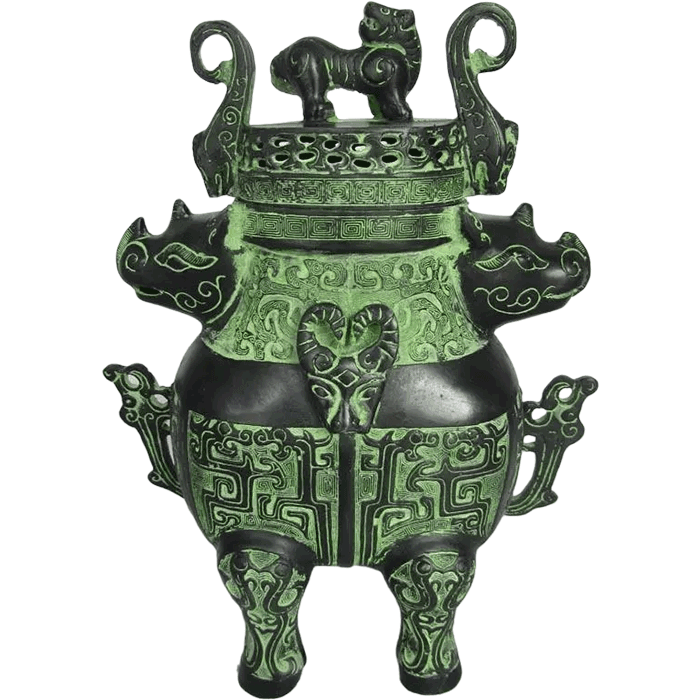
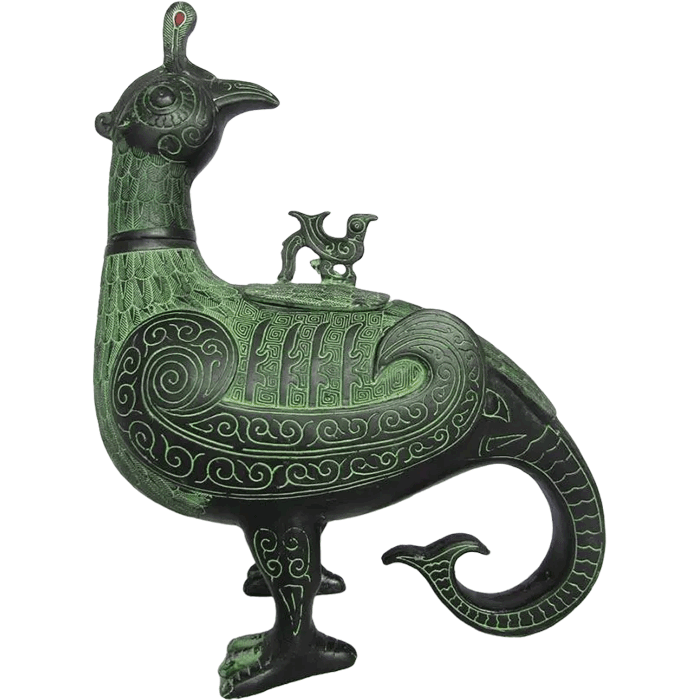
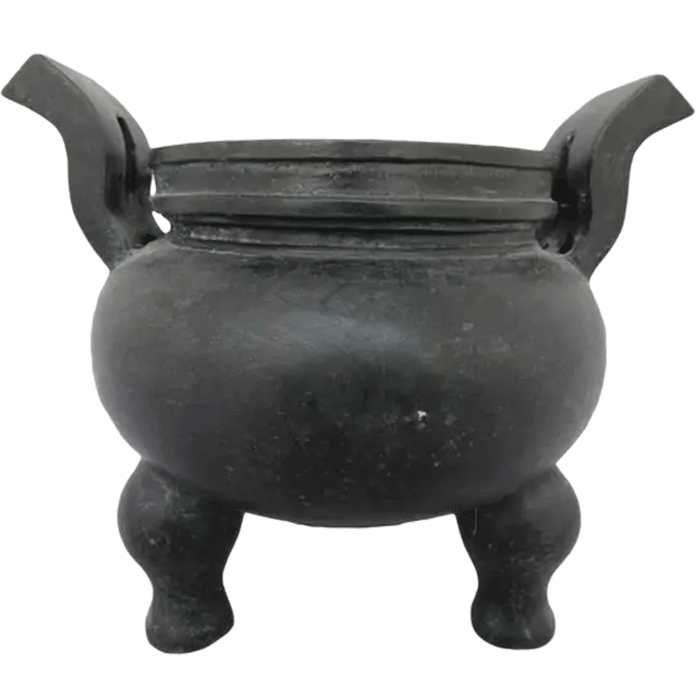
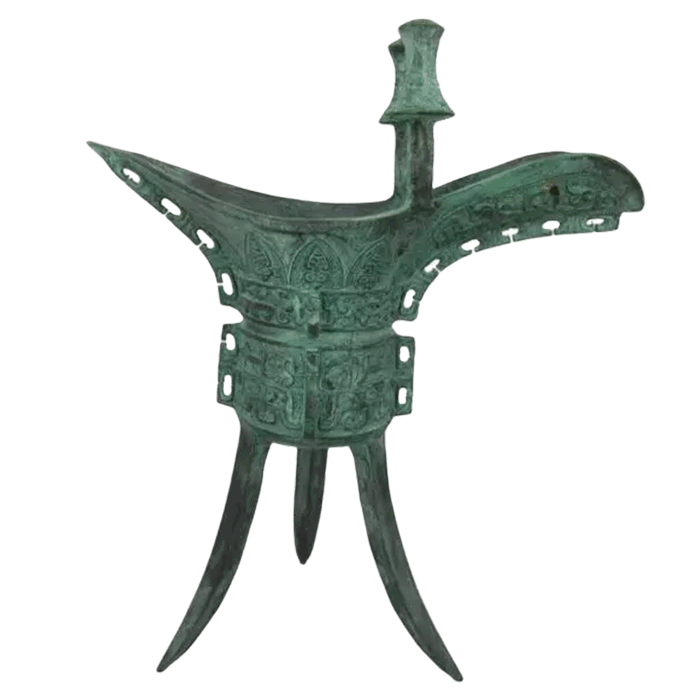
This method is particularly useful for reproducing deep relief, facial expression, hair texture, animal anatomy, inscriptions, ornamental handles, and vessel patterns. It is relevant when reproducing forms inspired by historical objects such as ding, zun, hu vessels, mirrors, incense burners, and figurative sculptures. Buyers reviewing ancient vessel references may find the overview of traditional bronze ware forms helpful when preparing a design brief.
Lost-wax casting does not eliminate the need for inspection. Rather, it gives the buyer a defined process to review. The agreed artwork should be checked at the wax or model stage when possible, because substantial dimensional or design changes become more difficult after the metal has been poured.
Can a supplier exactly match an antique bronze?
Exact replication should be understood carefully. A capable manufacturer can work toward accurate reproduction of a supplied reference, including dimensions, silhouette, decorative motifs, inscriptions, handles, feet, and surface character. However, a newly cast work should not be presented as an original antique. The buyer should specify that the product is a reproduction, replica, or newly made artwork and should ensure that any labeling, sales material, and customs descriptions are accurate.
For antique-inspired projects, provide multiple views of the original object, precise measurements, scale requirements, close-up images of relief work, and notes on intentional wear or surface variation. If an original object cannot be physically supplied, a dimensional drawing or 3D file can reduce ambiguity. Reference knowledge can also help buyers identify the details that require special attention; for example, the structure of a Houmuwu square cauldron includes distinctive geometric proportions and surface decoration that should not be simplified without approval.
What evidence should I request for patina color matching?
Patina is a controlled surface finish, but it remains partly artisanal. Small differences in surface texture, lighting, scale, and application can affect how a color appears. The best approach is to establish a physical color sample, approved finish board, or clearly identified reference image before production. The buyer should describe the desired result in practical terms: for example, dark brown with warm highlights, mottled antique green, matte black, or polished bronze with limited dark recesses.
Ask the supplier to confirm whether the finish will be antique or modern in appearance and whether hand finishing will be used. Luoyang Yichuan Bronze Craft Co., Ltd. offers hand chasing, polishing, and patina finishing in antique or modern looks. For repeat orders, retain the approved sample and written color notes so that the production team has a consistent standard for matching later batches.
It is also sensible to distinguish between a uniform factory-coated color and an intentionally varied hand-applied patina. In many art bronze projects, controlled variation is part of the desired appearance. The acceptance standard should therefore identify which variations are acceptable and which are not.
How to evaluate construction, weight, and finish
Material claims should be reviewed alongside construction. A bronze sculpture may be solid, hollow, or assembled from multiple cast sections. None of these approaches is automatically inferior. The appropriate construction depends on the object’s size, design, installation location, handling requirements, and budget. Large sculptures are often made as hollow castings to manage weight and material use, while smaller objects may be cast more heavily depending on the design.
Questions to ask about construction
- Will the item be solid or hollow cast?
- What is the approximate finished weight range?
- Will separate sections be welded together, and where will joints be placed?
- How will weld seams be chased and blended after assembly?
- Does the work require mounting holes, threaded hardware, a base plate, or internal reinforcement?
- What dimensions are subject to tolerance, especially for installation-critical components?
For human and animal sculptures, ask to see the figure from all angles during approval. A front-facing photograph can conceal issues with stance, balance, tail placement, drapery, or silhouette. Buyers seeking different subjects can review available bronze statue themes when defining the intended artistic direction.
For vessels and incense burners, inspect symmetry, rim thickness, handle alignment, lid fit, leg placement, and interior finish. For mirrors, discuss the treatment of the reflecting face separately from the decorative reverse side. For Buddhist statues, establish which iconographic details, hand gestures, ornaments, and base inscriptions require exact attention before the wax-model stage.
What defects should be checked before shipment?
A final inspection should cover both technical and aesthetic matters. Check for visible casting porosity, unintended holes, cracks, sharp unfinished edges, weak or incomplete decorative details, uneven polishing, obvious weld marks, unstable bases, and patina inconsistency beyond the agreed standard. Review the piece under more than one lighting condition if color matching is critical, since natural and indoor lighting can make bronze finishes look different.
Luoyang Yichuan Bronze Craft Co., Ltd. performs quality inspection before every shipment and provides free replacement for casting defects. The company also offers after-sales support for patina touch-ups and restoration guidance. These points should be reflected in the purchase agreement together with the approved design, finish standard, packaging requirements, and inspection procedure.
Documentation and sampling for import due diligence
Documentation should be proportional to the order’s value and complexity. A single small decorative item may need a basic specification and final photographs. A museum-style replica, hotel installation, retail program, or bulk procurement may require drawings, approved samples, material declarations, inspection records, packing lists, and serial or batch identification.
| Project stage | Recommended proof | Buyer decision |
|---|---|---|
| Quotation | Alloy statement, dimensions, finish description, construction outline | Confirm scope and technical expectations |
| Design approval | Drawings, 3D files, reference photographs, wax-model images | Approve form, details, and scale |
| Sample stage | Physical sample or finish sample with agreed color notes | Approve metal appearance and patina direction |
| Pre-shipment inspection | Final images, dimensional checks, defect review, packaging confirmation | Release goods for shipment |
The manufacturer’s operating capability also matters when documentation is reviewed. Luoyang Yichuan Bronze Craft Co., Ltd. is ISO 9001 quality management system certified, and its art crafts comply with export quality inspection standards. With annual output exceeding 50,000 bronze art pieces, the company can support both custom one-piece work and larger production requirements while maintaining an established manufacturing workflow.
For buyers starting with a trial piece, the company’s custom sculpture MOQ begins from one piece. Bulk-order terms can be negotiated according to size and design complexity. This approach can be useful for importers who want to validate a prototype’s alloy declaration, casting detail, patina, and packaging performance before committing to a broader program.
Packaging proof is part of material due diligence
A well-made bronze object can still arrive damaged if it is packed poorly. Fine projections, long limbs, vessel handles, incense-burner lids, mirror edges, and raised decorative elements need protection against impact and abrasion. Request packing photographs before shipment, particularly for fragile or high-relief work.
Packaging review should confirm that the sculpture is immobilized, separated from hard contact points, cushioned appropriately, and protected from surface rubbing. If a work has removable parts, each component should be identified and packed to avoid movement during transport. The outer packaging should be suitable for the product’s weight and shape.
Luoyang Yichuan Bronze Craft Co., Ltd. focuses on export-compliant protective packaging for fragile sculptures. Buyers should still state their shipping method, destination conditions, pallet requirements, labeling needs, and any requirements from their freight forwarder at the quotation stage. Export protection is most effective when packaging planning begins before final assembly rather than after the artwork is completed.
Final approval checklist for Bespoke bronze replicas
Before releasing a purchase order or balance payment, use a concise approval checklist. It helps align the purchasing team, the supplier, and any third-party inspector around the same standard.
- Confirm the Cu-Sn bronze alloy declaration in the order documentation.
- Confirm the lost-wax casting process and agreed construction method.
- Approve drawings, model images, or prototype details before casting.
- Approve the patina sample and describe acceptable color variation.
- Verify dimensions, base details, mounting requirements, and estimated weight.
- Review final photographs for casting defects, finish quality, and detail accuracy.
- Confirm export protective packaging and shipment labeling.
- Keep all approved references with the purchase order for future repeat production.
Reliable sourcing depends on turning visual expectations into verifiable requirements. When alloy, process, finish, construction, inspection, and packing are agreed in advance, buyers can evaluate Bespoke bronze replicas with greater confidence. The result is a clearer production path for custom sculptures, antique-inspired vessels, mirrors, Buddhist art, incense burners, and other bronze artworks intended for international delivery.