Authenticating Flying Horse of Gansu Bronze Replicas
Authenticating Han-Era Details in the Flying Horse of Gansu Bronze Replica
The Flying Horse of Gansu, also known as the Bronze Galloping Horse, Thunder Galloping Horse, or Ma Ta Feiyan, stands as an unparalleled masterpiece of Han Dynasty artistry. Unearthed in 1969 from a Han Dynasty tomb in Wuwei, Gansu Province, this iconic sculpture captures a horse in full gallop, seemingly defying gravity with one hoof delicately balanced on a swallow in flight. For B2B buyers, including curators, art retailers, and custom art project managers, sourcing replicas that genuinely reflect the Han-era aesthetic and craftsmanship is paramount. This guide delves into the critical details and quality indicators necessary to assess the authenticity and fidelity of a proposed Flying Horse of Gansu bronze replica, ensuring it meets the expectations of discerning clients.
The Enduring Legacy of the Flying Horse of Gansu
The Flying Horse of Gansu is more than just a statue; it is a profound cultural symbol of ancient China's artistic and metallurgical prowess. Its discovery revolutionized the understanding of Han Dynasty bronze art, showcasing an era of remarkable innovation and aesthetic sophistication.
Historical Context and Discovery
The Han Dynasty (206 BCE – 220 CE) was a golden age for China, marked by significant advancements in culture, technology, and art. Bronze casting, already a sophisticated art form in earlier dynasties, reached new heights of technical and artistic refinement during this period. The Flying Horse, found in the tomb of General Zhang, exemplifies the Han people's reverence for horses, particularly the "heavenly horses" imported from Central Asia, which were vital for military strength and imperial prestige. The statue's dynamic pose and meticulous detail reflect a society that valued realism, power, and a connection to the celestial realm. It quickly became a national treasure and a symbol of Chinese tourism, representing the spirit of speed, strength, and grace. The historical significance demands that any replica be crafted with an understanding of its origins and artistic intent.
Key Characteristics of Han Dynasty Bronze Artistry
Han Dynasty bronze artistry is distinguished by its departure from the more ritualistic, heavy forms of earlier periods (like the Shang and Zhou dynasties) towards greater naturalism and a focus on capturing movement and vitality. Sculptors of this era demonstrated an extraordinary ability to convey life-like energy, often through dynamic compositions and flowing lines. The
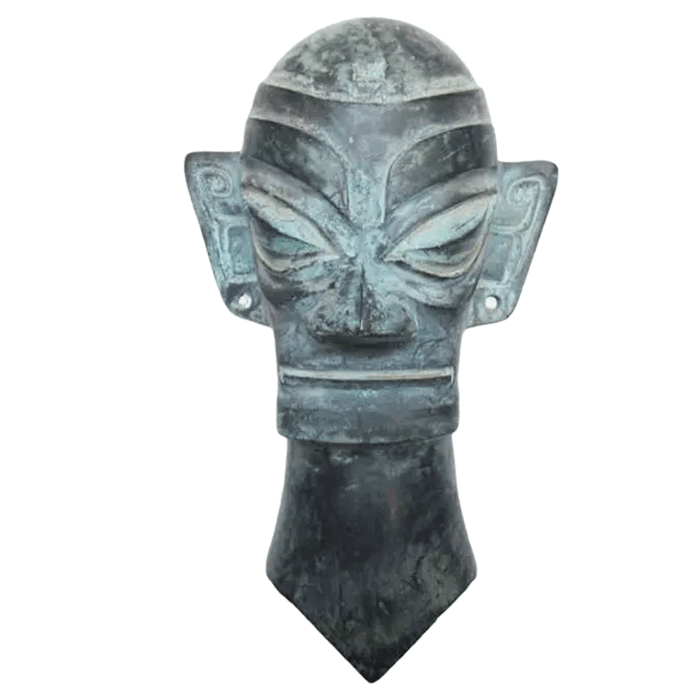
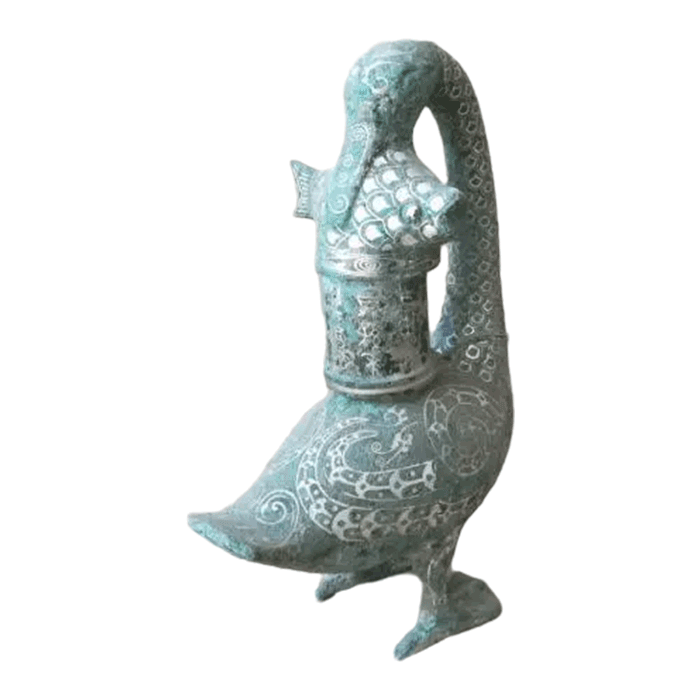
chinese bronze sculpture of the Han period frequently depicted animals and human figures with a keen observation of anatomy, yet with a stylized elegance that elevated them beyond mere imitation. The lost-wax casting method, a sophisticated technique, was central to achieving the intricate details and hollow structures characteristic of these bronzes, allowing for thin walls and complex forms that were both strong and light. This method required exceptional skill, from mold creation to the final pouring and finishing, ensuring that each piece was a testament to the artisan's mastery.
Essential Han-Era Details to Examine in Replicas
For those looking to procure high-quality replicas, understanding the specific attributes that define the original Han-era artwork is crucial. These details ensure that a replica is not merely a copy, but a faithful homage to the original's artistic integrity.
Dynamic Form and Balance
The most striking feature of the Flying Horse is its breathtaking sense of motion. The original sculpture depicts the horse with its head high, neck arched, and tail flowing, conveying immense speed. Crucially, three of its hooves are lifted, with the fourth—the rear right hoof—resting delicately on a swallow in mid-flight. This ingenious design element provides both structural support and reinforces the impression of supernatural speed, as if the horse is moving faster than the bird it overtakes. A truly authentic replica must accurately capture this precarious yet perfectly balanced pose, where the horse appears to defy gravity. The lean, muscular build of the horse, with its taut sinews and powerful legs, should convey an inherent strength and athleticism, rather than a static or heavy appearance. The dynamism is not just in the pose, but in the entire sculptural narrative.
Anatomical Accuracy and Stylization
Han artists displayed a profound understanding of equine anatomy, evident in the detailed musculature and skeletal structure of the Flying Horse. However, this realism is often combined with a degree of stylized exaggeration to enhance dramatic effect. For instance, the horse’s elongated neck, flowing mane, and sweeping tail contribute to its ethereal, almost mythical quality. The head, with its alert ears, wide, expressive eyes, and flared nostrils, conveys intelligence and spirit. When evaluating a replica, observe how faithfully these anatomical details are rendered, alongside the subtle stylizations that give the piece its unique Han character. The interplay between naturalistic form and artistic interpretation is a hallmark of the period. Attention to these nuances ensures the replica resonates with the original’s aesthetic power.
Patina and Surface Finish
The patina of an antique bronze is a result of centuries of interaction with its environment, typically manifesting as a rich, dark surface with occasional greenish or bluish mineral encrustations. Replicas, while new, must strive for a patina that convincingly mimics this historical aging. Luoyang Yichuan Bronze Craft Co., Ltd. understands this critical aspect, offering
bronze statues with different themes and finishes. We offer antique or modern looks, ensuring consistent patina color matching across batches—a common pain point for B2B buyers seeking uniformity for their collections or retail displays. The application of patina is an art form in itself, requiring skilled artisans to achieve depth, variation, and a natural appearance that avoids a uniform, painted look. The surface should also reflect the traditional hand chasing and polishing techniques, which smooth out casting imperfections and refine contours, contributing to the overall quality and tactile experience of the sculpture.
Casting Quality and Craftsmanship
The fidelity of a bronze replica is ultimately determined by the quality of its casting and finishing. The traditional lost-wax method (cire perdue) is indispensable for producing intricate sculptures like the Flying Horse. This method allows for exceptional detail and the creation of hollow forms, which conserves material and reduces weight while maintaining structural integrity. After casting, the bronze undergoes hand chasing, where artisans meticulously refine details, sharpen lines, and remove any flashing or imperfections from the casting process. Polishing then prepares the surface for patina application. Luoyang Yichuan Bronze Craft Co., Ltd. prides itself on using premium bronze alloy (Cu-Sn) and the traditional lost-wax method, followed by expert hand chasing, polishing, and patina finishing. This commitment to traditional techniques ensures that each piece not only looks authentic but also possesses the tactile quality and durability expected of fine bronze art. We employ over 30 skilled craftsmen, including bronze-casting masters and finishing artisans, whose expertise is crucial in achieving this level of quality.
Sourcing Authentic Replicas: What B2B Buyers Need
For wholesale buyers, museum curators, and high-end retailers, the process of sourcing bronze art requires a trusted partner who understands both artistic fidelity and commercial demands.
Precision in Replication
The primary concern for any B2B buyer of historical art replicas is precision. Curators require exact replication of antique bronzes for educational purposes or public display, where even minor deviations can compromise historical accuracy. Retailers of luxury goods demand fidelity to the original design to meet the expectations of discerning collectors. This involves not only capturing the artistic nuances but also adhering to precise dimensional accuracy. A reliable manufacturer should demonstrate a deep understanding of the original artwork's measurements, proportions, and stylistic characteristics, ensuring that each replica is a true homage, not just an approximation. This meticulous attention to detail is what differentiates a factory-produced item from a handcrafted work of art.
Quality Assurance and Production Capabilities
A reputable supplier must offer robust quality assurance protocols. Luoyang Yichuan Bronze Craft Co., Ltd. is ISO 9001 quality management system certified, ensuring our products comply with export quality inspection standards for art crafts. This certification provides a foundational layer of trust, assuring buyers that processes are standardized and quality is consistently maintained. Furthermore, the ability to support diverse order sizes is critical. We boast an annual output of over 50,000 bronze art pieces, demonstrating substantial production capacity. We support everything from a single custom prototype to extensive bulk production runs, with a flexible MOQ from 1 piece for custom sculptures. This scalability makes us an ideal partner for businesses ranging from small galleries needing unique pieces to large retail chains requiring volume. Our location in Yichuan County, Luoyang, Henan Province, within a 3,000 square meter production area, signifies a significant operational footprint dedicated to bronze artistry.
Packaging and After-Sales Support
The delicate nature of bronze sculptures, particularly those with intricate details and dynamic poses, necessitates specialized packaging for safe transit. One of the common pain points in sourcing custom bronze art is ensuring export-compliant protective packaging for fragile sculptures. Luoyang Yichuan addresses this with robust, custom-engineered packaging designed to safeguard each piece against damage during international shipping. Beyond delivery, comprehensive after-sales support is a hallmark of a reliable partner. We conduct quality inspection before every shipment and offer free replacement for casting defects, providing peace of mind. Additionally, we offer after-sales support for patina touch-ups and restoration guidance, ensuring the longevity and continued beauty of the bronze artworks. This full-spectrum service from production to post-delivery care underscores our commitment to client satisfaction.
Luoyang Yichuan Bronze Craft Co., Ltd.: Your Partner in Bronze Artistry
At Luoyang Yichuan Bronze Craft Co., Ltd., we are dedicated to preserving the legacy of ancient Chinese bronze art through exceptional craftsmanship and unwavering quality. Our expertise in creating bronze sculptures, including iconic works like the Flying Horse, stems from a deep respect for tradition combined with modern production capabilities.
We specialize in a wide range of bronze art, including
bronze statues with different themes (human and animal), bronze vessels (ding, zun, hu tripods and vases), bronze mirrors, bronze incense burners, and Buddhist statues. Our commitment to authenticity is reflected in our adherence to the traditional lost-wax casting method, utilizing premium Cu-Sn bronze alloy, and employing highly skilled bronze-casting masters and finishing artisans for hand chasing, polishing, and patina application. Whether you require an exact replication of antique bronzes for a museum collection or a contemporary piece with an antique finish, our team ensures consistent patina color matching and meticulous detail.
Our robust production infrastructure, capable of an annual output exceeding 50,000 pieces, means we can cater to diverse needs, from single custom prototypes to large-scale bulk orders, with an MOQ starting from just one piece for custom sculptures. We understand the unique challenges of international shipping and provide export-compliant protective packaging for fragile sculptures. Furthermore, our ISO 9001 certification and rigorous quality inspection before every shipment underscore our commitment to excellence. We stand by our work with free replacements for casting defects and offer after-sales support, including guidance for patina touch-ups and restoration.
For those interested in exploring the historical context of such magnificent pieces, we invite you to read about the
changxin palace lantern and bronze galloping horse. To discuss your specific project requirements or to
customize a bronze sculpture from sculpmart.com, please contact us. We are poised to be your trusted partner in bringing exquisite bronze artistry to your clientele.
Conclusion
Identifying authentic Han-era details in a Flying Horse of Gansu bronze replica requires a keen eye for historical context, artistic nuance, and superior craftsmanship. From the dynamic balance and anatomical precision to the quality of casting and patina, each element contributes to the overall fidelity of the piece. For B2B buyers, partnering with a manufacturer that prioritizes these details, alongside robust quality assurance and comprehensive support, is essential. Luoyang Yichuan Bronze Craft Co., Ltd. offers the expertise, capacity, and commitment to quality necessary to deliver bronze replicas that honor the legacy of the Han Dynasty and meet the highest standards of the global art market.