Asian Style Office Decor: Japanese vs Chinese Cues
Asian Style Office Decor Depends on Knowing Japanese and Chinese Design Cues Apart
Corporate interior teams and procurement specialists increasingly look to East Asian aesthetics when planning executive suites, hospitality lobbies, and cultural institutions. Yet "Asian" is not one style — it is a family of distinct visual languages. Buyers who blend Japanese minimalism with Chinese bronze-age motifs without understanding the differences often end up with a mismatched, unconvincing result. This guide breaks down the core visual cues that separate Japanese and Chinese design traditions, and explains how bronze art objects — sculptures, vessels, mirrors, and incense burners — can anchor a coherent office concept for large-scale procurement or single showcase pieces.
Why Regional Precision Matters for Office Decor Sourcing
Interior specifiers rarely have the luxury of trial and error on commercial projects. A boardroom styled around vague "Zen" clichés or an unresearched mix of dynasties can undermine a brand's credibility with clients who recognize the difference. Getting the visual language right at the concept stage saves procurement teams from costly re-sourcing later. This is especially true when specifying decorative metalwork, where casting technique, alloy composition, and patina finish carry cultural meaning that a generic import cannot replicate.
For teams researching provenance and material authenticity, background reading on the evolution of bronze culture over 2000 years offers useful context before finalizing a design brief.
Japanese Visual Cues: Restraint, Negative Space, and Natural Materials
Core Characteristics
Japanese interior aesthetics — rooted in wabi-sabi and Zen principles — favor asymmetry, muted tonal palettes, and deliberate emptiness. Materials tend toward unfinished wood, washi paper, matte stone, and blackened or oxidized metal. Ornamentation is sparse and purposeful; a single object is often given room to breathe rather than grouped densely.
Typical Office Applications
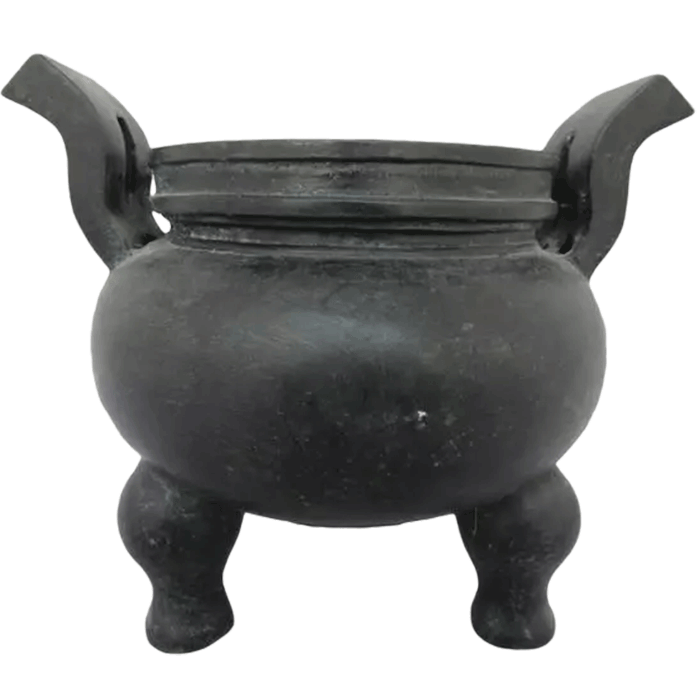
- A single dark bronze vessel on a low console, unaccompanied by other objects
- Matte, subdued patina finishes rather than high polish or gilding
- Low horizontal lines in furniture paired with vertical accent pieces
- Restrained color transitions — charcoal, ash, and muted bronze-green
When sourcing bronze pieces to support this aesthetic, buyers typically request understated antique-green patina rather than bright gold tones, since the visual goal is quiet authority, not display of wealth.
Chinese Visual Cues: Symmetry, Symbolism, and Historical Reference
Core Characteristics
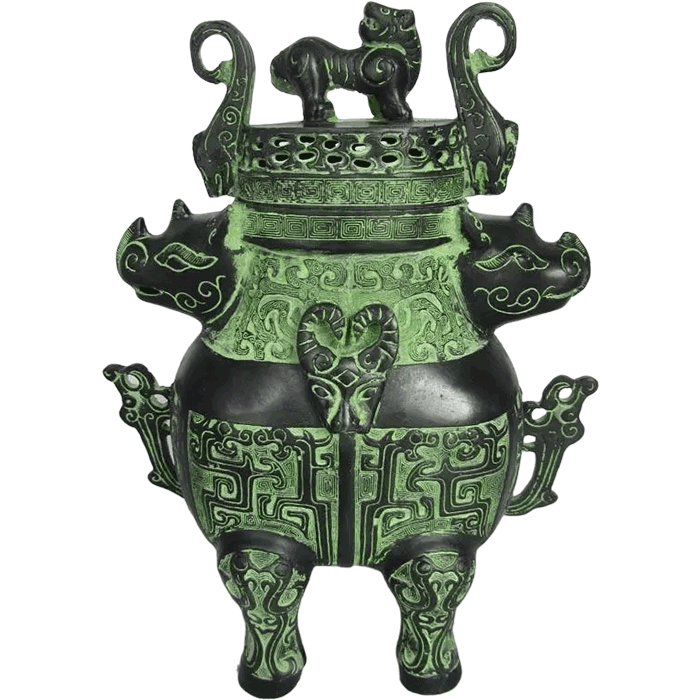
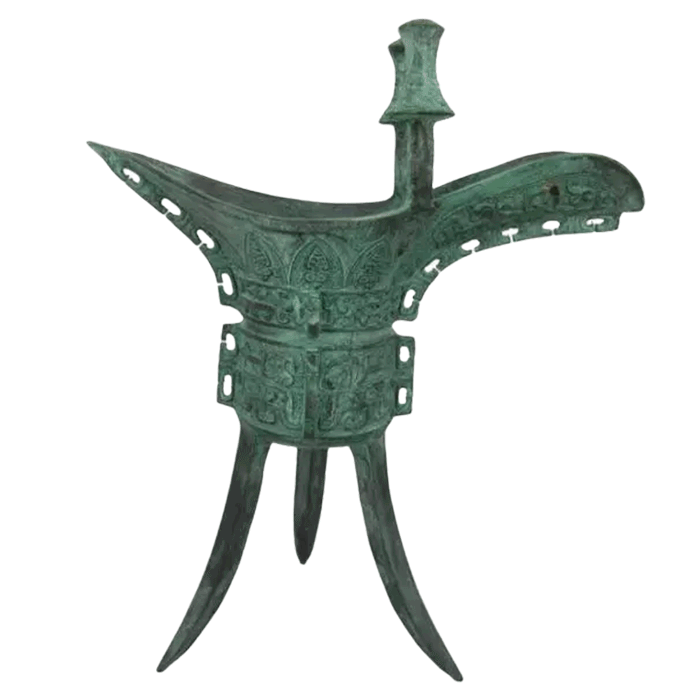
Chinese design traditions, particularly those drawing on bronze-age and imperial court aesthetics, favor symmetry, layered ornamentation, and objects with clear symbolic lineage. Ritual bronze forms — the ding tripod, the zun wine vessel, the hu vase — carry centuries of documented meaning around authority, ceremony, and status. Reception areas and executive offices commissioned in this style often reference specific historical vessel types rather than abstract "Asian-inspired" shapes.
Typical Office Applications
- Paired sculptures or vessels flanking an entrance for visual balance
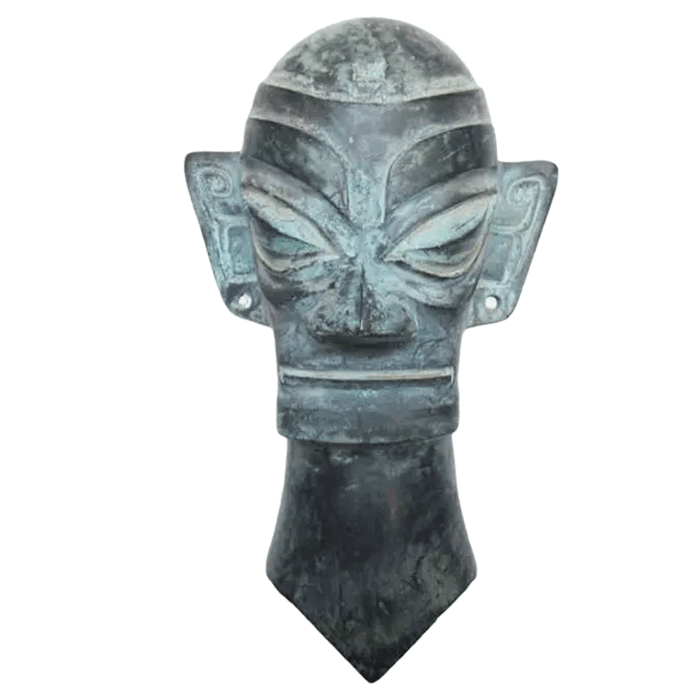
- Ding and zun-style vessels displayed as centerpieces, referencing chinese bronze sculpture traditions
- Bronze mirrors or incense burners used as accent pieces near seating areas
- Deeper, richer patina — sometimes with visible cast texture — signaling craftsmanship and age
Procurement teams working on hospitality or cultural-sector projects often specify exact replication of museum-referenced pieces, which requires a foundry capable of matching historical proportions and surface texture rather than a stylized approximation. Reading about the differences in the difference between bronze and brass is a useful starting point for specifiers unfamiliar with alloy terminology, since the wrong metal choice changes both the visual tone and the long-term patina behavior of a piece.
Blending the Two Without Losing Authenticity
Where Overlap Exists
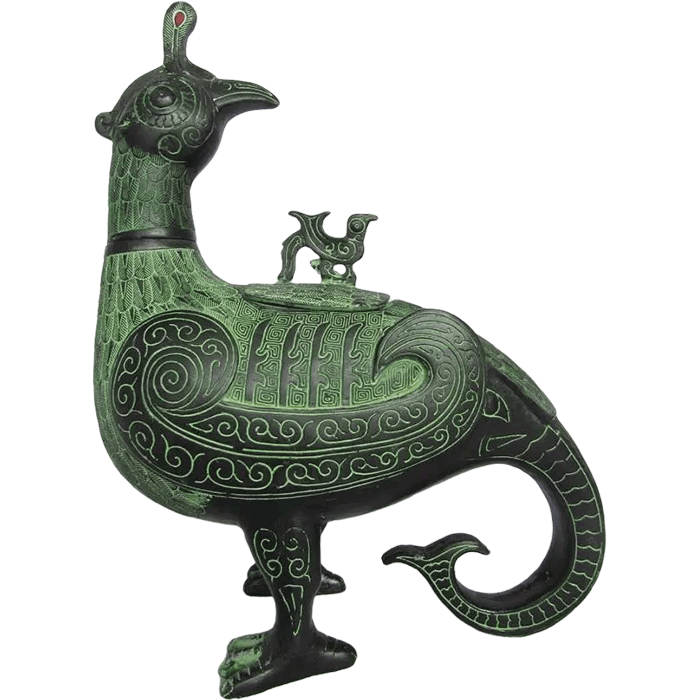
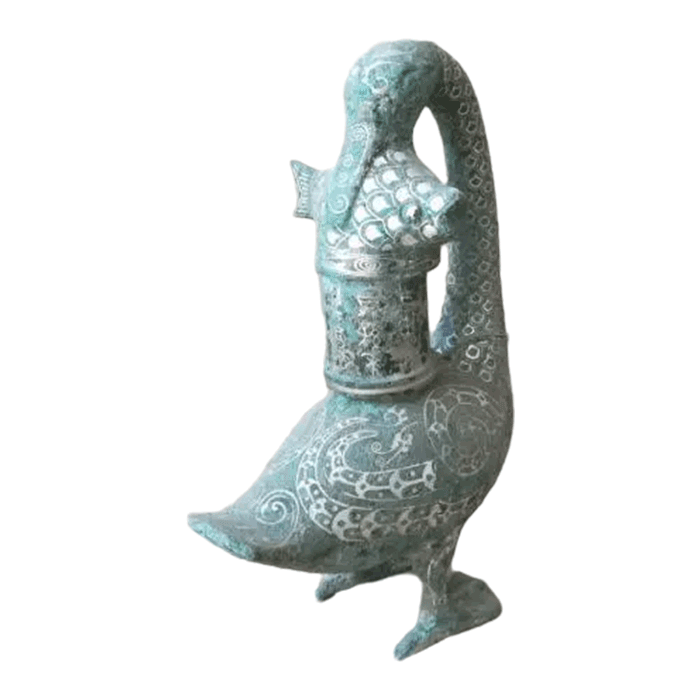
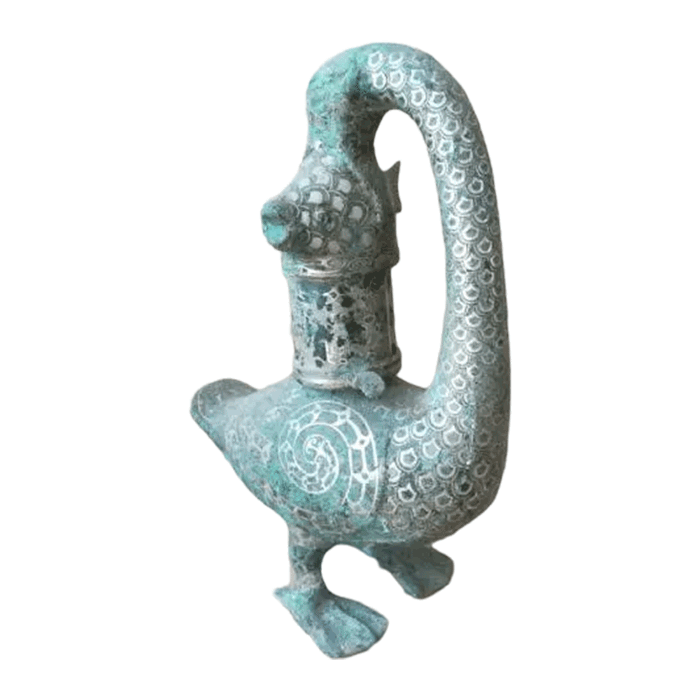
Both traditions share an appreciation for handcraft, natural material aging, and objects that reward close inspection. Bronze, in particular, sits comfortably across both languages: a lightly patinated bronze animal sculpture can read as Japanese-influenced restraint, while the same alloy cast into a ritual vessel form reads as distinctly Chinese. The difference lies almost entirely in silhouette, finish, and placement density — not in the material itself.
Practical Guidance for Specifiers
- Choose one dominant visual language per zone rather than mixing motifs within the same sightline
- Use bronze finish (matte oxidized vs. richer historical patina) to reinforce the chosen direction
- Reserve paired, symmetrical placements for Chinese-referenced spaces; use single statement pieces for Japanese-referenced spaces
- Consult catalog references such as bronze statues with different themes to compare silhouette options before finalizing a floor plan
Sourcing Considerations for Bronze Office Pieces
Casting Method and Surface Quality
Traditional lost-wax casting in a copper-tin (Cu-Sn) alloy produces sharper detail retention than sand-cast alternatives, which matters for both Japanese minimalist forms — where a single flawed surface is highly visible — and Chinese vessel replicas, where inscription and relief detail must match historical references closely. Hand chasing and polishing after casting allow finishers to control texture density, which affects how light interacts with the piece under office lighting.
Patina Consistency Across Multi-Piece Orders
Projects involving matched sets — a pair of guardian animal statues, or a vessel-and-mirror grouping — require consistent patina color across every unit in the batch. Color drift between pieces is one of the most common quality complaints in decorative bronze procurement, so specifiers should confirm a supplier's process for batch-matching before committing to a multi-piece order.
Export Packaging for Fragile Sculptural Work
Bronze sculptures and thin-walled vessels are vulnerable to impact damage and surface scratching during international freight. Export-compliant protective packaging — rigid crating, surface-safe wrapping, and moisture control — should be confirmed as standard practice, not an optional add-on, particularly for antique-finish pieces where any surface abrasion is highly visible against the patina.
From Concept Board to Finished Installation
Single Prototype Before Bulk Commitment
For teams still finalizing a design direction, ordering a single custom prototype before committing to a full assortment allows the design, patina, and scale to be reviewed in situ. This is particularly useful when a project blends elements — for example, a Japanese-influenced open floor plan featuring one Chinese-referenced vessel as a cultural anchor point. Adjustments to size, base design, or finish are far easier to make before a bulk production run begins.
Custom Development for Branded or Themed Spaces
Corporate clients occasionally request custom bronze artworks that reference a company's founding region, industry symbolism, or a specific historical vessel tied to a client relationship. Development timelines and design revisions for this kind of commission can be reviewed through the customize a bronze sculpture process, which allows specifiers to submit reference images and receive a scaled proposal before full production.
Human and Animal Statuary as Accent Pieces
Beyond vessels, standalone figures play a strong supporting role in Asian Style Office Decor schemes — a seated bronze figure suits a Japanese-inflected reading room, while a paired set of guardian animals suits a Chinese-referenced entrance hall. Browsing bronze statues with different themes alongside animal bronze statues can help a design team settle on scale and posture before specifying final placement.
Quality Assurance Before Installation
Any bronze piece entering a commercial interior should pass inspection for casting defects, surface consistency, and secure mounting hardware before it ships. Suppliers working to ISO 9001 quality management standards typically inspect every piece prior to dispatch and offer replacement for casting flaws, which reduces risk for procurement teams managing tight installation schedules. After-sales support for patina touch-ups is also worth confirming in advance, since office lighting and handling can gradually affect surface tone over years of display.
Bringing the Two Traditions Together with Confidence
Distinguishing Japanese restraint from Chinese symbolism is the first step toward a credible, well-specified interior. Once that distinction is clear, bronze becomes a flexible material bridge — capable of expressing either tradition convincingly, depending on form, finish, and placement. Teams beginning concept development can review about scultmart to understand production capacity and craftsmanship standards, then move from single prototype to full assortment planning with a clearer, more defensible design direction for their space.