Asian Style Office Decor: Chinese vs Japanese Cues
Asian Style Office Decor: Chinese vs Japanese Cues for Commercial Interiors
For architects, workplace strategists, procurement teams, and interior designers, Asian-inspired interiors offer more than a recognizable visual theme. They can establish a measured atmosphere of cultural depth, material quality, calm focus, or formal hospitality. However, Chinese and Japanese design directions should not be treated as interchangeable. Each has its own approach to proportion, ornament, color, symbolism, spatial rhythm, and decorative objects.
When developing Asian Style Office Decor, the first design decision is not which object to purchase. It is deciding whether the workplace should communicate ceremonial richness and narrative presence, or controlled simplicity and quiet refinement. Chinese cues often support a more expressive and layered environment, while Japanese cues generally emphasize restraint, natural texture, and visual breathing room. Both directions can work effectively in reception areas, executive suites, boardrooms, hospitality lounges, cultural institutions, premium retail offices, and client-facing meeting spaces.
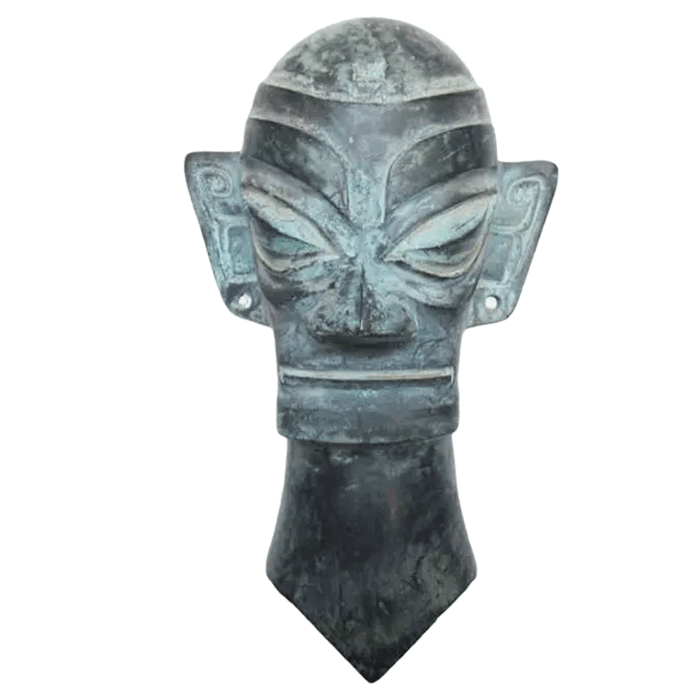
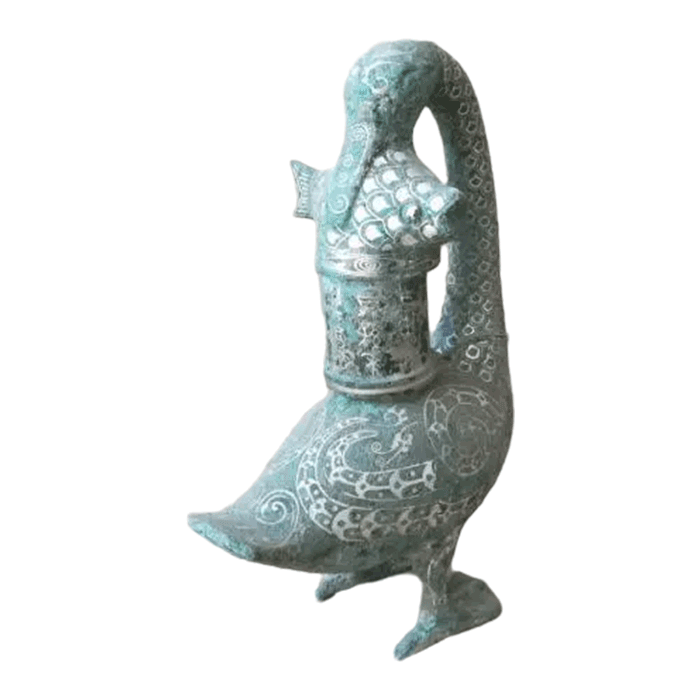
Bronze artworks can play an important role in either direction because the material carries visual weight without relying on large quantities of decoration. A carefully selected bronze vessel, animal sculpture, mirror, incense burner, or figurative statue can become a focal point that supports the intended cultural language. The key is matching the bronze form, finish, scale, and placement to the overall design brief.
Chinese Cues: Formal Presence, Symbolism, and Layered Detail
Chinese-inspired office interiors often use a stronger sense of hierarchy and visual emphasis. The entrance, reception desk, main meeting room, or executive office may be designed as a ceremonial focal point. Symmetry, axial planning, framed views, paired decorative objects, and substantial materials can reinforce this character. The result does not need to feel traditional in a literal sense. Contemporary Chinese office design can combine clean architectural lines with selected references to historical bronze, lacquer, wood carving, calligraphy, landscape imagery, or auspicious animal forms.
Color is usually one of the clearest distinctions. Chinese-oriented schemes may incorporate deep red, black, warm walnut, dark brown, jade green, bronze, gold, ink gray, or muted imperial yellow. These colors can be used sparingly in a contemporary workplace, such as on a feature wall, screen, upholstered chair, brass detail, or art pedestal. The objective is not to fill every surface with strong color, but to create deliberate contrast and a sense of permanence.
Common Chinese-Inspired Visual Elements
- Balanced or symmetrical arrangements at reception desks, entrances, and boardroom walls.
- Dark timber, stone, lacquer-like finishes, bronze, and textured metal details.
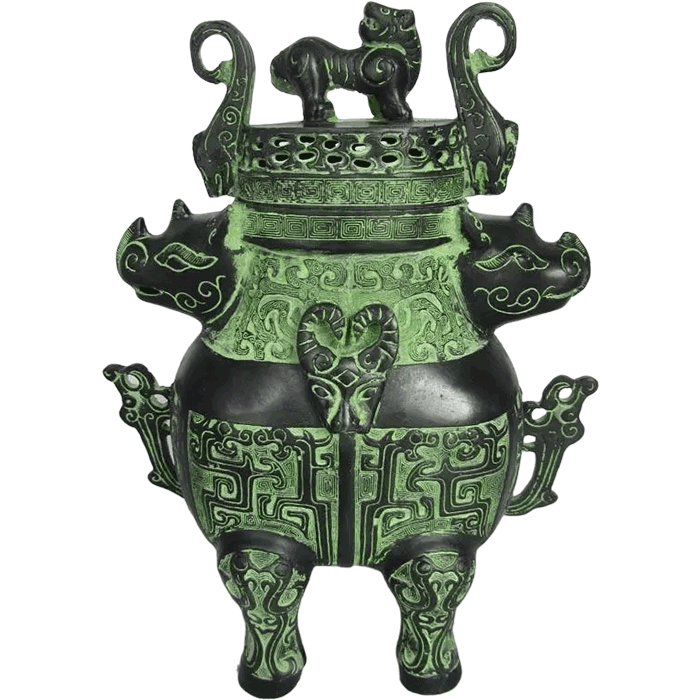
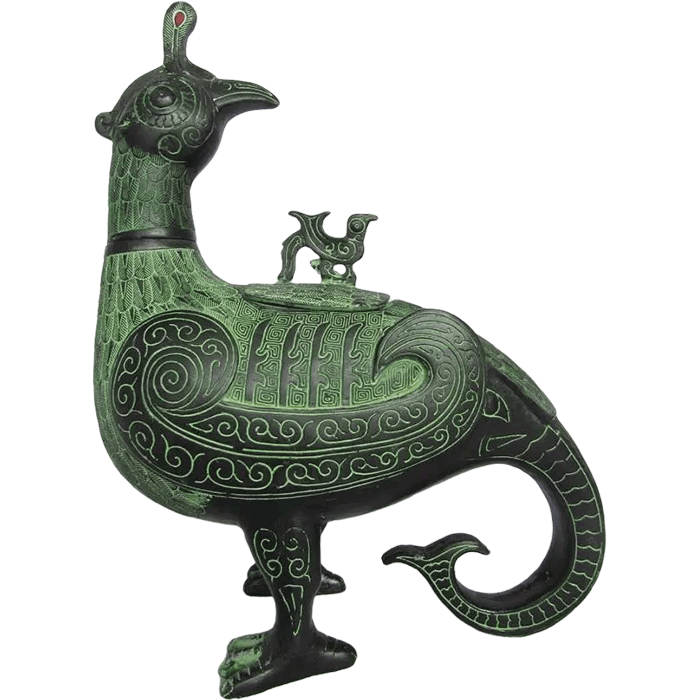
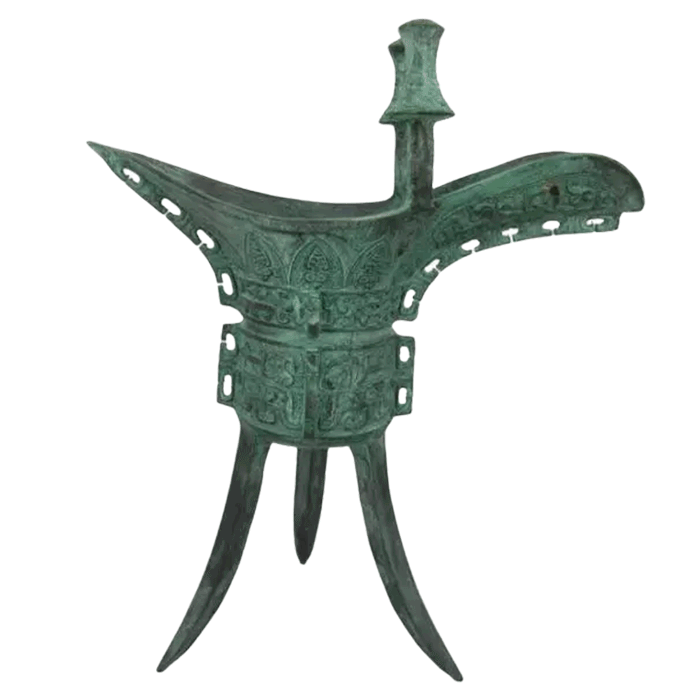
- Decorative references to ding vessels, zun forms, hu vases, cloud patterns, taotie-inspired motifs, dragons, cranes, horses, lions, or scholar imagery.
- Layered screens, framed panels, carved details, geometric lattice patterns, and selected calligraphic artwork.
- Bronze objects with antique brown, green, black, or warm gold patinas.
- Statement sculptures placed on plinths, consoles, or integrated display niches.
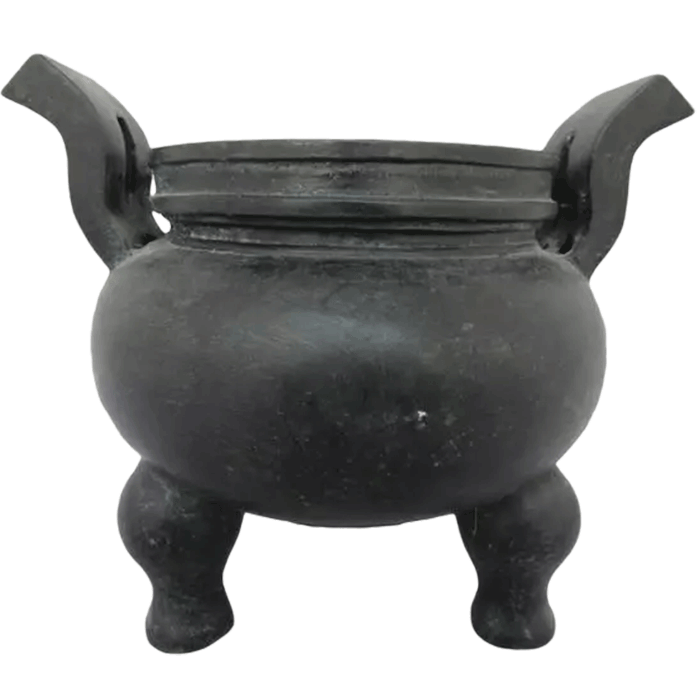
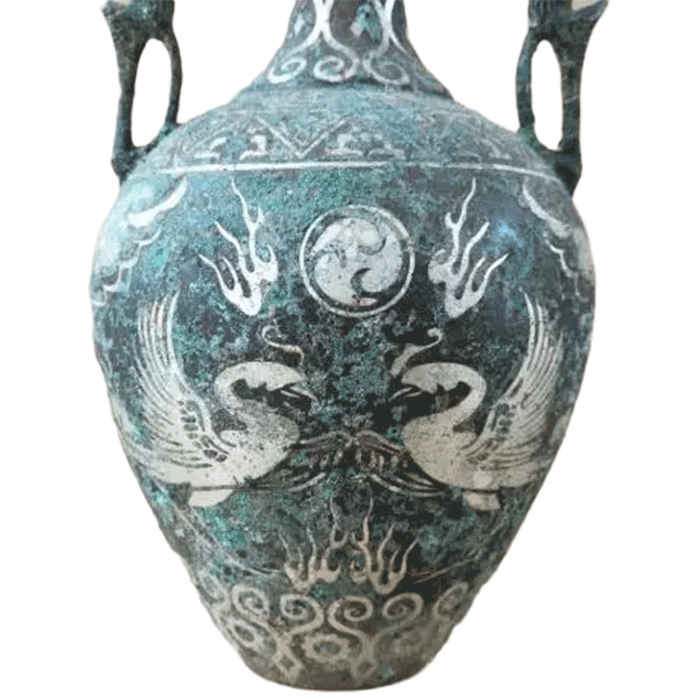
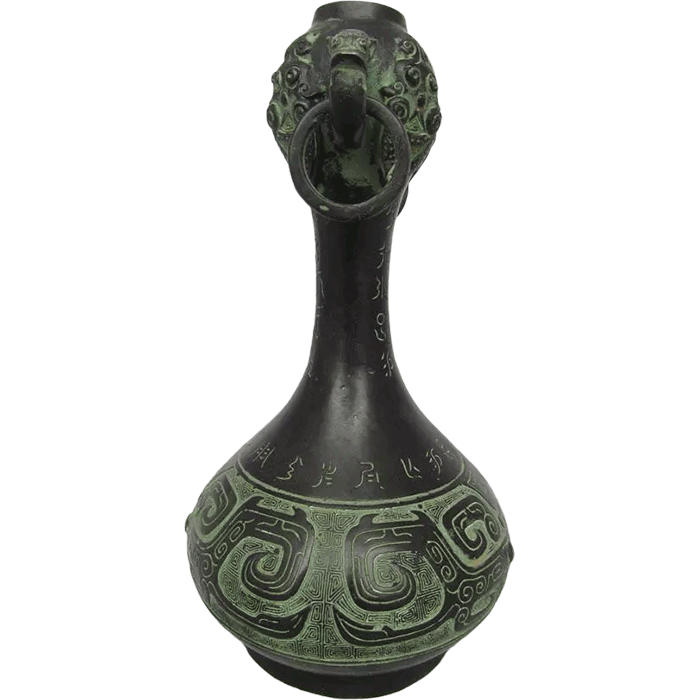
For buyers seeking a historically informed reference point, studying the forms of ancient bronze wares can help define the silhouette of a suitable decorative vessel. A ding or tripod form, for example, communicates stability and ritual significance, while a hu vase offers a more vertical, elegant profile for shelves, reception consoles, or meeting-room cabinets.
Chinese bronze objects are especially appropriate when an office needs to project heritage, confidence, and cultural continuity. In a law firm, investment office, cultural organization, or luxury showroom, a substantial vessel or animal sculpture can provide a memorable point of arrival. The surrounding interior should allow the object enough visual space. A bronze piece placed among too many unrelated decorative items may lose its authority.
Japanese Cues: Restraint, Natural Materials, and Quiet Balance
Japanese-inspired workplace interiors generally create impact through reduction rather than accumulation. The design language often emphasizes empty space, careful alignment, tactile materials, filtered light, and the relationship between interior and nature. Instead of using multiple symbolic objects, a Japanese-influenced office may use one sculptural item, one branch arrangement, one wall panel, or one crafted vessel as a quiet point of focus.
Typical material selections include light oak, ash, cedar-like timber tones, stone, linen, handmade paper textures, clay finishes, woven surfaces, and matte metals. The palette often remains close to nature: warm white, charcoal, soft gray, sand, taupe, muted green, black, and weathered bronze. Contrast is present, but it is controlled. A dark bronze sculpture against a pale plaster wall can be more effective than a collection of highly ornate decorative pieces.
Common Japanese-Inspired Visual Elements
- Open circulation paths and uncluttered visual fields.
- Low, horizontal furniture profiles and carefully proportioned joinery.
- Natural light, soft indirect illumination, and shadow as design elements.
- Neutral palettes supported by timber, stone, paper-like textures, and matte finishes.
- Simple vessels, understated animal forms, abstract sculptures, or quiet figurative pieces.
- Asymmetrical composition balanced through negative space rather than mirrored placement.
The Japanese direction is often suitable for wellness-focused workplaces, technology offices, creative studios, boutique hospitality environments, and executive spaces intended to feel private and composed. It can also support hybrid offices where employees need visual calm and reduced distraction. A refined interior does not require an empty room; it requires disciplined selection. Every decorative object should have a reason to be present.
Bronze remains relevant in this setting when the finish is subdued. A dark brown, blackened, softly polished, or naturally weathered patina can complement timber and stone without appearing overly formal. A small incense burner, a simplified vessel, or an abstract animal sculpture may work well on a credenza, in a library corner, or at the end of a corridor. The piece should feel crafted and enduring rather than ornate for its own sake.
Comparing Chinese and Japanese Design Cues for Office Planning
The following comparison helps project teams establish a clear direction before specifying artwork, furnishings, finishes, and decorative accessories. These are broad design tendencies, not fixed rules. Contemporary commercial interiors may combine references thoughtfully, but a clear primary language usually produces a more cohesive result.
| Design Consideration | Chinese-Inspired Direction | Japanese-Inspired Direction |
|---|---|---|
| Overall mood | Formal, expressive, cultured, and ceremonial | Calm, restrained, natural, and contemplative |
| Spatial organization | Symmetry, focal axes, paired elements, and framed views | Open space, asymmetry, visual pauses, and simple transitions |
| Color approach | Deep red, black, walnut, jade, bronze, and gold accents | Warm white, gray, charcoal, sand, timber, and muted green |
| Decorative density | Layered details with selected symbolic references | Fewer objects with stronger emphasis on placement |
| Bronze selection | Ding vessels, zun forms, lions, horses, dragons, cranes, and figurative works | Minimal vessels, abstract forms, quiet animal subjects, and matte finishes |
| Best application areas | Reception halls, boardrooms, executive suites, cultural venues | Studios, private offices, wellness rooms, hospitality lounges |
For many commercial projects, the main distinction comes down to visual density. A Chinese-inspired scheme can accommodate more narrative content, stronger decorative silhouettes, and richer contrasts. A Japanese-inspired scheme usually depends on restraint, material honesty, and the ability of a few selected objects to carry the room. Both can be contemporary, premium, and appropriate for international business settings.
Selecting Bronze Artworks That Support the Intended Style
Bronze is a flexible medium for commercial interiors because it can be cast into historically informed forms, realistic figures, animals, abstract pieces, religious statuary, and customized corporate artworks. The selection process should begin with the project’s functional and visual priorities: sightline, wall finish, furniture scale, visitor circulation, maintenance requirements, and the desired emotional response.
Bronze Objects for a Chinese-Inspired Workplace
Chinese-style spaces can accommodate more substantial bronze artworks. A tripod vessel can be used as a freestanding lobby object or mounted on a pedestal. A large hu vase may complement a reception wall with stone or dark timber cladding. Animal statues, including horses, cranes, lions, or other meaningful subjects, can provide energy and symbolism where the design concept supports them. For historical inspiration, the story behind the Houmuwu square cauldron illustrates why the ding form remains visually powerful in cultural and decorative contexts.
Bronze mirrors can also be effective in executive rooms, corridors, and feature walls. Their circular form softens rectilinear architecture while introducing a subtle historical reference. The surface can be specified with an antique or modern finish depending on whether the office aims for heritage-rich character or a cleaner contemporary expression.
Bronze Objects for a Japanese-Inspired Workplace
For Japanese-influenced interiors, consider pieces with restrained silhouettes and carefully finished surfaces. A small bronze vase on a timber shelf, a quiet animal figure in a meditation or wellness room, or a simplified human sculpture near a window can create a contemplative moment. The object should not compete with the architecture. Instead, it should contribute weight, texture, and a sense of craftsmanship.
A matte patina is often a practical choice for this direction. Dark brown, charcoal, black, or subtly greened bronze can sit comfortably beside pale wood, gray stone, linen upholstery, and warm-white walls. Avoid placing too many bronze items within one sightline. One well-proportioned artwork with appropriate lighting can be more successful than several smaller objects.
Designers who need sculptural options for varied commercial settings can review bronze statue collections as a starting point for discussing themes, scale, and placement. The final selection should still be based on the office’s layout, brand character, and decorative direction.
How to Avoid Mixing Cues Without a Clear Design Logic
It is possible to combine Chinese and Japanese references, but the combination requires a disciplined concept. Randomly mixing red lacquer-style panels, bamboo screens, ornate dragon motifs, minimalist furniture, and multiple bronze vessels can make an office feel theme-driven rather than professionally designed. A commercial interior should communicate a coherent brand environment, not a collection of unrelated cultural symbols.
A useful approach is to select one primary design language and one secondary material influence. For example, an office may use a contemporary Japanese-inspired spatial plan with pale timber, open circulation, and limited decoration, while introducing a single Chinese bronze vessel as a cultural focal point. Alternatively, a Chinese-inspired boardroom may feature dark wood, balanced composition, and a major bronze sculpture, while using Japanese-influenced paper-texture wall coverings to soften the atmosphere.
The following questions can guide the style-definition stage:
- What should clients feel when entering the office: confidence, serenity, heritage, innovation, or hospitality?
- Will the space be used for formal meetings, collaborative work, private consultation, or public reception?
- Does the brand benefit from a strong cultural narrative or a more universal, understated environment?
- Which decorative object should become the main focal point, and which items should remain secondary?
- How will bronze finishes relate to surrounding metals, timber tones, stone, and lighting temperature?
- Does the project require a standard artwork, a historically referenced reproduction, or a fully custom design?
Custom Bronze Production for Commercial Design Projects
For offices with specific spatial, branding, or cultural requirements, custom bronze artwork can provide a closer fit than standard decorative products. Luoyang Yichuan Bronze Craft Co., Ltd. produces bronze sculptures, vessels, mirrors, incense burners, Buddhist statues, and custom bronze artworks for projects ranging from a single prototype to negotiated bulk production runs. Custom sculpture orders can begin from one piece, subject to the design requirements.
The company uses premium Cu-Sn bronze alloy and the traditional lost-wax casting method. Skilled craftsmen perform hand chasing, polishing, and patina finishing, allowing antique or modern visual effects to be considered during the design process. For workplace projects, this flexibility can be important when the bronze must coordinate with specific timber stains, stone samples, metal trims, lighting conditions, or corporate color standards.
Custom development may involve adjusting dimensions, simplifying or refining a silhouette, selecting a base, changing a patina direction, or translating a client concept into a bronze artwork suitable for indoor installation. Buyers seeking a project-specific process can customize bronze artwork according to the intended application and design details.
Located in Yichuan County, Luoyang, Henan Province, the company operates a 3,000-square-meter production area with more than 30 skilled craftsmen, including bronze-casting masters and finishing artisans. Annual output exceeds 50,000 bronze art pieces. The ISO 9001 quality management system certification and export quality inspection compliance support procurement requirements for international art-craft shipments. Each order receives quality inspection before shipment, and export-compliant protective packaging is available for fragile sculptures.
Choosing the Right Direction for a Lasting Office Interior
The strongest Asian Style Office Decor schemes are not defined by the number of cultural references included. They are defined by clear intent, appropriate proportion, and well-made materials. A Chinese direction can give an office gravity, symbolism, and visual richness. A Japanese direction can create a sense of composure, natural balance, and focused simplicity. Neither is inherently more suitable; the right choice depends on the brand, audience, architecture, and desired workplace experience.
For a client-facing setting that needs a strong focal point, Chinese-inspired bronze vessels, animal sculptures, or formal figurative works may provide the needed presence. For a quieter workspace, a minimal bronze object with a refined patina can add craftsmanship without disrupting a calm interior. In both cases, bronze should be selected as an integrated design material rather than an afterthought.
By defining the cultural direction early, interior teams can specify artwork with greater confidence, coordinate finishes more accurately, and create office environments that feel intentional from the reception area to the executive suite.