Ancient Chinese Bianzhong: Marquis Yi Bell System
Ancient Chinese Bianzhong Reveals the Musical World of Marquis Yi
The Ancient Chinese Bianzhong associated with Marquis Yi of Zeng is among the most important surviving ensembles of early Chinese ritual music. More than an exceptional archaeological discovery, the set demonstrates advanced bronze casting, musical acoustics, court hierarchy, and ceremonial design in the late Spring and Autumn period. For cultural institutions, heritage buyers, researchers, and exhibition planners, the Marquis Yi bell system offers a valuable reference for understanding how bronze objects functioned as both instruments and symbols of political authority.
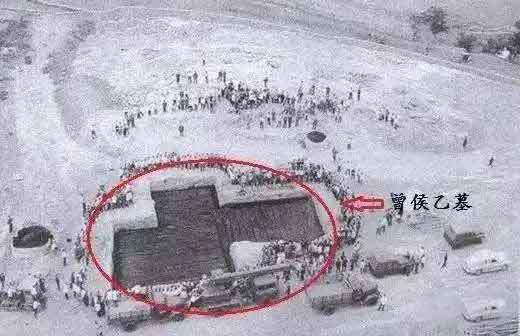
Discovered in 1978 in the tomb of Marquis Yi of Zeng in Hubei Province, the bell set is generally dated to 433 BCE. It is widely recognized for its large scale, sophisticated organization, and remarkable musical capability. The ensemble contains 65 bells suspended from a multi-level wooden frame supported by bronze figures and structural elements. Its survival provides unusually direct evidence of the musical culture of an elite regional state during a formative era of Chinese history.
Unlike a single ceremonial vessel or decorative bronze, a chime-bell system required coordinated work across multiple disciplines. Bell forms had to be designed for pitch, bronze alloys had to be cast consistently, inscriptions had to be legible, and the supporting structure had to safely carry considerable weight. This integration of artistry and engineering remains relevant for museums and cultural projects planning educational displays, historically inspired installations, or custom bronze artworks.
The Marquis Yi Bell System and Its Archaeological Importance
Marquis Yi was the ruler of the State of Zeng, a regional polity that existed during the Eastern Zhou period. His tomb contained an extensive group of ritual, military, domestic, and musical objects. Among these finds, the bell system became especially significant because it preserved a complete and highly organized musical ensemble rather than isolated instruments.
The bells were arranged by size and musical range across a three-tier frame. The frame itself was not a simple utility structure. Its bronze posts, human-like supports, animal-inspired elements, and decorative fittings communicated the prestige of the owner and the ritual importance of the music performed. The ensemble therefore should be understood as a unified system: bells, frame, inscriptions, performers, court ceremony, and visual symbolism all worked together.
For heritage interpretation, this context matters. Presenting the bells only as beautiful bronze objects can overlook their original purpose. The system was created for organized performance in an aristocratic environment, where music reinforced ceremonial order and social rank. The size of the ensemble also indicates substantial access to raw materials, skilled labor, and technical knowledge.
Many of the bells bear inscriptions that identify pitches and musical relationships. These inscriptions are especially valuable because they connect physical artifacts to musical theory. They also show that ancient Chinese musicians and bronze craftsmen worked within a developed framework of tonal classification rather than producing instruments through trial and error alone.
Why the Bells Produce Two Different Tones
The acoustic design of the Marquis Yi bells is one of the most fascinating features of the ensemble. Many bells in the set can produce two distinct tones when struck at different points. This is possible because of their characteristic almond-shaped or elliptical cross-section, rather than the circular profile commonly associated with many Western bells.
In practical terms, striking the front of the bell and striking the side can generate different pitches. The two notes are generally separated by a musical interval, allowing a comparatively compact set of bells to cover a broader tonal range. This acoustic property required a high degree of precision in the relationship between bell shape, wall thickness, dimensions, and metal composition.
The following table outlines the key features that make the bell system important for historical and technical study.
| Feature | Significance |
|---|---|
| Elliptical bell profile | Supports the production of two tones from different striking locations on many bells. |
| Graduated bell sizes | Creates an organized range from lower to higher pitches within one ensemble. |
| Bronze inscriptions | Records pitch names and musical relationships that support research into early music theory. |
| Three-tier frame | Provides structural organization while making the ensemble visually appropriate for a court setting. |
| Ritual setting | Shows that music, political status, and ceremonial practice were closely connected. |
The bells also illustrate why material selection is central to bronze craft. A bell must have appropriate rigidity and resonance, but it must also be cast without major voids, cracks, or distortions that can affect appearance and acoustic behavior. Traditional bronze casting was therefore both a visual art and a controlled production process.
For readers comparing historical bronze categories, an overview of bronze and brass differences can help clarify why alloy terminology and material properties matter when assessing decorative objects, vessels, and instrument-inspired reproductions.
Ancient Chinese Bianzhong as a Symbol of Ritual and Authority
In early China, music was not limited to entertainment. Court music had a ritual and political function. It was associated with formal ceremony, ancestral observance, banquets, diplomatic interaction, and the orderly expression of rank. A large chime-bell ensemble could therefore communicate more than the musical preferences of its owner. It represented resources, education, ceremonial legitimacy, and the ability to mobilize specialist craftsmanship.
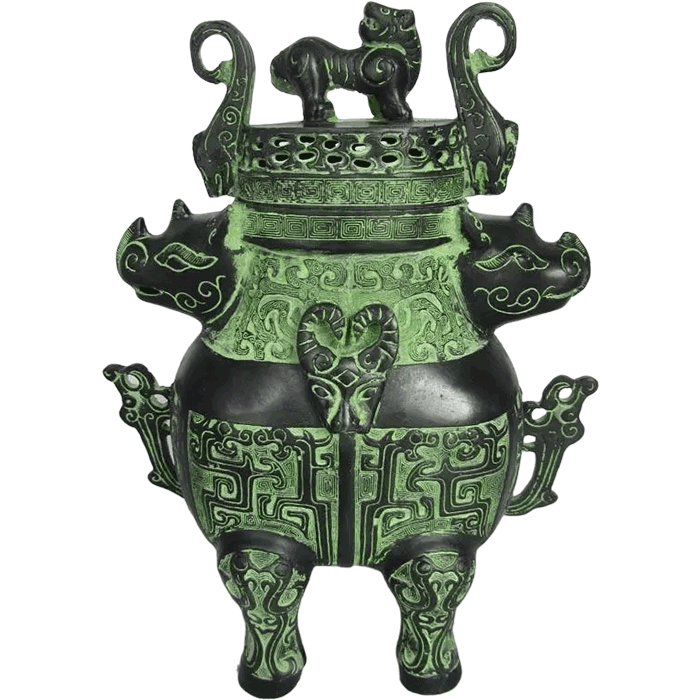
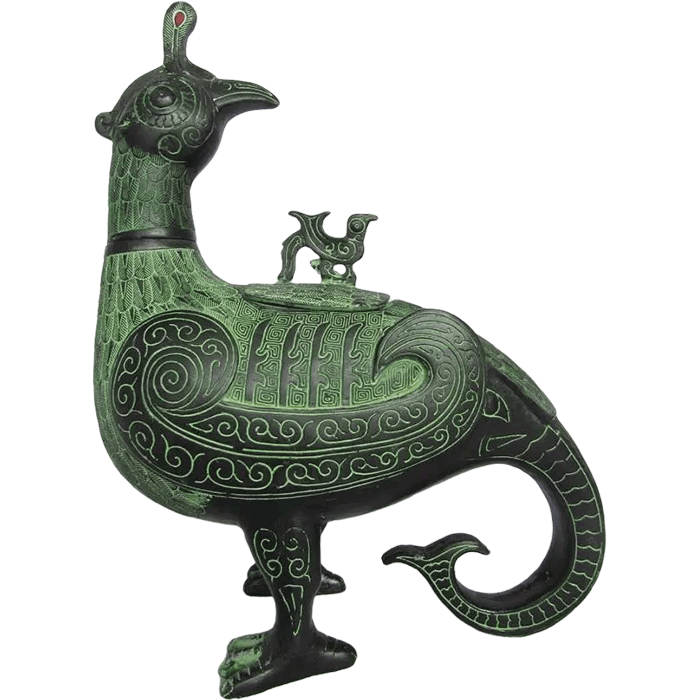
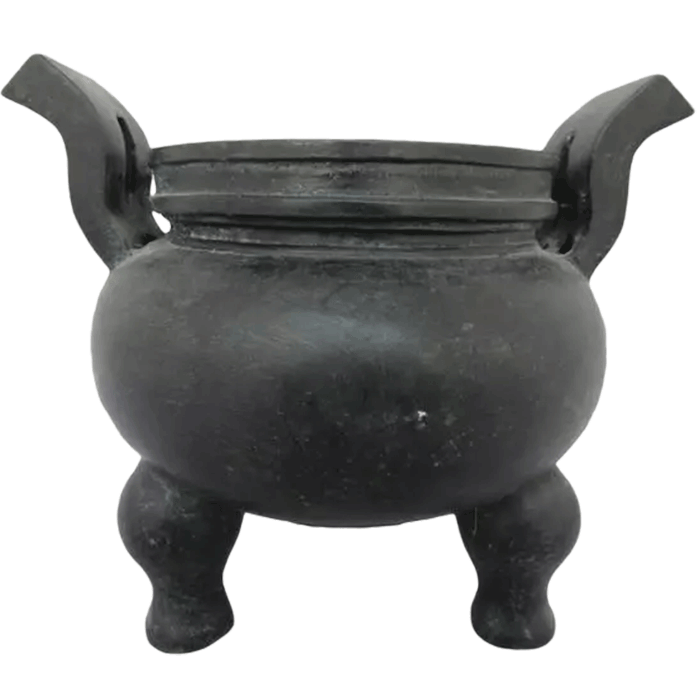
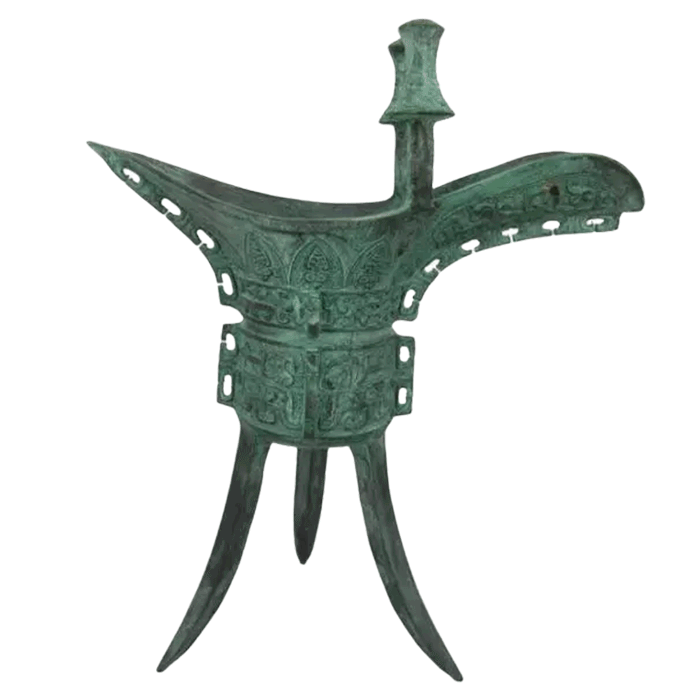
The Marquis Yi bells belonged to a wider tradition in which bronze objects carried social meaning. Ding, zun, hu, and other vessel forms were used in ritual and elite contexts, while weapons, mirrors, animal figures, and decorative fittings reflected different aspects of ancient life. Studying these categories together creates a fuller understanding of bronze culture.
Institutions planning a contextual exhibition may place a bell-system interpretation alongside vessels, figures, incense burners, or educational replicas. A bronze vessel can introduce ritual food and wine practices; a weapon display can explain military authority; and a musical installation can show how sound shaped formal gatherings. This cross-category approach helps visitors understand that historical bronzes were designed for specific environments, not merely for display cases.
For additional context on major ancient works, the article on Zenghouyi chime bells connects the Marquis Yi ensemble with other notable bronze achievements in Chinese cultural history.
What Makes a Responsible Bell-System Reproduction
A reproduction inspired by the Marquis Yi bell system should begin with a clear project purpose. A museum may need a visually accurate display model. An educational center may need scaled bells and a simplified frame for interpretation. A hotel, cultural venue, or public art project may prefer a monumental installation that references the visual language of ancient chime bells without presenting itself as an archaeological duplicate.
These goals require different decisions about dimensions, inscriptions, surface finish, mounting, and installation. Responsible reproduction also requires clear identification. A modern work should be presented as a contemporary reproduction, interpretive model, or historically inspired artwork, rather than as an original antique. This distinction protects collection integrity and supports transparent communication with visitors and buyers.
Key specification questions for buyers
- What is the intended use: exhibition display, education, interior décor, public art, or ceremonial setting?
- Will the project require full-scale dimensions, a reduced scale, or individual representative bells?
- Should inscriptions be reproduced from approved reference materials, simplified, or omitted?
- Is the priority visual fidelity, structural display safety, interactive use, or a combination of these needs?
- What finish is appropriate: a controlled antique patina, a darker ritual appearance, or a cleaner modern bronze surface?
- Will the installation require a custom support frame, wall mounting, pedestals, or export-ready packaging?
Acoustic performance should be addressed carefully. A visually accurate bell replica is not automatically a tuned musical instrument. If a buyer requires playable bells, the project should include defined pitch requirements, striker specifications, safety considerations, and appropriate technical validation. For many exhibition projects, visual and interpretive accuracy may be the primary requirement, while sound is delivered through recorded audio or digital interpretation.
Reference quality is equally important. Institutions should provide drawings, dimensions, collection-approved images, scholarly references, or curatorial requirements before fabrication begins. This helps the maker distinguish between essential historical details and areas where scaling or structural adaptation is necessary.
Bronze Craft Considerations for Cultural Institutions
Creating a custom bell, ceremonial vessel, or sculptural installation involves more than selecting a shape. The casting method, alloy, finishing process, assembly method, and protective packaging all affect the final outcome. Luoyang Yichuan Bronze Craft Co., Ltd. uses premium Cu-Sn bronze alloy and the traditional lost-wax casting method for bronze artworks. This process is suitable for complex forms because it can capture relief decoration, inscriptions, animal motifs, and sculptural surface details.
After casting, hand chasing and polishing can refine edges, inscriptions, and decorative elements. Patina finishing can be developed in antique or modern visual directions according to the approved sample or design brief. For historically inspired projects, controlled patina matching is particularly important because a surface that is too bright, too uniform, or too heavily textured can change the visual character of a replica.
The company operates from Yichuan County, Luoyang, Henan Province, with a 3,000-square-meter production area and more than 30 skilled craftsmen, including bronze-casting masters and finishing artisans. Its annual output exceeds 50,000 bronze art pieces, while custom sculpture orders can begin from one piece. Bulk order arrangements are negotiable according to size and design complexity.
For institutions considering related display categories, the available range of Chinese bronze sculpture can support a broader narrative that includes human figures, animal statues, vessels, and decorative objects. A coordinated collection can use consistent bronze tones and display standards while retaining the distinct purpose of each artifact type.
From Historical Research to Custom Production
A well-managed custom project normally moves through a structured sequence. This is particularly useful when a work includes multiple bells, a large frame, several cast components, or historically referenced inscriptions. Early agreement on the design scope reduces the risk of inconsistencies during casting and assembly.
- Define the interpretation: Identify whether the work is a faithful visual replica, a scale model, or an artwork inspired by the Marquis Yi system.
- Prepare references: Provide dimensions, drawings, approved photographs, inscription requirements, patina samples, and installation information.
- Confirm the fabrication plan: Determine casting sections, frame construction, assembly method, surface treatment, and packing requirements.
- Review the prototype: For complex or large projects, a prototype or sample component can help confirm form and finish before wider production.
- Inspect before shipment: Verify casting quality, finish consistency, component counts, and protective packing before dispatch.
Luoyang Yichuan Bronze Craft Co., Ltd. supports custom bronze artworks from single prototypes to bulk production runs. Products are inspected before shipment, and the company provides free replacement for casting defects as well as after-sales support for patina touch-ups and restoration guidance. Its ISO 9001 quality management system certification and compliance with export quality inspection standards for art crafts provide an organized foundation for international cultural procurement.
Buyers seeking a tailored interpretive installation may customize a bronze sculpture for requirements such as scale, finish, inscriptions, structural form, and packaging. For a heritage-led project, the strongest results usually come from early collaboration among the buyer, curator, designer, installer, and bronze production team.
Using the Marquis Yi Bells in Modern Interpretation
The enduring value of the Marquis Yi ensemble lies in its ability to connect several fields of knowledge. Archaeology explains the tomb context. Musicology examines tuning and performance. Art history studies ornament and form. Metallurgy investigates casting technology. Museum interpretation brings these findings together for contemporary audiences.
A modern exhibition can communicate this complexity through a combination of scaled replicas, diagrams of the bell frame, recorded performances, tactile material samples, and explanatory labels. For public spaces, an abstract arrangement of bell-inspired bronze forms can reference the visual rhythm of the ensemble while remaining clearly contemporary. For educational environments, a small set of simplified demonstrative bells may help explain the principle of different tones created by different striking positions.
The Ancient Chinese Bianzhong remains a powerful example of how bronze craftsmanship can preserve sound, ceremony, and cultural memory across centuries. Its study encourages buyers and institutions to look beyond surface appearance and consider the full relationship between material, function, context, and interpretation. With accurate references, transparent reproduction standards, and careful bronze production, historically informed projects can make this remarkable musical heritage accessible to new audiences.