A Guide to the History of Chinese Bronze Vessels by Dynasty
The Dynastic History of Chinese Bronze Vessels Reveals Millennia of Artistic Evolution
For nearly two millennia, bronze vessels were central to the political, social, and spiritual life of ancient China. Far more than mere containers, they were symbols of power, instruments of ritual, and canvases for some of the most sophisticated artistic expression of the ancient world. Understanding their development across different dynasties offers a unique window into the changing values, technologies, and aesthetics of Chinese civilization. For museums, cultural institutions, and researchers, sourcing high-quality replicas requires a deep appreciation of this complex evolution. This article provides a foundational overview of how these magnificent objects transformed from the Xia to the Han dynasties.
The Dawn of Bronze Casting: The Erlitou Culture and the Xia Dynasty (c. 2070–1600 BCE)
The origins of Chinese bronze metallurgy are traced to the late Neolithic period, but it was during the time associated with the semi-legendary Xia Dynasty, particularly within the Erlitou culture, that the first true bronze vessels emerged. Archaeological discoveries at the Erlitou site in Henan Province have unearthed the earliest known bronze workshops in China, revealing a nascent but organized industry.
The bronze vessels from this period are characterized by their relative simplicity and thin walls. The primary casting technique was the piece-mold method, an indigenous Chinese invention that would dominate production for centuries. The alloy was often a simple copper-tin or copper-lead-tin mixture, and the craftsmanship, while groundbreaking for its time, was still in its infancy compared to what would follow.
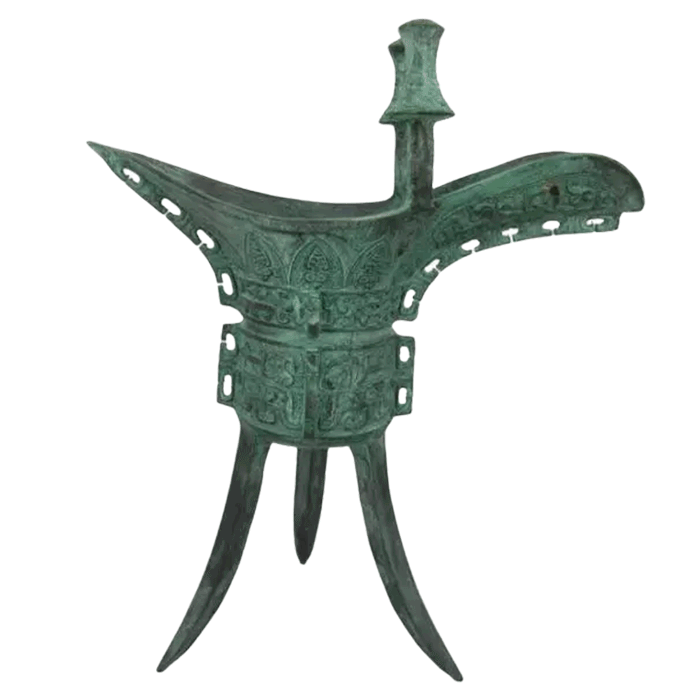
Key vessel types from this era include the jue (a tripod wine pitcher with a long spout and a handle), the jia (a larger tripod wine vessel), and the he (a pitcher with a closed spout). Decoration was minimal, typically consisting of thin raised lines, simple bands, or rows of small circles or bosses. The iconic and complex animal-mask motif, the taotie, which would dominate the subsequent Shang period, appears only in its most rudimentary form as two stylized eyes on a plain surface. These early pieces, though stylistically simple, represent a monumental technological leap, laying the groundwork for the Bronze Age's golden era.
The Apex of Ritual Art: The Shang Dynasty (c. 1600–1046 BCE)
The Shang Dynasty marks the zenith of Chinese bronze casting. During this period, the production of bronze vessels became a state-controlled industry of immense scale and sophistication. These objects were not for everyday use; they were essential components of elaborate rituals for ancestor worship and communication with the spirit world. The number and type of vessels a noble family possessed directly reflected their rank and status.
Shang bronzes are renowned for their technical mastery, imposing forms, and dense, intricate decoration. The piece-mold casting process was perfected, allowing for incredibly sharp and detailed surface ornamentation. The vessels are typically thick-walled and heavy, conveying a sense of permanence and power. The variety of shapes exploded, with dozens of standardized types, each with a specific function in ritual ceremonies involving the offering of wine and food.
Prominent vessel types include:
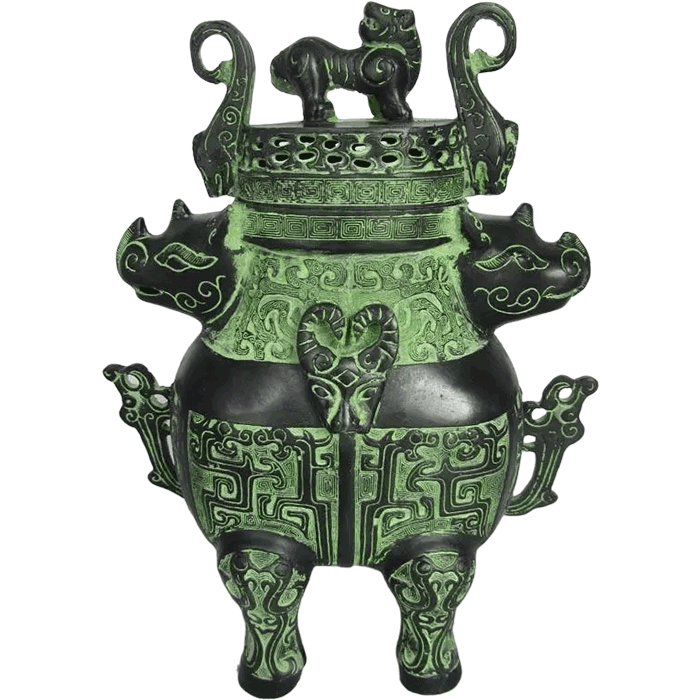
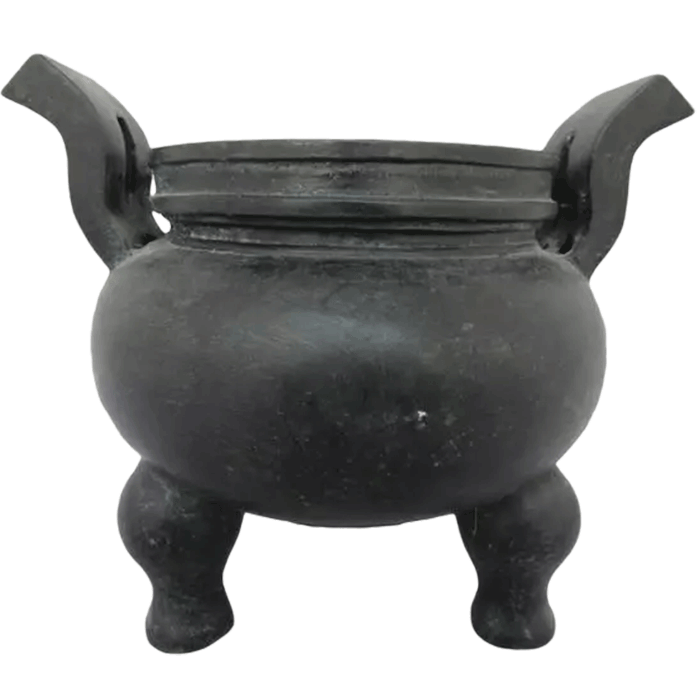
- Ding: A tripod or, less commonly, a rectangular four-legged cauldron for cooking and offering meat. The Houmuwu square cauldron is the most famous example of this type.
- Zun: A large wine container, often with a wide mouth and sometimes cast in fantastic zoomorphic shapes like elephants, owls, or mythical beasts.
- Gu: A tall, slender beaker for drinking wine, with a flared mouth and a narrow waist.
- Gong: A ritual wine pitcher shaped like a covered gravy boat, often decorated with a composite animal design.
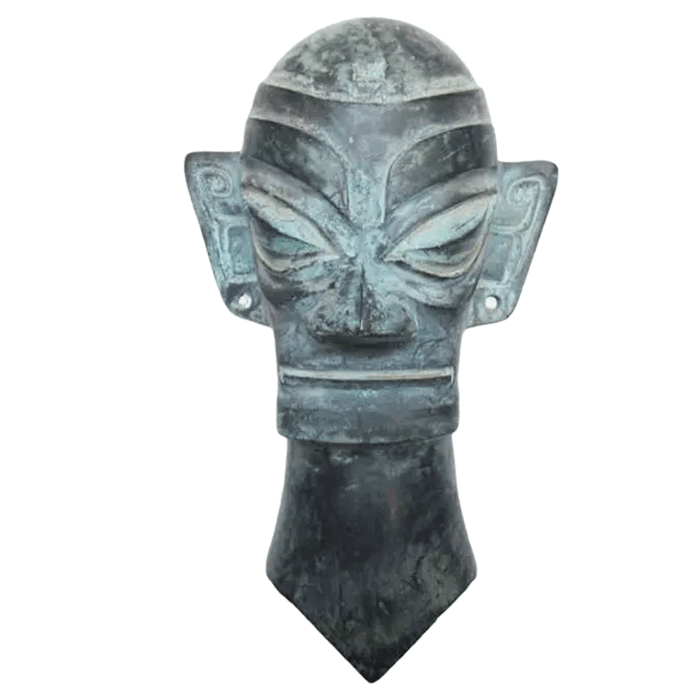
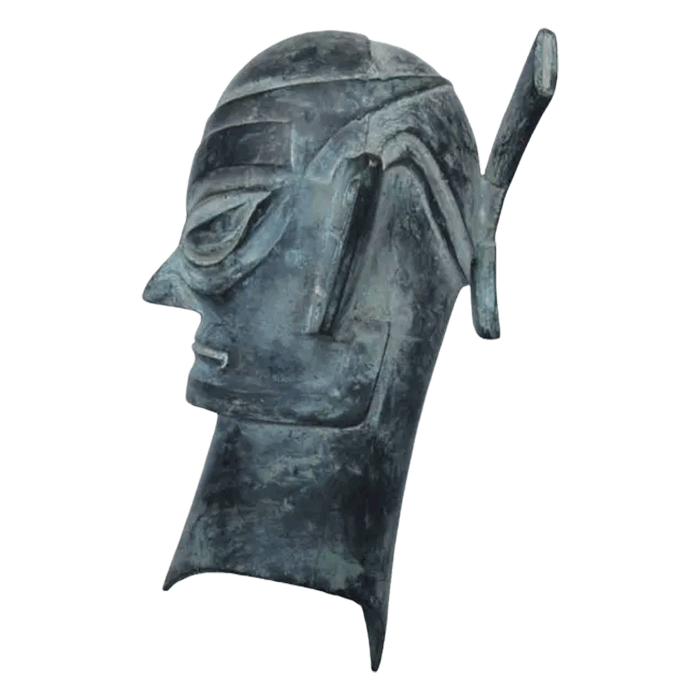
The defining decorative feature of Shang bronzes is the taotie, a stylized and symmetrical zoomorphic mask with prominent eyes, but no lower jaw. This mysterious motif, often flanked by dragons, birds, and other creatures, typically covers the entire surface of the vessel, set against a background of fine spiral patterns known as leiwen ("thunder pattern"). The sheer artistic energy and spiritual intensity of Shang bronzes have made them one of the most celebrated achievements in the global chinese bronze sculpture tradition.
From Ritual to Record: The Zhou Dynasty (c. 1046–256 BCE)
The Zhou people, who overthrew the Shang, inherited their bronze-casting technology but gradually adapted it to their own cultural and political needs. The Zhou Dynasty is divided into the Western Zhou and Eastern Zhou periods, each with distinct stylistic developments.
Western Zhou (c. 1046–771 BCE)
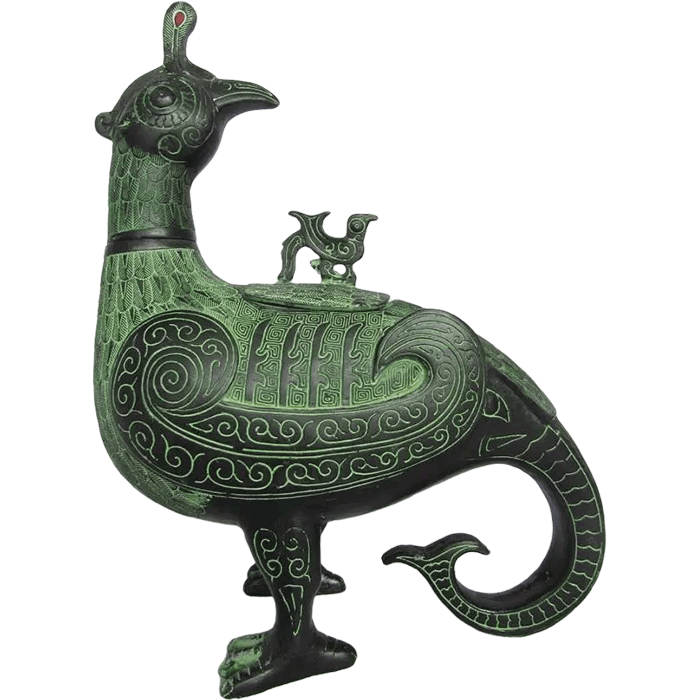
In the early Western Zhou, bronze styles closely followed late Shang precedents. However, over time, a new aesthetic emerged. The fierce, almost aggressive energy of the Shang taotie motif gave way to more restrained and orderly designs. Large, stylized birds with flamboyant crests became a popular motif, and the dense leiwen background was often simplified or omitted entirely.
The most significant innovation of the Western Zhou was the rise of long inscriptions. While Shang bronzes occasionally bore short inscriptions (often a clan name), Zhou artisans began casting lengthy texts into the interior of vessels. These inscriptions documented royal decrees, military victories, land grants, and official appointments, effectively turning the bronze vessels into permanent historical records. The vessel itself became a testament to the owner's prestige and a document to be passed down through generations. This shift from a purely spiritual function to a commemorative and political one is a hallmark of the period.
Eastern Zhou (Spring and Autumn & Warring States Periods, c. 771–256 BCE)
The Eastern Zhou was a time of political fragmentation and intellectual ferment. The central authority of the Zhou king waned, and powerful feudal lords competed for dominance. This social change was reflected in the production of bronzes. The strict, state-controlled ritual system of the Shang and Western Zhou broke down, and bronzes began to be used more widely for personal enjoyment and as symbols of secular wealth by a broader elite.
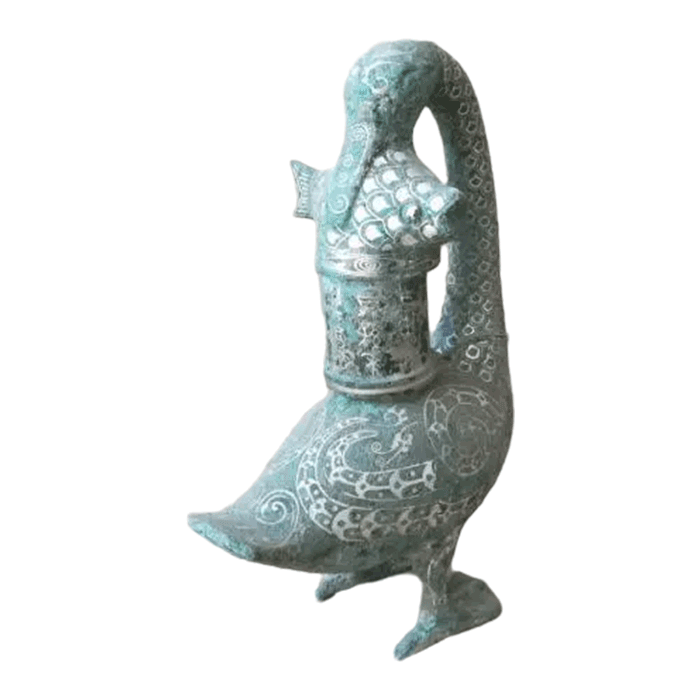
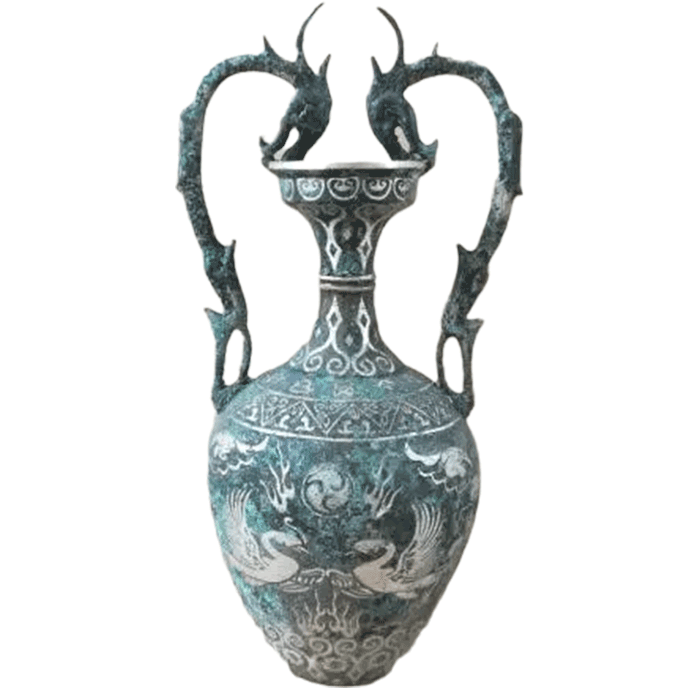
This period witnessed a "ritual revolution" and an explosion of regional styles. The heavy, imposing forms of the early Zhou were replaced by more elegant and refined shapes. The most notable technological advancement was the mastery of the lost-wax casting technique, which allowed for more complex, openwork designs with undercut features. Furthermore, artisans perfected the art of inlay, decorating bronze surfaces with intricate patterns of gold, silver, copper, turquoise, and malachite. The characteristics of Spring and Autumn bronzes show a clear move towards decorative opulence. Forms became more dynamic, with designs featuring intertwined dragons, hunting scenes, and complex geometric patterns that conveyed a sense of fluid movement.
Transformation and New Forms: The Qin and Han Dynasties (221 BCE–220 CE)
The unification of China under the Qin Dynasty and the subsequent stability of the Han Dynasty marked another turning point. While bronze continued to be a prestige material, its central role in ritual was greatly diminished. The rise of lacquerware and early ceramics provided less expensive and more fashionable alternatives for many types of containers.
However, bronze craftsmanship did not disappear; it was repurposed. Production shifted towards new categories of luxury and functional goods. Some of the most iconic Han bronzes include:
- Bronze Mirrors: While appearing earlier, intricately cast bronze mirrors became extremely popular during the Han. The non-reflective side was heavily decorated with cosmological symbols, zodiac animals, and inscriptions for good fortune.
- Incense Burners (Boshanlu): These censers, often shaped like a sacred mountain peak rising from the waves, were designed for the Daoist pursuit of immortality. They featured detailed openwork to allow smoke to escape, creating a miniature mythical landscape.
- Lamps: Bronze lamps were crafted into elegant and often complex forms, such as the famous Changxin Palace Lantern, which features a kneeling servant girl ingeniously designed to funnel smoke away.
- Gilded Bronzes: The technique of gilding bronze with mercury and gold became widespread, creating dazzling objects that appealed to the Han elite's taste for luxury.
The decorative style of Han bronzes moved away from the abstract and symbolic motifs of earlier periods towards a more naturalistic and narrative approach. The forms were often sleek, smooth, and less formally intimidating than their ritual predecessors.
Legacy and Expert Replication in the Modern Era
The long and varied history of Chinese bronze vessels represents a pinnacle of artistic and technological achievement. From the spiritual power of the Shang ding to the elegant luxury of a Han mirror, each piece tells a story of its time. For today's cultural institutions and collectors, recreating these masterpieces requires not only technical skill but also a profound understanding of their historical context.
At Luoyang Yichuan Bronze Craft Co., Ltd., our team of over 30 skilled artisans, including bronze-casting masters, specializes in the traditional lost-wax method. We are dedicated to preserving the integrity of these ancient forms. Our ISO 9001-certified process ensures that every piece, from a single prototype to a large production run, meets exacting quality standards. We solve key sourcing challenges by providing exact replication of antique designs, consistent patina color matching, and export-compliant packaging. Whether you need to reproduce a specific historical vessel or customize a bronze sculpture inspired by these timeless traditions, our expertise ensures an authentic and masterful result.